
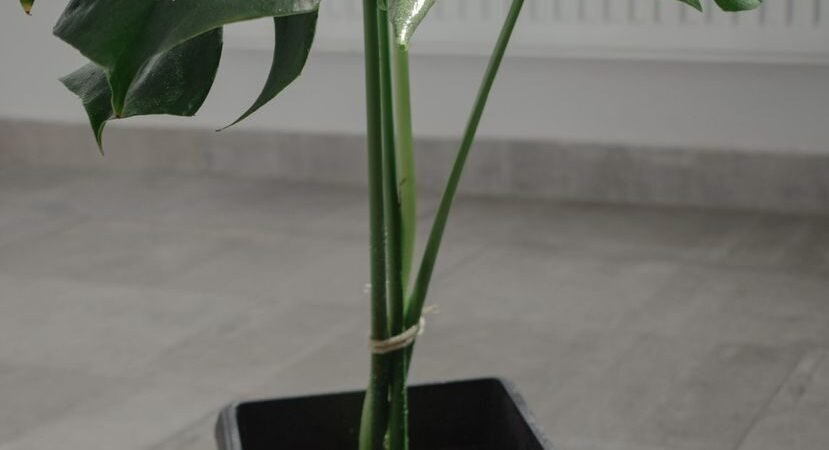
Quick answer: Give your monstera bright, indirect light, water only when the top 1–2 inches of soil feel dry, plant it in a chunky, well-draining mix, and give it something to climb. Get those four things right and most monstera problems never show up.
Monstera is the plant most beginners buy first — and the one that forgives the most beginner mistakes. It grows fast, tells you clearly when something is wrong, and bounces back from most mishaps. This guide covers everything a first-time monstera owner needs: light, water, soil, humidity, feeding, support, repotting, and the problems you are most likely to meet.
One note before we start: the plant sold as “monstera” is almost always Monstera deliciosa, the big split-leaf climber from the rainforests of Mexico to Panama. Smaller relatives like Monstera adansonii (the one with holes all over the leaf) and Monstera peru follow the same basic rules, with a little more appreciation for humidity.
Monstera care at a glance
| Light | Bright, indirect light; a few feet from a sunny window or behind a sheer curtain |
| Water | When the top 1–2 inches of soil feel dry; soak until water drains out, then empty the saucer |
| Soil | Chunky, airy mix: roughly equal parts potting soil, orchid bark, and perlite |
| Humidity | Average room air is fine; 40–50% and up keeps new leaves happy |
| Temperature | 65–85°F; keep away from cold drafts and radiators |
| Feeding | Balanced liquid fertilizer at half strength, about once a month in spring and summer |
| Support | A moss pole or stake once the plant starts leaning or climbing |
| Repot | Every 1–2 years, into a pot just 1–2 inches wider |
| Pets | Toxic if chewed — keep out of reach of cats, dogs, and small children |
Light: bright and indirect wins
Light is the single biggest factor in how your monstera looks. In bright, indirect light, new leaves come out large and start to split. In low light, new leaves stay small and solid, and growth slows to a crawl. In harsh, direct afternoon sun through glass, leaves scorch with pale, crispy patches.
The sweet spot is an east-facing window, or a few feet back from a south- or west-facing window. A sheer curtain turns a too-sunny window into a perfect one. If your only option is a dim corner, a full-spectrum grow light for 10–12 hours a day does the job — see our guide to grow lights for houseplants for the signs your plant needs one.
Turn the pot a quarter-turn every couple of weeks so growth stays even instead of leaning hard toward the window. And if you want the full story on what light does to leaf size and splitting, read how much light a plant really needs — the same principles apply, even though that article is about fiddle leaf figs.
Water: check the soil, not the calendar
There is no honest “water every X days” rule for monstera, because the right gap changes with pot size, light, and season. The rule that works: push a finger into the soil. If the top 1–2 inches feel dry, water. If they still feel damp, wait. Our full guide to how often to water a monstera walks through four soil checks you can use instead of a calendar.
When you do water, water thoroughly: pour slowly and evenly until water runs out of the drainage holes, then empty the saucer so the pot never sits in water. In summer that often works out to about once a week; in winter it can stretch to every two or three weeks. A pot without drainage holes is the fastest route to root rot — if yours has none, either drill one or use it as a decorative cover with a nursery pot inside.
Not sure whether you have already gone wrong in one direction or the other? Our overwatered vs. underwatered guide shows how to tell the two apart in under a minute.
Soil: chunky and airy, never dense
In the wild, monstera climbs trees with its roots half in the air, so its roots want air as much as moisture. Straight, dense potting soil stays wet too long and suffocates them. The beginner-friendly mix is roughly one part potting soil, one part orchid bark, and one part perlite. That is the same 1-1-1 recipe in our best soil mix for monstera guide, with swaps if you cannot find bark.
Repot in spring, when the plant is about to grow anyway, and only go one pot size up — a pot just 1–2 inches wider in diameter. A much bigger pot holds wet soil around small roots for too long. If the plant is rootbound, these signs confirm it, and our 9-step repotting guide walks through the whole job.
Humidity and temperature: normal rooms are fine
Monstera appreciates humidity but tolerates normal indoor air far better than most tropical plants. Average room humidity of 40–50% is enough for healthy growth; higher humidity gives you larger, more vigorous leaves and helps new leaves unfurl without sticking. If your home is very dry in winter, grouping plants together, a pebble tray, or a humidifier all help — ranked honestly in our guide to increasing humidity for houseplants. Skip misting as a humidity strategy: it raises humidity for minutes, not hours, and wet leaves invite fungal spots (see should you mist houseplants).
Temperature is simple: 65–85°F, the range most homes already sit in. Keep the plant away from cold drafts, cold window glass in winter, and hot air blasting from radiators or heating vents. Below about 50°F, growth stops and cold damage starts, so bring outdoor monsteras inside well before the first cold snap — our bringing houseplants indoors checklist covers the timing.
Feeding: little and only while growing
Feed a balanced liquid houseplant fertilizer at half the label strength, about once a month, in spring and summer only. That is the whole routine for a beginner. Stop feeding in fall and winter when growth slows — fertilizer in a resting plant builds up as salts in the soil and burns leaf edges. If you are unsure whether your plant is actively growing (new leaf unfurling, or fresh growth in the last few weeks), skip the feed. The full schedule, including which plants need more or less, is in how often to fertilize houseplants.
Support: give it something to climb
A monstera without support sprawls, leans, and keeps its leaves small. A moss pole or sturdy stake changes that: leaves grow larger and split more as the plant climbs. Add support when the plant starts leaning or outgrows its nursery stake, tie the main stem loosely with soft plant ties (never wire), and tuck the long brown aerial roots against the pole or into the soil. Cutting a few aerial roots off does no harm if they are in the way. Our moss pole guide covers placement, watering the pole, and what to do when the plant outgrows it.
Pruning and cleaning: small jobs, big payoff
Prune with clean, sharp scissors or shears: remove yellow or damaged leaves at the base of their stem, and cut back leggy stems just above a node if the plant is getting unruly. Pruned stem sections with a node can be propagated in water — but a cutting without a node will root and never grow a new stem, as explained in can you propagate monstera without a node.
Wipe the big leaves with a damp cloth every few weeks. Dust blocks light, and clean leaves photosynthesize better and show problems earlier. While you are at it, check leaf undersides for pests — tiny webs, sticky residue, or clusters of small insects are worth catching early.
Common monstera problems (and which guide fixes each)
| Drooping leaves | Usually watering or light — start with why is my monstera drooping |
| Yellow leaves | Overwatering is the usual suspect — see monstera leaves turning yellow |
| Leaves not splitting | Almost always light, support, or youth — see why monstera leaves are not splitting |
| Mushy stem or black roots | Root rot — act fast with how to save an overwatered plant |
| Brown, crispy leaf edges | Low humidity, salts, or heat blasts — check the humidity guide above |
| Leggy, stretched growth | Not enough light — move closer to a window or add a grow light |
Toxicity: keep it away from pets and kids
All parts of monstera contain calcium oxalate crystals, which irritate the mouth and digestive system if chewed. It is toxic to cats and dogs, and unpleasant for small children who mouth leaves. Keep it on a high shelf, a tall stand, or a hanging setup out of reach — and if a pet does chew a leaf, watch for drooling or pawing at the mouth and call your vet if symptoms persist.
Your first week with a new monstera
- Check the nursery pot: drainage holes, soil that is damp but not soggy, no mushy stems at the base.
- Place it in bright, indirect light — not directly in a sunny window on day one.
- Do not repot immediately. Let it settle for 2–4 weeks unless the pot is cracked, rootbound solid, or the soil smells sour.
- Water only when the top 1–2 inches dry out, and empty the saucer every time.
- Expect one older leaf to yellow as the plant adjusts. That is normal settling, not a crisis — worry only if new growth yellows or several leaves go at once.
Related rescues
- How Often to Water a Monstera: The Soil-Check Rule
- Why Is My Monstera Drooping?
- Best Soil Mix for Monstera: A Simple DIY Recipe
How much light does a monstera need?
Bright, indirect light is ideal: an east-facing window, or a few feet back from a south- or west-facing window. Low light means small, unsplit leaves; direct afternoon sun scorches them. If you only have a dim spot, a full-spectrum grow light for 10–12 hours a day works.
How often should I water my monstera?
When the top 1–2 inches of soil feel dry, not on a fixed schedule. That is often about once a week in summer and every two to three weeks in winter. Water thoroughly until it drains out, then empty the saucer.
Why are my monstera leaves not splitting?
Usually one of three things: not enough light, no support to climb, or a young plant that has not matured yet. Bright indirect light plus a moss pole is the combination that produces splits; a plant on a shelf with nothing to grab can hold juvenile, unsplit leaves for years.
Is monstera toxic to cats and dogs?
Yes. All parts contain calcium oxalate crystals that irritate the mouth and stomach if chewed. Keep the plant out of reach, and call your vet if a pet chews a leaf and shows drooling or distress.
When should I repot my monstera?
Every 1–2 years, in spring, into a pot just 1–2 inches wider. Signs it is time: roots circling out of the drainage holes, water running straight through, or growth stalling despite good light and water.