
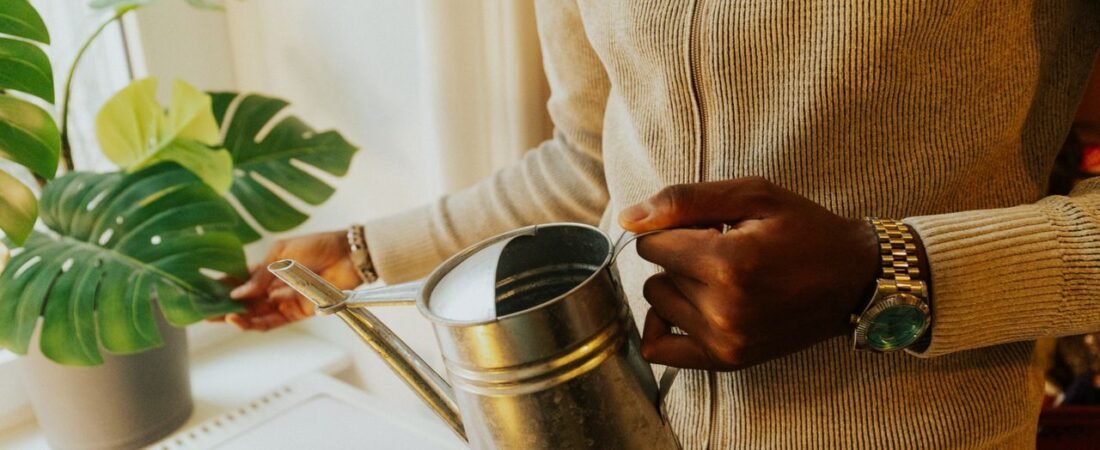
Your monstera doesn’t need a watering schedule. It needs you to check the soil.
That sounds vague, but it’s the single most important thing to understand about watering this plant: monsteras don’t die because their owner forgot to water on Tuesday. They die because a well-meaning owner watered every Tuesday whether the plant needed it or not. This is a plant with thick, fleshy roots that hold some water of their own — overwatering kills more monsteras than drought ever will.
The quick answer: every 1 to 2 weeks, when the top 2 inches are dry
Here’s the rule to build your whole routine around:
- Check the soil once a week in spring and summer, every two to three weeks in fall and winter.
- Water only when the top 2 inches of soil feel dry.
- When you do water, soak the soil thoroughly until water runs out of the drainage holes.
- Always empty the saucer afterward. Never let the pot sit in standing water.
That’s it. The soil is the schedule — not the calendar.
How to check the soil (pick the test you’ll actually do)
The finger test is the gold standard, but any of these work. Use the same one each time so you learn what “dry enough” feels like.
1. The finger test. Push your finger into the soil up to your second knuckle (about 2 inches). Dry at that depth? Water. Still moist? Wait a few days and check again.
2. The chopstick test. Push a plain wooden chopstick or skewer into the soil, leave it for a few minutes, then pull it out. Soil clinging to it or a dark damp line means moisture — wait. Clean and dry means water.
3. The lift test. Lift the pot right after watering and feel its weight. Lift it again before you water. A dry monstera pot is noticeably lighter. After a few weeks you’ll be able to tell by feel alone.
4. A moisture meter. A simple probe meter takes the guesswork out. Water when the reading drops into the lower “moist” range for the root zone — not the second the surface looks dry.
Whichever test you use, remember one thing: dry surface soil is normal. The surface always dries first. What matters is the moisture 2 inches down, where the roots are.
How much water to give (when it’s time)
Monsteras don’t want little sips. They want a full drink, then a proper dry-down.
- Water slowly and evenly around the whole pot so the entire root ball gets wet, not just one side.
- Keep pouring until water flows freely out of the drainage holes.
- Wait 15 minutes, then dump any water collected in the saucer or cache pot.
If water runs straight through and out the bottom almost immediately, your soil may be too compacted or bone-dry and hydrophobic. Let the pot sit in a sink of water for 20–30 minutes (bottom watering) so the soil can absorb evenly, then drain it well. Every third or fourth watering, water from the top instead — it flushes out fertilizer salts that build up in the soil.
A seasonal watering rhythm
Your monstera’s thirst changes with the seasons because its growth rate does. Use this as a starting point, but always let the soil check override it.
| Season | Typical rhythm | What’s happening |
|---|---|---|
| Spring | Every 7–10 days | Growth surges; soil dries fastest |
| Summer | Every 7–14 days | Heat speeds drying, but AC also dehumidifies indoor air |
| Fall | Every 2–3 weeks | Growth slows; soil stays moist longer |
| Winter | Every 3–4 weeks | Near-dormant; let soil dry a bit deeper between drinks |
In winter especially, resist the urge to “be nice” and water on the old schedule. A monstera sitting in cold, wet soil for weeks is prime territory for root rot.
5 things that change your monstera’s schedule
Two monsteras in the same apartment can have completely different thirsts. Adjust based on:
1. Light. A monstera in bright, indirect light photosynthesizes hard and drinks fast. One in a dim corner barely sips — its soil can stay moist for weeks. Bright light = check more often.
2. Pot size and material. Small pots dry out in days; big pots hold moisture for weeks. Terracotta is breathable and dries fast; plastic and glazed ceramic hold water longer. If you just upsized to a much bigger pot, expect the soil to stay wet far longer than before.
3. Soil mix. Dense, peat-heavy potting soil stays soggy (and is the usual suspect behind overwatered monsteras). A chunky mix with bark and perlite drains freely and dries predictably, making your schedule easier to read.
4. Temperature and humidity. Warm rooms dry soil fast; cool rooms slow it down. Dry winter heating air pulls moisture out of pots quickly, while a humid room keeps soil damp longer.
5. Plant size. A big, root-filled monstera drinks fast. A young cutting with a few roots in a big pot drinks almost nothing — most of that soil is just sitting wet, which is exactly how root rot starts.
Signs you’re watering it wrong
| Too much water | Too little water |
|---|---|
| Lower leaves turn yellow first | Leaves droop but perk up within hours of watering |
| Stems feel soft or mushy at the base | Leaf edges turn brown and crispy |
| Soil smells sour or stays wet for weeks | Leaves curl inward to conserve moisture |
| Tiny flies (fungus gnats) hover over the soil | Soil pulls away from the edges of the pot |
| Black, mushy roots = root rot | Growth stalls completely |
Seeing the left column? Read our guides on why your monstera is drooping and monstera leaves turning yellow to pin down the cause — and if the roots are rotting, follow how to save an overwatered plant before it’s too late. The full comparison lives in our overwatered vs. underwatered guide.
5 watering mistakes that kill monsteras
1. Watering on a schedule instead of checking the soil. “Every Sunday” is how overwatered monsteras happen. The soil check takes ten seconds. Make it the habit.
2. The little-sips habit. A splash every few days keeps the top wet and the deep roots dry while salts accumulate. Soak deeply or don’t water at all.
3. A pot with no drainage holes. If your decorative pot has no holes, either drill them or keep the plant in a nursery pot that sits inside the decorative one (and still empty the cache pot after watering).
4. Leaving water in the saucer. Roots sitting in a puddle can’t breathe. Fifteen minutes after watering, dump the saucer. Every time.
5. Shocking the roots with ice-cold water. Let tap water come to room temperature first. It’s a small kindness a tropical plant appreciates.
Should you mist your monstera?
Honestly? Skip it. Misting raises humidity for about ten minutes and leaves wet foliage that invites problems. If your air is dry, a small humidifier or a pebble tray under the pot does far more good with none of the risk. For the full picture on humidity, see our monsteras’ plant hub: your monstera.
Related rescues
- Why Is My Monstera Drooping? 6 Causes & Fixes
- Why Are My Monstera Leaves Turning Yellow? 8 Causes & Fixes
- How to Save an Overwatered Plant: 7 Rescue Steps That Actually Work
How often should I water my monstera in winter?
In winter, most indoor monsteras need water only every 3 to 4 weeks, because growth slows and the soil stays moist much longer. Always check that the top 2 inches of soil are dry before watering — in a cool, dim room even that rhythm may be too often.
Can I water my monstera once a month?
Maybe in winter, but during spring and summer a month is usually too long. Check the soil weekly in the growing season and water when the top 2 inches are dry. Letting it go bone-dry for weeks stresses the plant and causes brown, crispy leaf edges.
Should I water my monstera from the top or the bottom?
Both work. Bottom watering gives even saturation and is great for very dry soil. But water from the top every third or fourth time — it flushes fertilizer salts out of the drainage holes, which bottom watering leaves behind.
Why is water dripping from my monstera’s leaves?
That’s guttation — the plant pushing out excess water through its leaf tips, usually overnight. A little of it is normal and harmless. If it’s happening constantly, your soil is likely staying too wet, so let it dry out more between waterings.
Is tap water okay for a monstera?
Yes, for most homes tap water is fine. If your water is very hard, mineral salts can build up in the soil over time — flush the pot with a deep top-watering every month or two and you’ll be fine.