
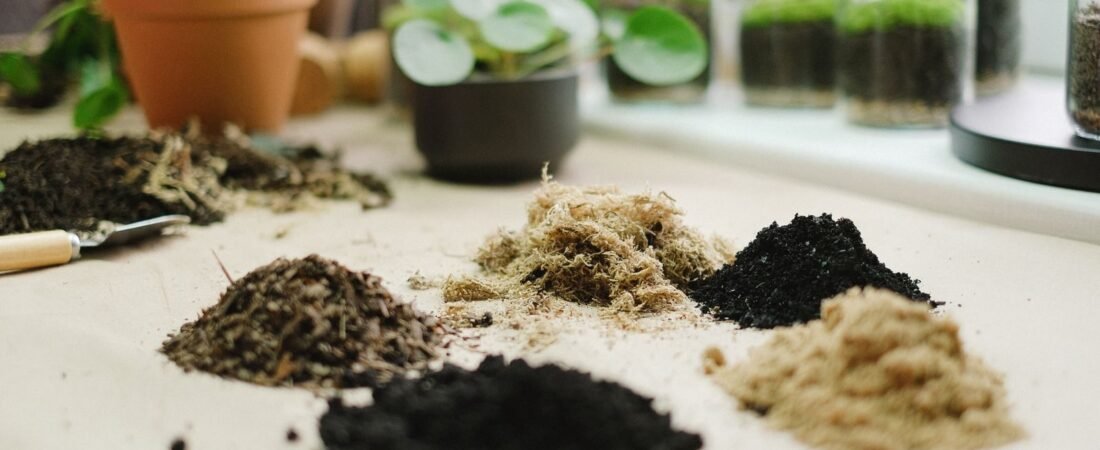
The short answer: mix 1 part indoor potting soil, 1 part orchid bark, and 1 part perlite. That is it. This chunky, airy blend gives your monstera what it actually wants — moisture its roots can reach, air they can breathe, and drainage that keeps root rot away. Below: 3 versions tuned to your room, the 5-second squeeze test, and the mistakes that ruin a good mix.
What monstera soil actually needs to do
Monsteras are climbing aroids. In the wild they anchor to trees and root into loose, airy debris — bark, fallen leaves, moss — not dense ground soil. A pot has to fake that environment, which means your mix has three jobs: hold enough water that roots do not dry out instantly, drain the excess fast, and keep air pockets open even after months of watering.
Here is the visual test growers use: if your mix looks like one uniform black mass, it is too fine. It will compact, suffocate roots, and invite rot. If it looks like chunky trail mix — bark pieces, white perlite, and dark soil all visible — you are in the right neighborhood.
Getting this right matters because most monstera rescues trace back to the pot, not the plant. NC State Extension lists good drainage and high organic matter among the soil requirements for Monstera deliciosa — and if yours is sitting in soggy, airless mix, our guide to why monstera leaves turn yellow will look very familiar. Your monstera hub page collects every monstera rescue in one place.
The default recipe: 1-1-1
You do not need a ten-ingredient “premium aroid blend.” The recipe that works for most monsteras in average homes is dead simple — equal parts by volume:
- 1 part indoor potting mix — the moisture and food
- 1 part orchid bark — the chunk and structure
- 1 part perlite — the air and drainage
For one medium batch, that is 3 scoops of each — a scoop can be a cup, a yogurt tub, whatever you have, as long as you use the same one for everything. Measure by volume, never by weight: bark and perlite are far lighter than damp potting mix, so a kitchen scale will lie to you. An optional small handful of worm castings adds gentle nutrition, but it is a bonus, not a requirement.
This mix works because each ingredient covers the others’ weaknesses: the base holds water the bark and perlite cannot, the bark keeps the base from collapsing into sludge, and the perlite keeps air flowing even when the base is fully wet.
What each ingredient does (and what you can swap)
Cover three functional roles and you are covered. Everything else is optional.
- Indoor potting mix — the base. Holds water and nutrients between waterings. Use a product made for containers; garden soil and topsoil turn to cement in a pot and can carry pests. Coco coir can replace part of a peat-heavy base if you prefer it — but coir alone does not guarantee drainage; particle size and the full recipe decide that.
- Orchid bark — the structure. Medium-sized chunks create the air pockets monstera roots love and slow the mix’s collapse over time. In a pinch, clean coco chips work; very fine bark behaves more like the base and will not do the job.
- Perlite — the air. Lightweight white granules that keep pores open after repeated watering. Pumice does the same job but adds weight, which helps stabilize a top-heavy monstera on a moss pole.
- Worm castings (optional) — gentle food. A small handful adds slow-release nutrition. A little is plenty; too much fine material eats into your air space.
- Horticultural charcoal (optional — honestly skippable). Some growers add it, but it will not fix a mix that is too dense. Get the three core ingredients right first.
Three recipes for three rooms
The 1-1-1 is the starting point, not a law. Your pot size, pot material, light, and watering habits change how fast any mix dries. Tune it:
| Your situation | Recipe | Why it works |
|---|---|---|
| Average home, bright indirect light, pot with drainage | 1-1-1 (the default) | Balanced — dries at a manageable pace |
| Humid room, winter, deep plastic pot, or you water on the early side | 1 part base, 1.5 parts bark, 1.5 parts perlite | Extra chunk dries the root zone faster |
| Dry room, small terracotta pot, strong filtered light | 2 parts base, 1 part bark, 1 part perlite | More base holds moisture longer |
Two rules for adjusting: change one thing at a time, and give it two watering cycles before judging. And never use a chunkier mix as an excuse to water more often — check the soil first. Our monstera watering guide shows exactly how.
How to mix it: 7 steps
- Inspect every bag. Do not use anything that smells sour or rotten, shows visible mold, or sat open outdoors collecting who-knows-what.
- Choose one measuring scoop and stick with it for every ingredient.
- Lightly dampen the base and the perlite. Perlite dust is unpleasant — work somewhere ventilated and wear a dust mask if you have one.
- Fold the base and perlite together until no dense pockets of plain potting mix remain.
- Add the bark last and distribute the chunks through the whole batch — not just on top.
- Run the squeeze test: grab a handful, compress, release. It may hold its shape for a second, then break apart with a light poke. If it stays a tight ball, add more bark or perlite. If it will not hold at all, add more base.
- Trial it in a spare nursery pot before committing your plant: fill, water thoroughly, and watch. Water should soak in rather than puddle for minutes, and runoff should emerge from the drainage holes. Check the weight and moisture over a couple of days in the same room your monstera lives in.
Store-bought mixes work too
Not everyone wants to blend soil on the kitchen floor, and that is fine. A pre-made “aroid mix” from a plant shop or specialty seller is the best ready-to-use option — it is formulated for exactly this.
Fox Farm Ocean Forest is decent straight from the bag, but it is denser than a monstera prefers — plan on mixing in extra perlite and bark. Whatever you buy, run the squeeze test: if a moist handful compacts into a tight ball, it needs amending before it touches your plant.
5 mistakes that ruin a good mix
- Using garden soil or topsoil. It compacts in a container, holds too much water, suffocates roots, and can introduce pests. Container mix only — always.
- No drainage hole. No mix on earth can compensate for a sealed pot. If you love a decorative cachepot, keep the plant in a nursery pot inside it and empty the runoff after every watering.
- A gravel layer at the bottom “for drainage.” This old myth does not work — the gravel just raises the soggy zone closer to the roots. A drainage hole plus the right mix beats gravel every time.
- Changing the soil but not your watering habits. A chunky mix dries differently than the dense one it replaced — usually faster. Keep checking moisture before you water. Our overwatered vs underwatered guide has the foolproof tests.
- Repotting to “fix” root rot without treating the rot. Fresh mix helps healthy roots; it cannot save mushy, foul-smelling ones. If the roots are already rotting, inspect and treat the rot first, then repot into the new mix.
When to refresh the soil
Even a great mix breaks down. Bark decomposes, fine particles migrate downward, and the air pockets that made it perfect slowly collapse. Plan on refreshing the root-zone mix every 1–2 years — or sooner if water starts puddling on top, the mix smells sour, or the pot stays wet far longer than it used to.
Repot into a container only modestly larger than the root ball — a huge pot of fresh mix around a small root ball just stays wet. After repotting, water once to settle everything, let all the runoff escape, then go back to checking moisture before each watering. A little post-repot droop is normal; if it lingers, our drooping monstera guide walks through the checks.
Related rescues
- How Often to Water a Monstera: The Soil-Check Rule
- Why Are My Monstera Leaves Turning Yellow? 8 Causes & Fixes
- Root Rot: Signs, Treatment & How to Save Your Plant
Can I use regular potting soil for my monstera?
Straight from the bag, most potting soils are too dense for a monstera — they stay wet and compact over time. You can absolutely use potting soil as the base of the 1-1-1 recipe above (mixed with bark and perlite), but on its own it will eventually suffocate the roots.
What can I use instead of orchid bark?
Clean coco chips are the closest swap. Extra perlite plus a coir-based base also works in a pinch. Avoid fine bark or “bark fines” as the only chunk — they behave more like potting soil and will not keep the mix open.
Can I use garden soil or topsoil for my monstera?
No. Garden soil compacts in containers, holds far too much water, drains poorly, and can carry pests and weed seeds. Always use a mix made for containers.
Do I still need fertilizer with this mix?
Yes. Worm castings add a little gentle nutrition, but they are not a full feeding plan. Feed on your normal spring-and-summer schedule — the mix handles structure and drainage, fertilizer handles food.
Can I use this mix for pothos and philodendrons too?
Yes — most aroids want the same chunky, airy blend. Pothos, philodendrons, and monsteras all thrive in it, so one batch can serve the whole collection.