
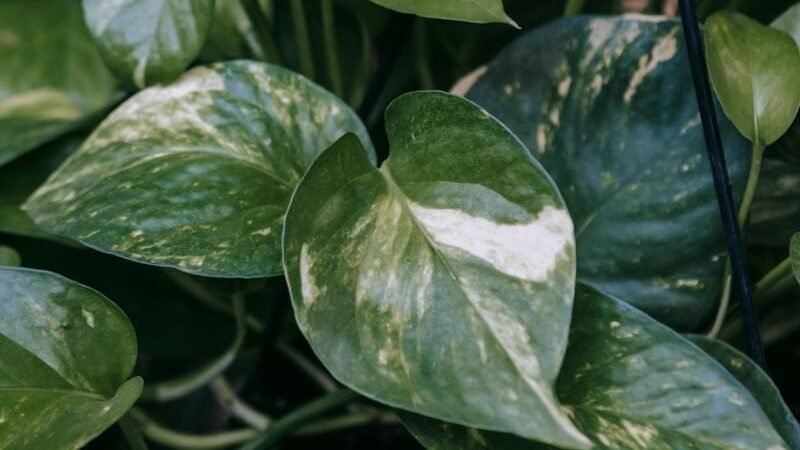
A drooping pothos stops you mid-watering-can. One day the vines are perky and trailing over the shelf; the next, the leaves hang limp and the whole plant looks exhausted. It feels like an emergency, and in a way it is — but it is rarely a death sentence. Pothos (Epipremnum aureum) is one of the toughest houseplants you can own, and drooping is its early-warning system, not its last word.
The tricky part is that drooping has two opposite causes. A thirsty pothos droops because its roots have no water to send up. An overwatered pothos droops for the exact same reason — its roots are drowning and cannot move water at all. The leaves look identical either way. That is why the first thing you do matters more than anything else: diagnose before you water. One wrong pour can turn a thirsty plant into a rotting one.
Quick diagnosis: Push a finger 2 inches into the soil. Bone dry and the pot feels light? Your pothos is thirsty — a thorough soak should perk it up within a few hours. Damp or soggy soil and a heavy pot? It is drowning — do not water it. Check the roots for rot instead. That one check rules out the two most common causes in under a minute. If the soil is moist but not wet, the problem is environmental: cold, dry air, or pests.
The 60-Second Soil Check (Do This First)
Before you touch the watering can, run this check. It takes a minute and it tells you which half of the problem you are dealing with.
- Push a finger 2 inches into the soil. Bone dry all the way down means thirst. Damp means wait. Soggy means trouble.
- Lift the pot. A thirsty pot feels feather-light. A waterlogged pot feels heavy, like a brick.
- Smell the soil. Healthy soil smells earthy. A sour, swampy smell points to root rot.
- Look at the leaves and stems. Limp leaves with firm, green stems usually mean a watering issue. Limp leaves with mushy, dark stems mean root rot. Crispy leaf edges point to dry air. Sticky residue or tiny insects point to pests.
If the soil check does not explain the droop, think back over the last week or two. Did you move the plant? Turn the heating on for winter? Repot it? A recent change is often the hidden trigger — pothos notice disruption even when they look tough.
Overwatering vs Underwatering: How to Tell Them Apart
These two causes produce the same droop, so compare the clues side by side instead of guessing. If you want the full comparison, our guide to overwatered vs underwatered plants walks through every sign.
| Clue | Underwatered | Overwatered |
|---|---|---|
| Soil 2 inches down | Bone dry, may have pulled away from the pot edges | Damp or soggy days after watering |
| Pot weight | Feather-light | Heavy |
| Leaves feel | Papery, thin, sometimes curled at the edges | Heavy and limp, soft rather than dry |
| Leaf colour | Edges turn crispy brown; leaves may yellow from the tips | Leaves yellow from the base, often whole leaves at once |
| Stems | Firm and green | Soft or mushy near the soil line |
| Smell | Nothing unusual | Sour or swampy |
| After watering | Perks up within a few hours | Stays limp — or gets worse |
The last row is the giveaway. If you watered yesterday and the plant is still drooping, the roots are not working — and more water will only make it worse.
1. Underwatering — The Easiest Fix
Why it happens: When the soil dries out completely, the plant loses the water pressure (turgor) that keeps its cells rigid and its leaves upright. Pothos has no water-storage organ, so there is nothing in reserve when the supply fails. The droop can appear fast — within a day of the soil drying out completely — and the leaves may curl slightly at the edges as well.
How to confirm: The finger test finds bone-dry soil, the pot feels light, and the leaves feel papery. The plant probably has not been watered in two weeks or more, or it sits in a small pot that dries out fast.
How to fix it:
- Water thoroughly until it runs freely from the drainage holes. If the soil has shrunk away from the pot edges, set the pot in a bowl of room-temperature water for 20–30 minutes so the mix can rehydrate — dry potting mix can repel water at first.
- Let the pot drain completely, then empty the saucer. Never leave a pothos standing in water.
- Expect the leaves to start firming up within a few hours and to stand upright by the next morning.
- Going forward, water when the top 1–2 inches of soil feel dry — not on a fixed calendar day. Our guide to how often to water a pothos explains the soil-check rule in detail.
2. Overwatering — Too Much of a Good Thing
Why it happens: Pothos evolved on tropical forest floors, where roots dry out between rains. In a pot with no drainage or a heavy, waterlogged mix, the roots sit in water with no oxygen. They suffocate, stop absorbing, and the plant droops even though the soil is wet. This is the most misdiagnosed pothos problem, because the fix looks like the opposite of what your instincts say.
How to confirm: The soil is damp or soggy days after the last watering, the pot feels heavy, and the leaves are limp and heavy rather than papery. Yellow leaves often appear alongside the droop — see our guide to pothos leaves turning yellow if that is happening too.
How to fix it:
- Stop watering immediately. Do not water on schedule — water only when the top 1–2 inches are dry.
- Move the plant to bright, indirect light so the soil dries out faster.
- If the pot has no drainage holes, repot into one that does. A decorative pot without drainage should only ever be an outer sleeve.
- Let the soil dry out almost completely before watering again, then switch to the soil-check rule permanently.
3. Root Rot — The Serious One
Why it happens: Root rot is what chronic overwatering turns into. Fungi take hold in soggy, airless soil and break down the root system. Dead roots move no water at all, no matter how wet the pot is — which is why a rotting pothos droops in soaking soil. This is the one cause that needs prompt action.
How to confirm: The droop does not improve after watering, the soil smells sour or swampy, and the stems feel soft or mushy near the soil line. Slide the root ball out of the pot: healthy roots are white or light tan and firm; rotten roots are brown or black, mushy, and may fall apart when you touch them. Our root rot signs and treatment guide shows exactly what to look for.
How to fix it:
- Take the plant out of its pot and shake off as much old soil as you can.
- Trim away every brown, black, or mushy root with clean scissors. Cut back to firm, healthy tissue — even if that means removing a lot.
- Let the remaining roots air-dry for about an hour.
- Repot into fresh, well-draining mix in a clean pot with drainage holes. A standard houseplant mix with a handful of perlite works well.
- Hold off on watering for two to three days so the trimmed roots can recover, then water lightly. Our full rescue walkthrough, how to save an overwatered plant, covers the same steps in more detail.
- Do not fertilise for at least four to six weeks — feeding a stressed plant can burn already-vulnerable roots.
4. Rootbound — No Room Left to Drink
Why it happens: When a pothos has filled its pot completely with roots, there is barely any soil left to hold moisture. Water runs straight through and out the drainage holes, and the plant droops even though you water it regularly. Most pothos need repotting every one to two years.
How to confirm: Roots are circling out of the drainage holes or poking through the soil surface, the plant dries out within a day or two of watering, and the pot feels solid with roots when you squeeze it gently.
How to fix it:
- Choose a new pot just 1–2 inches larger in diameter than the current one. A much bigger pot holds excess moisture in unused soil and invites root rot.
- Gently loosen the root ball and tease out the circling roots at the bottom.
- Repot in fresh potting mix, water well, and place the plant in bright, indirect light.
- Expect recovery within a week as the roots spread into the new space. A little droop right after repotting is normal transplant shock — see the FAQ below.
5. Cold Drafts and Temperature Stress
Why it happens: Pothos is a tropical plant that prefers 65–85°F. A cold draft from an open window, an air-conditioning vent, or a single-pane window in winter can make it wilt within hours. Temperatures below 50°F can damage it outright, and the leaves may develop dark, water-soaked patches after a cold night.
How to confirm: The droop started suddenly after a cold snap, a move, or the heating or air conditioning coming on — and the soil moisture is fine. The plant sits near a window, an exterior door, or a vent.
How to fix it:
- Move the plant away from drafts, vents, and cold windows to a warm, stable spot.
- Keep it between 65°F and 85°F and avoid sudden temperature swings.
- Give it a few days in the warm spot before judging whether it needs anything else. Cold-damaged leaves will not recover, but new growth should come through healthy — prune off any blackened leaves once the plant has settled.
6. Low Humidity — The Winter Problem
Why it happens: Pothos prefers 40–60% humidity. In winter, when the heating runs constantly, indoor air can drop to 10–30% humidity, and the plant loses moisture through its leaves faster than its roots can replace it. The result is a subtle, ongoing droop that never quite resolves after watering — often with crispy leaf tips as a companion symptom.
How to confirm: The droop is worst in winter or in a heated room, the leaf tips are brown and crispy, and watering helps only briefly. A cheap hygrometer near the plant will confirm the air is dry.
How to fix it:
- Run a small humidifier near the plant — the most reliable fix by far.
- Group it with other houseplants, or set the pot on a tray of pebbles filled with water (the pot itself should not sit in the water).
- Misting is not a real fix: it raises humidity for a few minutes and can spread disease on wet leaves. Our guide to whether to mist houseplants in winter explains why.
7. Pests — The Quiet Drain
Why it happens: Sap-sucking insects — mealybugs, scale, and spider mites — drain a pothos quietly, often for weeks before the droop shows up. A stressed, drooping plant is also more vulnerable to pests, so the two problems feed each other.
How to confirm: Flip a few leaves over and look at the undersides and leaf joints. Mealybugs look like tiny cottony clumps; scale looks like small brown bumps on the stems; spider mites leave fine webbing and tiny yellow speckles. Sticky residue on the leaves is another giveaway.
How to fix it:
- Isolate the plant immediately so pests do not spread to your other houseplants.
- Wipe the leaves with a damp cloth, then dab mealybugs and scale with rubbing alcohol on a cotton swab, or spray with insecticidal soap or neem oil. Our guides to getting rid of mealybugs and getting rid of spider mites cover the full treatment plans.
- Repeat the treatment every 5–7 days for at least three weeks to catch each new generation of pests.
- Only once the pests are gone should you judge whether the droop needs anything else — a pest-free plant usually perks up on its own.
What If Your Pothos Is Drooping in Water?
A pothos cutting rooting in a glass of water can droop too, and the cause is usually the water itself. Warm, stagnant water runs low on oxygen and breeds bacteria, which damages the developing roots. Change the water at least once a week, use room-temperature water, and keep the cutting in bright, indirect light — never direct sun, which heats the glass. Once roots are 2–3 inches long (usually 1–2 weeks), pot the cutting in soil. Our guide to propagating pothos in water covers the whole process.
Recovery Timeline: When Will It Perk Up?
Drooping is not a single recovery — it depends entirely on the cause. Use this as a rough guide, and judge by new growth, not by the damaged leaves: leaves that have already yellowed or gone crispy will not recover, but the plant as a whole can.
| Cause | First improvement | Fully recovered |
|---|---|---|
| Underwatering | Within a few hours | By the next morning |
| Overwatering | 3–7 days as the soil dries | 1–2 weeks |
| Root rot | 1–2 weeks, once new roots grow | 3–4 weeks |
| Rootbound | A few days after repotting | 1–2 weeks |
| Cold stress | A few days in a warm spot | 1–2 weeks (new growth) |
| Low humidity | A few days with a humidifier | 1–2 weeks |
| Pests | 1–2 weeks after treatment starts | 3–4 weeks |
If nothing has improved after 10 days, the cause is probably root rot or a pest problem you have not found yet — go back to the 60-second check and work through the list again.
When to Give Up
Most drooping pothos come back. But be honest with yourself if the plant has crossed the line: every stem is mushy and black down to the soil, the roots are all brown and falling apart, and the soil smells rotten even after you have trimmed and repotted. At that point the plant itself is gone — but the pothos is not necessarily lost. Take any firm, green stem cuttings with at least one node, root them in water, and start again. Pothos propagates so easily that a rescue cutting is often the fastest route back to a full plant. Compost the rest and move on without guilt.
How to Keep Your Pothos From Drooping Again
Prevention is simpler than treatment, and it comes down to a handful of habits. Water by soil condition, never by calendar — check the top 1–2 inches before every watering. Always use a pot with drainage holes. Keep the plant in bright, indirect light and away from vents, exterior doors, and drafty windows. Repot every one to two years, one size up. And inspect the undersides of a few leaves every time you water, so pests never get a head start.
| Care factor | Ideal condition | Warning sign |
|---|---|---|
| Watering | When the top 1–2 inches of soil are dry | Drooping, yellowing, soggy soil |
| Light | Bright to moderate indirect light | Pale leaves, leggy growth, slow growth |
| Temperature | 65–85°F | Sudden wilting, dark patches after cold exposure |
| Humidity | 40–60% relative humidity | Crispy leaf tips, persistent droop |
| Soil | Light, well-draining potting mix | Compacted soil, slow drainage |
| Pot | Any pot with drainage holes | Waterlogged soil, root rot |
| Fertilising | Monthly in spring and summer, half strength | Salt crust on the soil, burnt leaf edges |
| Repotting | Every 1–2 years, one size up | Roots escaping drainage holes, drooping |
Related Rescues
- Why Are My Pothos Leaves Turning Yellow?
- How Often to Water a Pothos: The Soil-Check Rule
- How to Save an Overwatered Plant: 7 Rescue Steps That Actually Work
Why is my pothos drooping after repotting?
Transplant shock is normal. Repotting disturbs the roots, so the plant temporarily takes up less water. Keep the soil lightly moist (not wet), place it in bright, indirect light, and do not fertilise for at least a month. Most pothos bounce back within one to two weeks.
Why is my pothos drooping even though I water it?
Because the problem is usually too much water, not too little. When soil stays soggy, roots suffocate and rot, so they cannot move water up to the leaves — the plant droops in wet soil. Push a finger 2 inches into the mix: if it is damp, stop watering, let the soil dry out, and check the roots for rot.
How long does it take a drooping pothos to recover?
A thirsty pothos perks up within a few hours of a good soak. An overwatered one takes one to two weeks as the soil dries and the roots recover. After root rot treatment, expect new growth in two to four weeks. If nothing improves after 10 days, re-check for root rot or pests.
Should I mist a drooping pothos?
Misting will not fix a droop. It raises humidity for a few minutes and does nothing for the roots, which is where the problem is. Fix the actual cause first — water correctly, move the plant away from cold drafts — and use a humidifier or pebble tray if the air is genuinely dry.
Can a drooping pothos come back?
Yes, in most cases. If the stems are still firm and green and some roots are healthy, a pothos will recover once the cause is fixed. If every stem is mushy and black and all the roots have rotted, the plant is gone — but you can still take healthy stem cuttings with a node and root them in water to start again.