
Quick diagnosis
Symptom: Your plant is wilting, yellowing, or collapsing despite wet soil — the classic sign that the roots, not the leaves, are the problem.
Most likely cause: Root rot from overwatering. Roots sitting in soggy, airless soil suffocate and decay; rotted roots are brown/black and mushy, while healthy roots are white or tan and firm.
Your 60-second first step: Stop watering immediately. Slide the plant out of its pot and look at the roots — white and firm means something else is wrong; brown, black, or mushy with a bad smell means root rot. The sooner you act, the more you can save.
Root rot is the number-one killer of houseplants, and it’s sneaky — by the time the leaves show distress, the damage underground is often advanced. The good news: if any healthy roots or rhizomes remain, most plants can be saved with prompt surgery. This guide explains what does root rot look like and how to fix it, with the signs above and below the soil, six causes, and a step-by-step treatment. For rot-specific triage, see our root rot symptom hub and the Plant Emergencies archive.
What root rot looks like: signs above the soil
Because the damage is underground, root rot announces itself through the leaves first. Watch for:
- Wilting or drooping despite wet soil — the defining paradox of root rot.
- Yellowing leaves, often starting with the lower ones.
- Leaves that feel soft, translucent, or water-soaked rather than dry and crispy.
- Stunted growth or sudden leaf drop.
- A foul, swampy smell from the soil surface.
- Stems that feel soft or mushy near the base.
What root rot looks like: signs below the soil
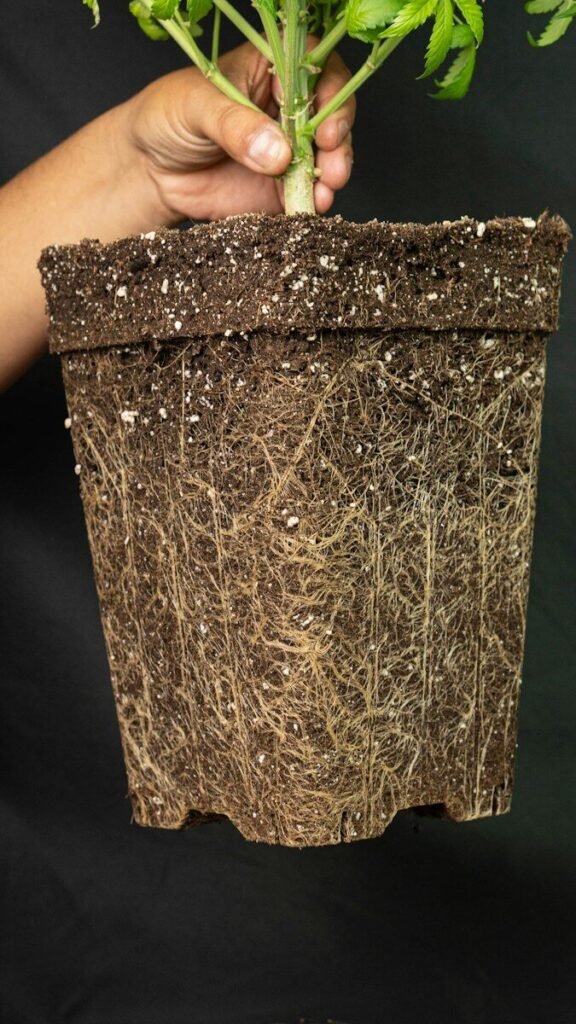
Slide the plant out of its pot to confirm. Healthy roots are white, cream, or light tan, firm, and may smell faintly earthy. Rotted roots are:
- Brown, gray, or black instead of white.
- Mushy or slimy to the touch — the outer sheath may slide right off, leaving a thin string.
- Foul-smelling, like decay or sewage.
- Brittle and breaking apart easily.
If you’re unsure whether you’re dealing with too much or too little water, our overwatered vs underwatered guide walks through the differences.
6 causes of root rot
1. Overwatering (the #1 cause)
Why it happens: Roots need oxygen as well as water. Soil that stays saturated squeezes out all the air, and suffocated roots die and decay. Most houseplants are killed by too much water, not too little.
Fix it: Water only when the top 1 to 2 inches of soil are dry (deeper for succulents). Always empty the saucer so the pot never sits in water.
2. No drainage holes
Why it happens: A pot without drainage traps every drop at the bottom, creating a permanent swamp around the lowest roots — rot starts there and spreads up.
Fix it: Repot into a container with drainage holes. If you love a decorative pot without holes, use it as a cachepot with the nursery pot inside, and empty it after watering.
3. Dense, compacted soil
Why it happens: Heavy garden soil or old, broken-down potting mix holds water like a sponge and contains no air pockets. Roots can’t breathe even between waterings.
Fix it: Repot in fresh, airy mix matched to the plant — add perlite, pumice, or orchid bark for drainage. Replace potting mix every 1 to 2 years before it compacts.
4. Oversized pot
Why it happens: A pot much larger than the root ball holds far more soil than the roots can drink, so the excess stays wet for weeks — prime rot conditions.
Fix it: Size up only 1 to 2 inches at a time. When treating rot, consider downsizing to match the surviving roots.
5. Contaminated tools or reused soil
Why it happens: The fungi behind root rot (like Pythium and Phytophthora) spread on dirty pruners and in reused potting mix, infecting healthy plants.
Fix it: Sterilize tools with rubbing alcohol or a 1:10 bleach solution between plants. Never reuse soil from a rotted plant — discard it.
6. Cold plus wet
Why it happens: Cold soil slows both evaporation and root function, so winter watering that was fine in summer suddenly waterlogs the plant.
Fix it: Cut watering frequency roughly in half in winter. Keep plants away from cold windows and never let tropicals sit in cold, wet soil.
How to treat root rot: step by step
- Unpot the plant. Gently slide it out and shake or rinse off the old soil so you can see the roots clearly.
- Trim the rot. With sterilized scissors, cut away all brown, black, mushy, or foul-smelling roots, cutting back into healthy white tissue. Also remove any yellow, mushy leaves.
- Disinfect. Rinse the remaining roots and soak for 5 minutes in a 1:10 hydrogen peroxide to water solution, then let them air-dry for an hour. Sterilize the pot too, or use a new one.
- Repot in fresh mix. Use new, fast-draining potting mix (never reuse the old soil). Choose a pot that fits the surviving roots — downsizing is fine.
- Water lightly, then wait. Water once to settle the soil, then hold off until the top inches dry out. Bright, indirect light and warmth speed recovery.
- Watch and be patient. Don’t fertilize for at least a month. New growth is your sign of success.
Root rot or just overwatered? Quick differential
| What you see | Likely situation | Instant check |
|---|---|---|
| Wilting in wet soil, yellow soft leaves | Root rot likely | Inspect roots for mush |
| Wilting in wet soil, roots white and firm | Overwatered but not yet rotted | Let soil dry fully |
| Wilting in dry soil, crispy leaves | Underwatered | Water thoroughly |
| Foul smell from soil | Active rot | Unpot immediately |
| Mushy stem base | Advanced rot | Check for firm tissue to save |
How long until it recovers
Recovery depends on how much healthy root survived. With prompt treatment and plenty of firm roots remaining, expect new growth within 4 to 6 weeks. Severely pruned plants may sit quiet for 2 to 3 months while they rebuild underground — don’t mistake slow for dead. Keep watering careful and light during this period; the smaller root system needs less water than before.
When to give up
Give up only when there is nothing firm left to save: all roots are mush, the stem base is black and soft through the center, and any rhizomes or bulbs are rotted. If even a small piece of firm root, rhizome, or stem tissue remains, it’s worth attempting a rescue — plants regrow from remarkably little. But if the rot has reached the crown and turned it to mush, it’s time to compost and start fresh.
Frequently asked questions
Can a plant recover from root rot?
Yes, if any healthy roots remain. Trim all the mushy, discolored roots, disinfect, and repot in fresh fast-draining mix. Plants with even a small amount of firm root tissue can regrow — it just takes patience, usually 4 to 8 weeks for new growth.
Should I water after treating root rot?
Water once lightly to settle the fresh soil around the roots, then wait until the top 1 to 2 inches dry out before watering again. The trimmed root system needs far less water than before, so err on the dry side while it recovers.
Does hydrogen peroxide help root rot?
A diluted soak (1 part 3% hydrogen peroxide to 10 parts water, 5 minutes) kills surface pathogens and oxygenates the roots. It’s a useful disinfecting step during treatment, but it can’t fix rot on its own — trimming away dead tissue is the essential part.
How do I prevent root rot?
Use pots with drainage holes, fast-draining mix, and pots sized to the root ball. Water only when the top inches of soil are dry, empty saucers, and cut back in winter. Sterilize tools between plants to stop fungal spread.
Is root rot contagious to other plants?
The fungi that cause it can spread through shared water runoff, dirty tools, and reused soil — but it won’t jump through the air. Isolate the affected plant, sterilize your tools, discard the old soil, and wash the pot before reuse.