
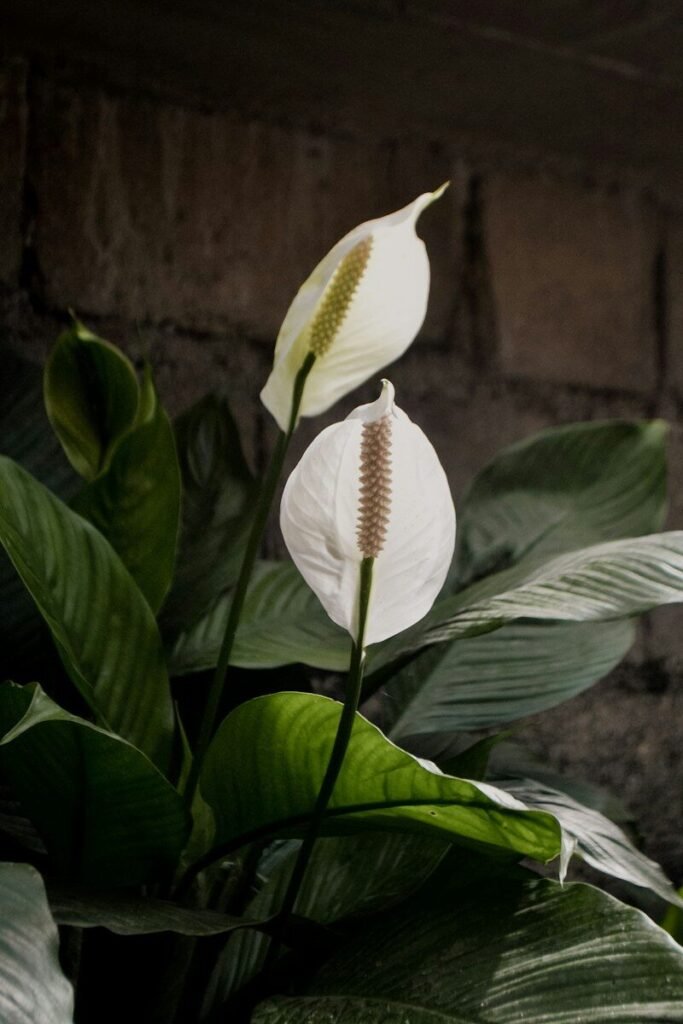
Quick diagnosis
Symptom: Your peace lily’s leaves have gone limp and floppy, sometimes almost overnight.
Most likely cause: Underwatering. Peace lilies are famously dramatic — drooping is how they tell you they’re thirsty.
Your 60-second first step: Push your finger 2 inches into the soil. Dry? Water thoroughly right now and watch it perk up within hours. Wet? Stop watering and check for root issues or cold drafts.
If you’ve ever walked into a room to find your peace lily collapsed in a heap, you know the panic. But here’s the secret experienced plant people know: a drooping peace lily is usually just being theatrical. These plants are the drama queens of the houseplant world — they droop spectacularly when thirsty and bounce back just as spectacularly after a drink. That said, drooping can signal other issues too. This guide explains why is my peace lily drooping, with six causes and the fix for each.
1. Underwatering (the classic peace lily drama)
Why it happens: Peace lilies have thin leaves that lose moisture quickly, and they signal thirst with dramatic drooping — often going from perky to collapsed in a single day. It’s their evolved alarm system, and it works.
How to confirm: The soil is dry 2 inches down, the pot feels light, and the drooping appeared relatively quickly. The leaves are limp but still green (not yellow or crispy).
Fix it:
- Water thoroughly until water drains from the bottom.
- Watch the magic — leaves usually perk up within 2 to 4 hours.
- Empty the saucer after draining.
- Start checking the soil every few days; don’t let it go bone-dry repeatedly.
2. Overwatering
Why it happens: A peace lily in soggy soil develops root rot, and damaged roots can’t deliver water — so the plant droops despite wet soil. This is the dangerous mimic of underwatering.
How to confirm: The soil feels wet days after watering, lower leaves are yellowing, and the plant does NOT perk up after watering. Compare with our overwatered vs underwatered guide to be certain.
Fix it:
- Stop watering and let the soil dry out.
- Ensure drainage holes are clear and the saucer is emptied.
- If it doesn’t improve in a week, check roots for rot and trim black mushy ones.
- Repot in fresh mix if the soil smells sour or stays soggy.
3. Low humidity
Why it happens: Peace lilies are rainforest plants. In dry indoor air — especially with winter heating — their broad leaves lose moisture faster than roots can supply it, causing drooping plus brown, crispy leaf tips.
How to confirm: Leaf tips and edges are browning, the air feels dry, and the plant sits near a heater or in an arid room. Soil moisture may be fine.
Fix it:
- Run a humidifier nearby or group plants together.
- A pebble tray with water under the pot adds local humidity.
- Trim brown tips with clean scissors — they won’t heal.
4. Too much light (or too little)
Why it happens: Peace lilies prefer medium, indirect light. Harsh direct sun scorches leaves and causes wilting, while deep shade weakens the plant over time and leads to floppy, pale growth.
How to confirm: For too much light: the plant sits in a sunny south/west window, leaves look bleached or have brown patches. For too little: it’s far from windows, growth is sparse and leggy.
Fix it:
- Move to bright, indirect light — an east or north window is ideal.
- Use a sheer curtain to filter harsh afternoon sun.
- Give it 2 to 3 weeks to produce stronger new leaves.
5. Temperature stress: cold drafts and heat
Why it happens: Peace lilies hate cold. A draft from a window, door, or AC vent — or a blast of hot dry air from a heater — causes rapid drooping and can yellow leaves.
How to confirm: Drooping started after a weather change or the plant sits near a drafty window, exterior door, AC vent, or radiator.
Fix it:
- Move away from drafts, vents, and heaters.
- Keep temperatures between 65 and 80°F (18–27°C).
- Remove badly damaged leaves; healthy new growth will follow.
6. Rootbound: needs repotting
Why it happens: Peace lilies grow fast and fill their pots with roots. A rootbound plant can’t absorb water properly — it droops even with regular watering because moisture runs straight through the dense root ball.
How to confirm: Roots are visible at drainage holes or on the soil surface, water runs through immediately when you water, and the plant dries out within a day or two.
Fix it:
- Repot into a container 2 inches wider with fresh potting mix.
- Water thoroughly after repotting.
- Expect brief transplant drooping for a few days, then strong recovery.
Peace lily drooping: quick differential
| What you see | Likely cause | Instant check |
|---|---|---|
| Sudden dramatic droop, dry soil, green leaves | Underwatering | Finger test; water and watch |
| Droop + yellow leaves, wet soil | Overwatering | Soil stays soggy for days |
| Droop + brown crispy tips | Low humidity | Near heater; dry air |
| Bleached patches on leaves | Too much sun | South/west window exposure |
| Droop after cold snap | Temperature stress | Drafts, doors, vents |
| Dries out within a day of watering | Rootbound | Roots circling the pot |
How long until it recovers
The classic thirsty peace lily is the fastest recovery in houseplants: expect visibly perkier leaves within 2 to 4 hours of watering, and full recovery by the next day. For overwatering, humidity, or light issues, expect recovery in 1 to 3 weeks once corrected. After repotting, allow 1 to 2 weeks for roots to settle. Brown tips won’t heal — trim them — but new leaves will emerge healthy.
When to give up
Peace lilies are nearly indestructible, so this section is short. Only compost if the crown (where leaves emerge) is black and mushy, all roots are rotted, and no firm tissue remains. If even a small firm rhizome section survives, it can regrow. A peace lily that looks dead above soil often surprises people by sprouting again — give it a few weeks before you decide.
Frequently asked questions
Why is my peace lily drooping even after I water it?
If watering doesn’t fix the droop within a few hours, the problem isn’t thirst. Check for overwatering (soggy soil, yellow leaves), root rot, or environmental stress like cold drafts. An overwatered peace lily droops exactly like a thirsty one but won’t perk up after watering.
How quickly should a peace lily perk up after watering?
A thirsty peace lily typically shows visible improvement within 2 to 4 hours of a thorough watering, and looks fully recovered by the next morning. If there’s no improvement after 24 hours, investigate other causes like root rot or temperature stress.
Should I cut off drooping peace lily leaves?
Not if they’re still green — drooping leaves usually recover once you fix the cause. Only remove leaves that are fully yellow, brown and crispy, or mushy. Cutting healthy-but-droopy leaves removes the plant’s ability to photosynthesize and recover.
Do peace lilies like to be misted?
Peace lilies appreciate humidity, but misting only raises it for minutes. A humidifier or pebble tray is far more effective for the brown crispy tips caused by dry air. Misting won’t fix drooping caused by watering issues.
Why are my peace lily leaves turning yellow and drooping?
Yellow plus drooping usually means overwatering and possible root rot — the roots are damaged and can’t support the leaves. Let the soil dry out, check drainage, and inspect the roots if it doesn’t improve within a week.