
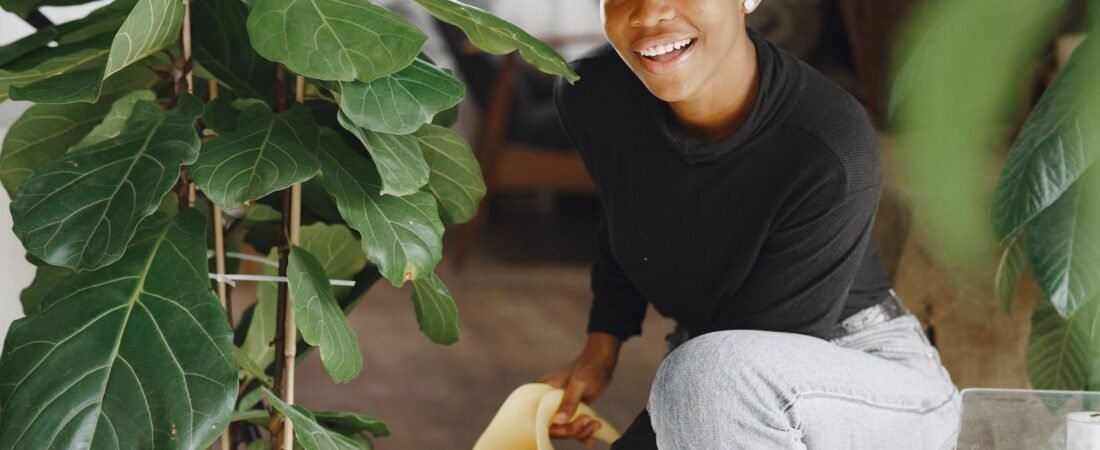
Quick answer: Water your fiddle leaf fig every 7–10 days in spring and summer, and every 2–3 weeks in winter — but only when the top 2 inches of soil feel dry. Never water on a calendar: check the soil first, then soak it thoroughly until water runs from the drainage holes and empty the saucer. A fiddle leaf fig would much rather be slightly thirsty than sitting in wet soil.
A fiddle leaf fig is famous for dropping leaves over a watering mistake, and most of those mistakes come from watering on a schedule instead of checking the soil. The plant does not care what day of the week it is. It cares whether its roots are wet or dry — and the only reliable way to know is to check before you water.
If your fig is already dropping leaves or showing spots, the watering is usually the first thing to check. Our guide to overwatered vs underwatered plants walks through the same checks in more detail, and if leaves are falling, start with why your fiddle leaf fig is dropping leaves.
The Short Answer: 7–10 Days in Summer, 2–3 Weeks in Winter
For a fiddle leaf fig in a bright room, the rhythm most care guides agree on looks like this: every 7–10 days in spring and summer, every 10–14 days in fall, and every 14–21 days in winter. Those numbers are a starting point, not a schedule. A fig in a sunny window in July may need water every week; the same plant in a dim corner in January may go three weeks between drinks.
The reason the gap matters so much is that fiddle leaf figs are unusually sensitive to wet roots. North Carolina Extension describes Ficus lyrata as sensitive to overwatering, and notes that leaf drop can follow from too much or too little water. Overwatering is the more common killer: soggy soil starves the roots of oxygen, root rot sets in, and the plant drops leaves from the bottom up. Underwatering is far more forgiving — a thirsty fig droops and crisps at the edges, but it usually recovers once it gets a proper drink.
The Soil-Check Rule: Check First, Water Second
Here is the whole rule: before you water, check the soil. If the top 2 inches are dry, water. If they are damp or cool, wait. Check again in two days. That one habit prevents almost every watering problem a fiddle leaf fig can have.
- The finger test (best for most people). Push your index finger into the soil up to the second knuckle, about 2 inches deep. If it feels dry all the way down, water. If it feels damp or cool, wait two days and check again.
- The wooden skewer test. Push a plain wooden chopstick or skewer into the soil and leave it for a minute. If it comes out damp or dark, the soil is still wet. If it comes out dry and clean, it is time to water. This works well for big pots where a finger cannot reach deep enough.
- A moisture meter. Push the probe halfway into the root zone and read the dial. Water when it reads in the dry zone. Meters are the most reliable option for beginners, but check the reading against the finger test for the first few weeks — cheap meters can be off.
- Lift the pot. A freshly watered pot is noticeably heavy; a dry one is light. Lift your fig right after watering so you learn the heavy weight, then lift it before each check. Once the weight difference clicks, you can judge the soil in two seconds.
When in doubt, wait. A fiddle leaf fig can handle a few extra dry days far better than a few extra wet ones. If the top 2 inches are dry but the deeper soil still feels damp on the skewer, wait another day or two — the roots at the bottom of the pot are the ones that rot first.
How to Water a Fiddle Leaf Fig in 5 Steps
How you water matters as much as when. A deep, thorough soak followed by a real dry-down is what this plant wants — not a little sip every few days.
- Use room-temperature water. Fill your watering can and let it sit for a few hours, or overnight. Cold water straight from the tap can shock the roots and is linked to the brown spots fiddle leaf figs are famous for.
- Water slowly over the whole soil surface. Pour in a slow circle so the water soaks in evenly instead of running down the gap between the soil and the pot. If the soil is very dry, water in two rounds a few minutes apart so the mix actually absorbs it.
- Soak until water runs from the drainage holes. Keep pouring until a steady stream comes out of the bottom. That tells you the whole root ball got wet, not just the top layer.
- Let it drain, then empty the saucer. Give the pot 15–30 minutes to drain, then tip out any water left in the saucer or cache pot. Never let a fiddle leaf fig sit in standing water — that is the fastest route to root rot.
- Water the soil, not the leaves. Wet leaves do nothing for the plant and can invite fungal problems. Wipe the big leaves with a damp cloth once a month instead — it keeps them glossy and helps them catch light.
Seasonal Watering Rhythm
Your fig drinks at the speed it grows, and growth follows the light. Use this table as a starting point, then let the soil check override it every time.
| Season | How often | How dry before watering | Notes |
|---|---|---|---|
| Spring (March–May) | Every 7–10 days | Top 2 inches dry | Growth restarts; check more often as days lengthen |
| Summer (June–August) | Every 7–10 days | Top 2 inches dry | In a heat wave, check every 3–4 days; bright rooms dry fastest |
| Fall (September–November) | Every 10–14 days | Top 2 inches dry | Slow down as light fades; bring outdoor figs in before the first cold nights |
| Winter (December–February) | Every 14–21 days | Top 2–3 inches dry | Growth nearly stops; heating dries the air, not the soil — do not water more to compensate |
Winter is where most people go wrong. The air feels dry because the heating is on, so it is tempting to water more — but the soil is drying slowly because the plant is barely growing. If you water a fiddle leaf fig on a summer schedule in January, the roots sit wet for weeks. Our guide to watering houseplants in winter covers the same trap across all your plants.
5 Things That Change How Often You Water
Two fiddle leaf figs in the same house can need water a week apart. These five factors decide which side of the range yours falls on.
- Light. This is the biggest factor. A fig in bright indirect light near a large window drinks far faster than one in a medium-light corner. If you move your plant to a brighter spot, expect to water more often — and check our guide to how much light a fiddle leaf fig needs before you move it.
- Pot size and material. Terracotta pots breathe and dry out noticeably faster than plastic or glazed ceramic. A small pot dries faster than a large one, and a pot that is too big for the root ball stays wet the longest — one reason to size up only 2 inches at a time when repotting.
- Soil mix. A light, chunky mix with perlite and bark drains fast and needs water more often; dense, peaty potting soil holds water for days longer. If your soil stays wet for more than a week after watering, the mix — not your schedule — is the problem.
- Temperature and humidity. Warm rooms and dry air pull water out of the soil faster. Fiddle leaf figs prefer temperatures above 55°F and medium humidity; in a hot, dry room you will water more often, but the fix for dry air is humidity, not extra water — see how to increase humidity for houseplants.
- Plant size and age. A tall, 6-foot tree with a big canopy drinks far more than a young plant in a 6-inch pot. New leaves and active growth also use more water, so a fig pushing out new growth in spring will need checking twice as often as a dormant one.
Too Much or Too Little? How to Tell
Fiddle leaf figs show overwatering and underwatering differently, and the treatment is the opposite — so read the symptoms before you reach for the watering can. If you are not sure which one you have, our overwatered vs underwatered guide compares the two side by side.
| Symptom | Too much water | Too little water |
|---|---|---|
| Leaves dropping | Lower leaves turn yellow, feel soft and limp, then drop | Leaves turn brown and crispy at the edges, then drop |
| Brown spots | Dark brown spots in the center of the leaf, often spreading | Dry, crispy brown edges and tips |
| Soil | Stays wet for a week or more; may smell sour or musty | Pulls away from the pot edges; water runs straight through |
| Roots (if you check) | Dark, mushy, foul-smelling — root rot | Dry, brittle, shriveled |
| New growth | New leaves emerge small, dark-spotted, or drop quickly | New leaves are small and slow to unfurl |
Dark brown spots in the middle of the leaf are the classic overwatering sign on a fig — our guide to brown spots on fiddle leaf fig leaves covers all nine causes. If the roots are dark and mushy, stop watering and follow our root rot treatment before the rot climbs the trunk.
5 Watering Mistakes That Hurt Fiddle Leaf Figs
- Watering on a fixed schedule. “Every Sunday” ignores the season, the weather, and the plant. The soil check takes ten seconds and replaces the calendar entirely.
- Little sips instead of a soak. A splash every few days wets only the top inch, so the deep roots stay dry while the surface stays damp. The result looks like underwatering and overwatering at the same time. Water thoroughly, then let it dry.
- Leaving water in the saucer. A fig sitting in a puddle is a fig with drowning roots. Always empty the saucer within 30 minutes of watering — this one step prevents more root rot than any other habit.
- Cold water straight from the tap. Cold water can shock the roots and is linked to brown spots and sudden leaf drop on fiddle leaf figs. Let the water reach room temperature first, and leave tap water out overnight if your water is heavily chlorinated.
- Watering right after repotting. Repotting tears fine roots, and watering straight into damaged tissue invites rot. Wait 5–7 days after repotting before the first watering, then resume the soil-check routine.
Special Cases
A new plant just brought home. Do not water it on arrival out of habit. Check the soil first — shop plants are often soaked. Let it settle in its bright spot for a week or two before you change anything, and expect a few lower leaves to drop from the move alone.
Going on vacation. Water thoroughly the day you leave and move the plant a step back from the window so it dries more slowly. A healthy fig is fine for 1–2 weeks without water; a self-watering spike or a trusted friend is the safer option for longer trips.
A pot with no drainage hole. Fix this before anything else — a fiddle leaf fig cannot live long in a pot that cannot drain. Repot into a container with drainage holes, or use the decorative pot as a cache pot with a nursery pot inside that you lift out to water and drain.
Hydrophobic soil that repels water. If water runs straight down the sides and out the bottom while the soil stays dry, the mix has gone hydrophobic. Set the pot in a basin of room-temperature water for 20–30 minutes so the soil rehydrates from below, then let it drain fully. If it happens again, it is time to repot into fresh mix.
Related Rescues
- Why Is My Fiddle Leaf Fig Dropping Leaves? — the 9 causes, with watering at the top of the list
- Brown Spots on Fiddle Leaf Fig Leaves: 9 Causes & Fixes — match the spot to the cause
- How to Save an Overwatered Plant — the 7-step rescue if you watered too much
-
How often should I water my fiddle leaf fig?
Water your fiddle leaf fig every 7–10 days in spring and summer and every 2–3 weeks in winter — but only when the top 2 inches of soil feel dry. The soil check matters more than the calendar: a fig in bright light may need water weekly, while one in a dim room in winter may go three weeks between waterings.
-
How do I know if my fiddle leaf fig needs water?
Push your finger 2 inches into the soil. If it feels dry all the way down, water. If it feels damp or cool, wait two days and check again. A wooden skewer, a moisture meter, or simply lifting the pot to feel its weight all work the same way — the point is to check the soil before you water, every time.
-
Should I water my fiddle leaf fig from the top or bottom?
Top watering is fine and is what most growers do: pour slowly over the soil surface until water runs from the drainage holes, then empty the saucer. Bottom watering works too and is useful for hydrophobic soil, but water from the top every few waterings to flush out fertilizer salts that collect in the mix.
-
Can I use tap water on my fiddle leaf fig?
Yes, as long as it is room temperature. Cold water straight from the tap can shock the roots and is linked to brown spots and leaf drop on fiddle leaf figs. Fill your watering can a few hours ahead, or leave it out overnight. If your tap water is very hard, flush the pot with a long soak every few months to wash out salt buildup.
-
How often should I water a fiddle leaf fig in winter?
Every 2–3 weeks, and only when the top 2–3 inches of soil are dry. Growth nearly stops in winter, so the soil dries much more slowly even though the heated air feels dry. Watering on a summer schedule in winter is the most common cause of root rot on fiddle leaf figs.