
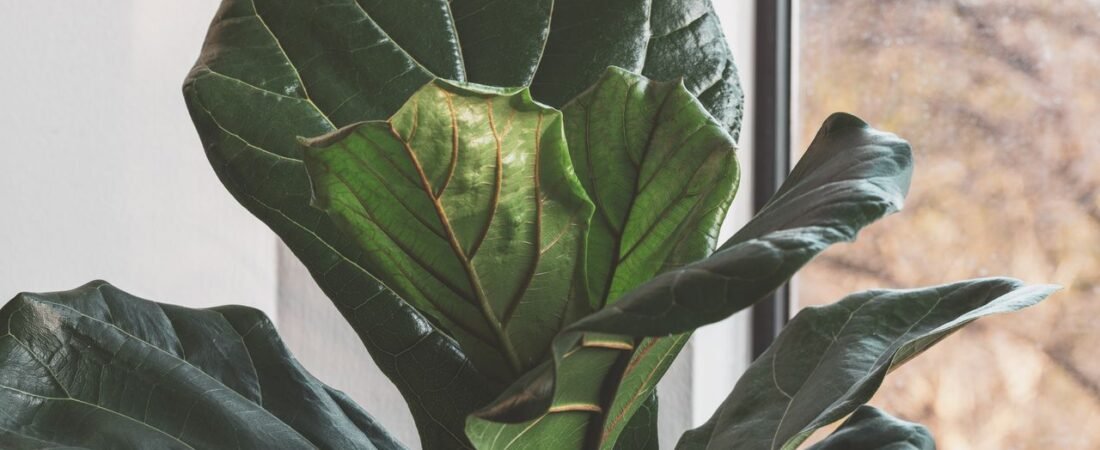
Quick answer: Brown spots on fiddle leaf fig leaves are usually a watering problem. Dark, soft spots spreading from the center of the leaf mean too much water (or root rot), while dry, crispy brown edges mean too little water or dry air. Pale, bleached patches on the window-facing side mean sunburn. Match the spot to the table below, then fix the cause — the spotted leaves won’t heal, but new growth should come in clean.
A fiddle leaf fig with brown spots is worrying, but the spots are actually good news in disguise: they are a readable symptom. Where a spot sits, what it feels like, and what your soil is doing will tell you the cause in about a minute — and most causes are fixable without losing the plant.
Before you do anything, it helps to know whether your plant is drowning or thirsty. Our guide to overwatered vs underwatered plants walks through the same checks in more detail, and if your fig is also dropping leaves, start with why your fiddle leaf fig is dropping leaves.
The 60-Second Diagnosis: Read the Spots First
Grab the plant and check three things before you read the causes below. The combination will usually point straight at the answer.
- Where are the spots? Center of the leaf, edges and tips, upper window-facing leaves, or new leaves only?
- What do they feel like? Soft and dark, dry and crispy, pale and papery, or raised and bumpy?
- How wet is the soil? Push a finger 2 to 3 inches down. Soggy, bone dry, or just right?
Now match what you found to this table.
| What the spots look like | Most likely cause | The test that confirms it |
|---|---|---|
| Dark brown or black spots starting at the center or along the middle vein, often with a yellow halo | Overwatering / root rot | Soil stays wet for days; roots are brown and mushy instead of white and firm |
| Dry, crispy brown edges and tips | Underwatering or low humidity | Top 2 to 3 inches of soil are bone dry, or the air is dry even though the soil is moist |
| Pale tan or bleached patches on the window-facing leaves | Sunburn | Spots appeared within days of moving the plant into direct sun |
| Small reddish-brown raised bumps, mostly on new leaves | Edema | Bumps feel corky and raised; watering has been irregular — drought, then a flood |
| Irregular spots that spread fast, with yellow or water-soaked halos | Bacterial or fungal leaf spot | New spots appear on other leaves within days |
| Large irregular brown patches that appeared almost overnight | Cold draft or vent blast | The plant sits near a cold window, an exterior door, or a heating or AC vent |
| Brown tips plus a white crust on the soil surface | Fertilizer burn / salt buildup | You fertilized dry soil, or the pot hasn’t been flushed in months |
| Tiny pale stippling, fine webbing, or silvery streaks | Pests | Check the leaf undersides with a flashlight — mites, scale, or thrips will be there |
1. Overwatering and Root Rot
This is the most common cause, and the most serious. Fiddle leaf figs are sensitive to overwatering: roots sitting in wet soil suffocate and develop root rot, and stop delivering water to the leaves. The cruel part is that a rotting plant can look thirsty — drooping, spotted leaves — while its roots are drowning.
How to confirm it: The soil is still wet 2 inches down several days after watering. The spots are dark brown or black, start at the center of the leaf or along the central vein, and often have a yellow halo. Leaves may drop even though they still look green. The soil may smell sour. If you slide the plant out of its pot, healthy roots are white or tan and firm; rotted roots are brown or black, mushy, and slimy.
How to fix it:
- Stop watering and let the top half of the soil dry out.
- Slide the plant out of its pot and inspect the roots. Trim mushy brown or black roots with sterilized shears and keep the firm white or tan ones.
- Repot in fresh, well-draining mix in a pot with drainage holes. Our step-by-step guide to saving an overwatered plant walks through the whole rescue, and root rot signs and treatment covers the root check in detail.
- From now on, water only when the top 2 to 3 inches of soil are dry, and empty the saucer about 15 minutes after watering so the roots never sit in water.
- Remove the worst-affected leaves if more than half of a leaf is brown — see the cut-or-keep rules below.
2. Underwatering
When a fiddle leaf fig goes thirsty, the leaf margins dry out first, because they are the farthest point from the central vein. The result is brown, crispy edges and tips on otherwise healthy-looking leaves, sometimes with drooping and a few dropped lower leaves.
How to confirm it: The top 2 to 3 inches of soil are bone dry, and the soil may have shrunk away from the edges of the pot. The brown areas feel dry and papery, not soft. The plant perks up noticeably within hours of a good watering.
How to fix it:
- Water deeply until it runs freely from the drainage holes. If the soil has gone hydrophobic and water runs straight through, set the pot in a basin of water for 20 to 30 minutes so the root ball can soak it up.
- Empty the saucer so the roots don’t sit in water.
- Check the soil every few days with your finger — water when the top 2 to 3 inches are dry, not on a fixed calendar day. If you’re unsure whether the problem is too much or too little water, our overwatered vs underwatered guide has a side-by-side comparison.
- You can trim fully dead, crispy edges for looks, but cut only the brown part — never cut into green tissue, or the edge will just brown again.
3. Sunburn
A fiddle leaf fig that has lived in moderate light and is suddenly moved into direct sun will scorch. North Carolina Extension notes that leaf scorch can occur when the plant gets too much direct sunlight, and that it needs protection from the afternoon sun.
How to confirm it: The spots are pale tan or bleached, almost papery, on the upper leaves facing the window. They appeared within a few days of moving the plant, rotating it toward the sun, or a seasonal change in sun angle. The leaves are otherwise firm, and the soil moisture is normal.
How to fix it:
- Move the plant back a few feet from the window, or hang a sheer curtain to soften the light.
- An east-facing window is ideal — gentle morning sun, no harsh afternoon blast. Our guide to how much light a fiddle leaf fig needs covers window directions in detail.
- If you want the plant closer to the light, acclimate it gradually over 2 to 3 weeks, moving it a little closer every few days.
- Sunburned patches won’t heal, but leave the leaf if it is mostly green — it is still feeding the plant.
4. Edema: The Reddish-Brown Freckles on New Leaves
Edema looks alarming — small reddish-brown raised bumps scattered across new leaves — but it is one of the least dangerous causes on this list. It happens when the roots take up water faster than the leaves can release it, usually after a dry spell followed by a heavy watering. The leaf cells swell and burst, leaving corky little bumps behind.
How to confirm it: The bumps are raised and corky to the touch, and they show up mostly on young, still-growing leaves. The plant otherwise looks healthy, and your watering has been irregular — long dry stretches, then a big soak.
How to fix it:
- Water consistently: the same amount, when the top 2 to 3 inches of soil are dry — no more feast-or-famine cycles.
- Water in the morning, so the plant can transpire through the day instead of sitting full overnight.
- Improve air circulation around the plant — a little airflow helps leaves release moisture.
- New leaves should come in clean once watering steadies. The old bumps stay, but they don’t spread and they don’t mean the plant is sick.
5. Bacterial or Fungal Leaf Spot
When spots spread fast, suspect infection. Bacterial leaf spot (often caused by Xanthomonas) and fungal infections thrive on wet leaves and still air. Unlike sunburn or underwatering, this one moves — new spots appear on other leaves within days.
How to confirm it: Irregular spots with yellow or water-soaked halos that keep spreading, even though your watering and light haven’t changed. The spots may feel soft or wet. Water sitting on the leaves — from misting or overhead watering — makes it worse.
How to fix it:
- Isolate the plant from your other houseplants right away.
- Remove affected leaves with sterilized shears — wipe the blades with rubbing alcohol between cuts — and bin the leaves. Don’t compost them.
- Keep water off the foliage from now on: water the soil only, and stop misting. Misting leaves water on the leaves and invites exactly this problem — see should you mist your houseplants.
- Improve airflow and space your plants further apart so leaves dry quickly.
- If spots keep appearing on new leaves after two weeks of this, the infection is established — remove more aggressively, or consider discarding the plant before it infects your collection.
6. Cold Drafts and Temperature Swings
Fiddle leaf figs are tropical trees, and they hate sudden cold. North Carolina Extension notes that brown spots can follow temperature fluctuations from heating or cooling vents, and that the plant performs best above 55°F. A cold window, an exterior door that opens all day, or a vent blowing directly on the leaves can all leave large brown patches almost overnight.
How to confirm it: Large, irregular brown patches appeared suddenly after a cold snap, a move near a door or drafty window, or a heating or AC vent aimed at the plant. The spots are usually worst on the side facing the cold source.
How to fix it:
- Move the plant away from cold windows, exterior doors, and heating or AC vents.
- Keep the room above 55°F — 65 to 75°F is ideal.
- Don’t move the plant outdoors until nights stay reliably warm.
- Damaged leaves won’t recover, but new growth should come in clean once the plant is out of the draft.
7. Low Humidity
Dry air pulls moisture from leaf margins faster than the plant can replace it. Below about 40% relative humidity, edges crisp and brown even when the soil is perfectly moist — a classic winter problem once the heating comes on.
How to confirm it: Crispy brown edges on many leaves at once, soil moisture normal, and the heating running. A cheap hygrometer near the plant will usually read under 40%.
How to fix it:
- Group plants together or run a humidifier nearby, aiming for 40 to 60% humidity. Our guide to increasing humidity for houseplants ranks the five methods honestly.
- Don’t mist as a substitute — water sitting on leaves invites bacterial and fungal spot (see cause 5 above).
- Keep the plant away from radiators and heat vents, which dry the air around it even further.
- A pebble tray helps a little; a humidifier helps a lot.
8. Fertilizer Burn and Salt Buildup
This is the cause most articles miss. Fertilizing dry soil burns the roots, and months of feeding without flushing lets mineral salts accumulate in the pot. Both show up as brown, crispy leaf tips and edges — often on a plant that is otherwise well watered.
How to confirm it: Brown tips appeared after a recent feeding, or there is a white crust on the soil surface or around the pot rim. The plant may have been fed through the winter, when it wasn’t actively growing.
How to fix it:
- Flush the soil: water thoroughly until several cups drain from the bottom, let it drain fully, then repeat once.
- Stop fertilizing until you see healthy new growth.
- When you resume, fertilize only moist soil and only while the plant is actively growing in spring and summer. See how often to fertilize houseplants for the simple schedule.
- Scrape off the white salt crust and replace the top inch of soil with fresh mix.
9. Pests: Spider Mites, Scale, and Thrips
Sap-feeding pests damage leaf cells one bite at a time, and the damage shows up as spots, stippling, and streaks. Fiddle leaf figs are not especially pest-prone, but spider mites love the dry air of a heated home in winter, and scale and thrips hitchhike in on new plants.
How to confirm it: Spider mites leave fine webbing and pale stippling, mostly on leaf undersides. Scale looks like small brown bumps that scrape off with a fingernail. Thrips leave silvery-brown streaks and tiny black specks (their droppings). Check the undersides with a flashlight — that is where they hide.
How to fix it:
- Isolate the plant so the pests can’t spread to your collection.
- Rinse the leaves with a strong spray of water, top and bottom — this knocks off a surprising number of mites and thrips.
- Wipe the leaves with insecticidal soap or neem oil, repeating every 5 to 7 days for 3 to 4 weeks to catch each new generation. Our neem oil guide shows how to use it without burning the leaves.
- Check neighboring plants — these pests spread fast. For the full treatment plans, see getting rid of spider mites, getting rid of thrips, and sticky leaves, which covers scale and the honeydew it leaves behind.
The One Cause That’s Normal: Aging Leaves
Not every brown spot is a problem. One or two of the lowest, oldest leaves yellowing and then browning and dropping each year is normal — the plant is shedding leaves it no longer needs. If it’s only the oldest leaves and the rest of the plant is growing well, do nothing.
One more thing that looks like a problem but isn’t: tiny raised white dots on the leaves that don’t wipe off. Those are normal ficus leaf cells, not pests or disease. Leave them alone.
Should I Cut Off the Spotted Leaves?
The advice out there conflicts — some guides say cut every damaged leaf, others say leave them all. Both are half right, so here is the rule that settles it:
- Keep a leaf if less than half of it is brown. It is still photosynthesizing and feeding the plant, and a struggling fig needs every leaf it can keep.
- Remove a leaf if more than half of it is brown. It is costing the plant more than it gives back.
- Always remove leaves with bacterial or fungal spot, even small ones, so the infection can’t spread.
- Cut with sterilized shears, close to the stem. Don’t tear leaves off — torn wounds invite infection.
- Never strip a struggling plant bare. If it has few leaves left, keep all but the infected ones.
How Long Until It Recovers?
Spotted leaves never heal — the brown areas are dead cells. Judge recovery by new growth: if new leaves emerge clean and no new spots appear, the fix worked. Here’s roughly what to expect for each cause.
| Cause | What to watch | When new growth should look clean |
|---|---|---|
| Overwatering / root rot | New leaves emerge clean; no more leaves drop | 4 to 6 weeks after repotting |
| Underwatering | Leaves perk up within days; edges stop crisping | 1 to 2 weeks |
| Sunburn | No new bleached patches appear | Immediately once moved; new leaves clean |
| Edema | New leaves come in without bumps | 2 to 4 weeks of steady watering |
| Bacterial / fungal spot | No new spots appear on other leaves | 2 to 3 weeks after removing infected leaves |
| Cold draft | No new patches appear | Immediately once moved |
| Low humidity | Edges stop crisping | 1 to 2 weeks with a humidifier running |
| Fertilizer burn | No new brown tips appear | 2 to 3 weeks after flushing the soil |
| Pests | No new stippling, webbing, or streaks | 3 to 4 weeks of treatment |
If nothing has improved after two months of correct care, re-check the diagnosis — the real cause may be a different one on this list, or two causes at once. Overwatering plus a cold draft, for example, is a common combination.
When to Give Up on a Fiddle Leaf Fig
Most spotted figs recover. Give up only when the plant itself is gone:
- All the leaves have dropped and the stem is soft, dark, and mushy at the base — rot has reached the stem, and there is nothing left to save.
- No new growth after 2 to 3 months of correct care, and the stem is shriveled and dry throughout.
- Bacterial spot keeps spreading to new leaves despite isolation, leaf removal, and dry foliage.
Before you compost it, do the scratch test: scrape a tiny bit of bark on the stem with your fingernail. Green underneath means the plant is still alive. A bare stem that is still firm and green under the bark can resprout — cut it back to healthy wood, keep it in bright indirect light, water sparingly, and give it a few more weeks.
How to Prevent Brown Spots
- Water by soil check, not by calendar. Water only when the top 2 to 3 inches are dry, water deeply until it drains, and empty the saucer after 15 minutes.
- Give it bright indirect light, 6 to 8 hours a day. An east-facing window is ideal; shield it from harsh afternoon sun.
- Keep it warm and draft-free. Above 55°F, away from cold windows, doors, and heating or AC vents.
- Keep humidity at 40 to 60% with a humidifier — don’t mist the leaves.
- Feed lightly, only on moist soil, only in the growing season. Flush the pot a few times a year to clear salt buildup.
- Quarantine new plants for 2 to 4 weeks and check leaf undersides monthly, so pests never get a foothold.
- Water the soil, not the leaves. Wet foliage is an open invitation to bacterial and fungal spot.
Related Rescues
- Why Is My Fiddle Leaf Fig Dropping Leaves? 9 Causes & Fixes
- How Much Light Does a Fiddle Leaf Fig Need?
- How to Save an Overwatered Plant: 7 Rescue Steps That Actually Work
-
Will brown spots on fiddle leaf fig leaves go away?
No. Spotted leaf tissue never turns green again, because the brown areas are dead cells. Don’t wait for the spots to fade. Judge recovery by new growth instead: if new leaves emerge clean and no new spots appear, the fix worked.
-
Should I cut off leaves with brown spots?
Keep any leaf that is less than half brown, because it is still photosynthesizing and feeding the plant. Remove leaves that are more than half brown, and always remove leaves with bacterial or fungal spot, using sterilized shears, so the infection can’t spread. Never strip a struggling plant bare.
-
What causes brown spots in the middle of fiddle leaf fig leaves?
Dark spots starting in the center of the leaf or along the middle vein, often with a yellow halo, usually mean overwatering or root rot, so check whether the soil stays wet for days. The same look can also come from bacterial leaf spot, which spreads to new leaves within days, or edema, which shows as small raised reddish-brown bumps on new leaves.
-
Can sunburn cause brown spots on a fiddle leaf fig?
Yes. Sunburn shows as pale tan or bleached patches on the upper leaves facing the window, usually appearing within a few days of moving the plant into direct sun. Move it back a few feet or behind a sheer curtain, and acclimate it gradually over two to three weeks if you want it closer to the light.
-
How often should I water a fiddle leaf fig to prevent brown spots?
Water only when the top 2 to 3 inches of soil feel dry, roughly every 7 to 10 days in summer and every 10 to 14 days in winter, depending on light and pot size. Water deeply until it drains from the bottom, then empty the saucer after about 15 minutes so the roots never sit in water.