
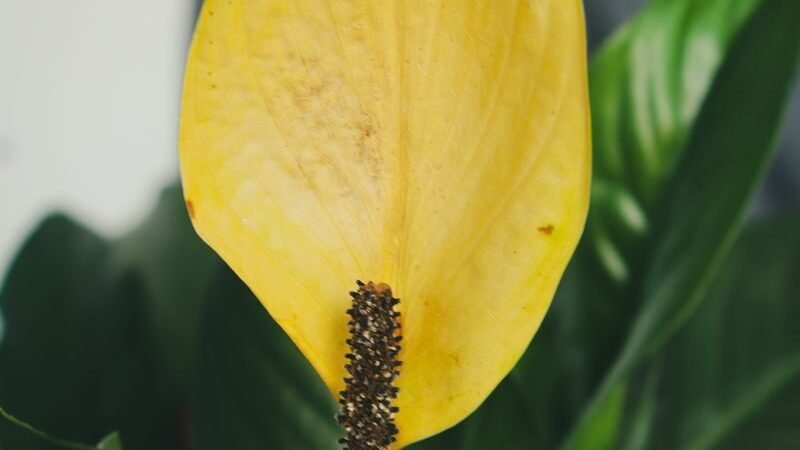
A peace lily can look perfectly glossy one week and start tossing out yellow leaves the next. The good news is that yellowing is usually a care clue, not a death sentence. The trick is separating normal lower-leaf ageing from stress yellowing — and once you know which one you are looking at, the fix is usually simple.
Peace lilies are famously dramatic about water, but they are also forgiving. A yellow leaf is your plant’s way of saying something in its routine needs adjusting: too much water, too little, the wrong light, a cold draught, salty soil, or a pest you have not spotted yet. This guide walks you through all nine causes, how to confirm each one in under a minute, and exactly what to do next.
If your plant is drooping as well as yellowing, start with our peace lily drooping guide — droop plus yellow usually points to a watering or root problem. And if you are not sure whether you are overwatering or underwatering, our overwatered vs underwatered guide settles it with a side-by-side comparison.
Quick diagnosis: One or two of the oldest, lowest leaves turning yellow while the rest of the plant stays glossy green is usually normal ageing — snip the leaf off and carry on. Several leaves yellowing at once, or yellowing on new growth, means something in water, light, temperature, or roots needs fixing. Run the 60-second triage below to find out which.
The 60-second triage: normal ageing or a real problem?
Before you change anything, run these four checks. They take a minute and they point straight at the cause.
- Count the yellow leaves and look at where they sit. One or two of the oldest, lowest leaves, with the rest of the plant looking healthy, is usually normal turnover. Several leaves at once, or yellowing on the newest leaf, is a fault.
- Push a finger an inch into the soil. Soggy soil that stays wet for days points to overwatering. Bone-dry soil that has pulled away from the pot points to underwatering.
- Lift the pot. A heavy pot with wet soil means the roots are sitting in water. A very light pot means the plant is thirsty.
- Look at the newest leaf. If the newest growth is green and firm, the plant is coping and you have time. If the newest leaf is yellowing too, act now — the problem is reaching the growing point.
What the yellow pattern is telling you
Yellow leaves are not all the same. The pattern — where the yellow starts, what the leaf feels like, and what else is happening — narrows the cause down fast.
| Pattern you see | Likely cause | Jump to |
| One or two oldest, lowest leaves yellow, rest healthy | Normal ageing | Cause 1 |
| Several leaves yellow, soil stays wet, plant droops in damp soil | Overwatering | Cause 2 |
| Wilts even in wet soil, mushy base, sour smell | Root rot | Cause 3 |
| Yellow days after a dramatic wilt, crispy edges, dry soil | Underwatering / watering swings | Cause 4 |
| Faded yellow on the sun-facing side, tan papery patches | Too much direct sun | Cause 5 |
| Pale all over, stretched stems, few or no blooms | Too little light | Cause 6 |
| Sudden yellowing after a cold night or a move | Cold draughts / temperature swings | Cause 7 |
| Brown crispy tips first, then yellow; white crust on soil | Fertiliser burn / salt buildup | Cause 8 |
| Yellow speckles, webbing, sticky residue, or cottony tufts | Pests | Cause 9 |
Cause 1: Natural ageing (the good kind of yellow)
Peace lilies naturally retire their oldest leaves. If the plant is otherwise growing and perky, a little yellow at the bottom is completely normal — the plant is shedding a leaf it no longer needs and putting its energy into new growth.
How to confirm: Only one or two of the oldest, lowest leaves are yellowing at a time, roughly one leaf every month or two. The rest of the plant stays deep green, new leaves are emerging from the centre, and the yellow leaf fades gradually over one to three weeks before browning and drying.
Fix it:
- Wait until the leaf is mostly yellow, then snip it close to the base with clean scissors.
- Do not pull green leaves off — that steals energy the plant needs to recover.
- Carry on with your normal routine. No other change is needed.
A yellow leaf will never turn green again, whatever the cause. That is true of every cause in this guide — the goal is always to stop the yellowing from spreading and to protect the new growth.
Cause 2: Overwatering
Overwatering is the most common reason peace lily leaves turn yellow. Peace lilies like evenly moist soil, not constantly wet soil. When the mix stays saturated, roots cannot get enough oxygen, and the plant starts shedding leaves it can no longer support.
How to confirm: The soil stays wet for many days after watering. Leaves yellow and feel soft and limp rather than crisp. The plant may droop even though the soil is damp. You might notice a musty smell, fungus gnats, or blackened leaf stems near the base.
Fix it:
- Stop watering. Let the top inch or two of soil dry out and the pot lighten before you water again.
- Empty the saucer. Never let the pot sit in standing water after watering.
- Check the pot. It needs a drainage hole. If it does not have one, repot into a pot that does.
- Move it into brighter indirect light. Brighter light helps the pot dry out more predictably.
- Reset your watering rhythm. In most homes, water when the top inch feels dry and the pot feels noticeably lighter, then water thoroughly until the excess drains out. In low light or cool rooms, that will be less often — in winter, considerably less.
- Learn the lift test. Get to know the weight of the pot when freshly watered versus when it is time to water again. It is more reliable than any calendar.
If your plant is drooping and the soil is wet, skip watering entirely and work through the steps above. Our guide to saving an overwatered plant walks through the full rescue, step by step.
Cause 3: Root rot
Root rot is what happens when overwatering goes on too long. The roots themselves start to decay, and once they are damaged the plant cannot move water and nutrients properly — which is why a rotted plant can wilt in wet soil and yellow at the same time.
How to confirm: The plant wilts even though the soil is wet. The base of the plant feels soft or mushy. The soil smells sour or rotten. If you slide the plant out of its pot, healthy roots are firm and pale; rotted roots are brown, mushy, and may smell bad.
Fix it:
- Unpot the plant and gently shake off the old mix.
- Trim away all soft, brown, mushy roots with clean scissors. Keep only firm, pale roots.
- Repot into fresh, airy mix — a houseplant mix with perlite and a little bark for drainage — in a pot with a drainage hole, only 1–2 inches wider than the root ball.
- Water lightly until new growth appears, then return to the normal top-inch-dry rhythm.
- Cut off the worst yellow leaves at the base so the plant can put its energy into the roots it has left.
Root rot caught early is very survivable — peace lilies regrow roots readily in spring and summer. For the full diagnosis and treatment, see our root rot signs and treatment guide.
Cause 4: Underwatering and watering swings
Peace lilies are dramatic when they are thirsty — they wilt theatrically, then perk up within hours of watering. That bounce-back is reassuring, but repeated wilting is stressful. The stress often shows up as yellow leaves a few days after the wilt, even though the plant looked fine again by the next morning.
How to confirm: The plant wilts dramatically, then perks up after watering. Leaves yellow soon after, sometimes with crispy edges. The soil pulls away from the edges of the pot, and water runs straight through when you water. The pot feels very light.
Fix it:
- Rehydrate fully. Water slowly until the mix is evenly moist all the way through.
- Bottom-water if the mix has gone hydrophobic. If water runs straight through, set the pot in a sink or bowl of room-temperature water for 20–30 minutes, then let it drain completely.
- Adjust your timing. Water when the top inch is dry and the pot feels lighter — not when the whole pot is dust-dry and the plant has already collapsed.
- Consider a repot if the mix has become hydrophobic or the plant is rootbound and drying out within days.
The real culprit is often the swing itself: soggy one week, bone-dry the next. Peace lilies want steady, even moisture. Our winter watering guide covers how that rhythm changes when growth slows and the days get shorter.
Cause 5: Too much direct sun
Peace lilies are low-light tolerant, not sun lovers. They come from the shaded floor of tropical rainforests, and direct sun bleaches the chlorophyll out of their leaves. North Carolina Extension notes that peace lilies prefer partial to deep shade and should not be placed in direct sun.
How to confirm: Yellowing is worse on the side facing the window. The colour looks faded or washed-out rather than speckled. In strong sun you may see tan, papery scorch patches, and the leaf feels thin.
Fix it:
- Move the plant to bright, indirect light — a few feet back from a south or west window, or near an east window.
- Use a sheer curtain if the only available spot is sunny.
- Rotate the pot weekly so growth stays even.
- Trim the scorched leaves at the base. Scorched tissue will not recover, but new leaves will come through green in the right light.
Cause 6: Too little light
Peace lilies tolerate low light better than most flowering houseplants, which is why they end up in dim corners. Tolerating it is not the same as thriving in it. In a very dim spot the plant cannot photosynthesise enough to maintain all its leaves, so it sheds the oldest ones first — and they yellow on the way out.
How to confirm: The leaves look pale all over rather than yellow in patches. Stems stretch long and leggy. Growth is slow, and the plant rarely blooms or stops blooming altogether. The pot also stays wet longer than it should, because the plant is barely drinking.
Fix it:
- Move the plant closer to bright, indirect light. A spot near a window with a sheer curtain is ideal.
- Move it gradually over a week or so if it has been in deep shade — a sudden jump into strong light can scorch leaves that are used to the dark.
- Water less while it is in low light, and check the top inch of soil before every watering, since a dim plant drinks slowly.
- Add a grow light in winter if your windows get very little daylight. Our grow light guide covers the five signs your houseplants need one.
Cause 7: Cold draughts and temperature swings
Peace lilies are tropical plants and they dislike the cold. A night beside a draughty window, a spot next to an exterior door, or a blast from a heating vent can shock the foliage into yellowing — sometimes within days of the exposure.
How to confirm: Yellowing appeared suddenly after a move, a cold snap, or the heating coming on. The leaves nearest a door, window, or vent are affected first. The rest of the plant may look fine.
Fix it:
- Keep the plant between 65 and 80°F (18–27°C) and never below 60°F (15°C). North Carolina Extension puts the ideal daytime range at 68–85°F, with no more than a 10-degree drop at night.
- Move it away from draughts — exterior doors, leaky windows, air-conditioning outlets, and heating vents.
- Keep it off cold windowsills in winter. The glass can be far colder than the room.
- Stabilise conditions and wait. Once the plant is warm and settled, new growth should come through green within a few weeks. Trim the yellowed leaves at the base.
Cause 8: Fertiliser burn, salt buildup, and hard tap water
Peace lilies are light feeders. Too much fertiliser, fertilising in winter when the plant is barely growing, or years of hard tap water can leave salts building up in the soil. The salts stress the roots, and the leaves yellow — often starting with brown, crispy tips.
How to confirm: Leaf tips turn brown and crispy first, then the leaves yellow. There is a whitish crust on the soil surface or around the pot rim. The yellowing started after a recent feeding, or the plant has not been repotted or flushed in a long time.
Fix it:
- Flush the soil. Run room-temperature water through the pot — roughly two to four times the pot’s volume — letting it drain fully. Do this in a sink or bathtub.
- Pause fertiliser for four to six weeks after flushing.
- Feed gently from now on: a balanced houseplant fertiliser at quarter to half strength, every four to six weeks, in spring and summer only. Skip autumn and winter entirely. Our fertilising guide has the full seasonal schedule.
- Switch water if yours is very hard. Try filtered, distilled, or rainwater. Letting tap water sit out overnight helps with chlorine, but it does not reliably remove chloramine or fluoride, and it does nothing about hardness — so flushing the pot every couple of months matters more than the water you start with.
- Repot into fresh mix if the soil is old and crusty, or if flushing does not help. Fresh mix resets the salt load completely.
Cause 9: Pests
Pest damage can look like yellowing because the insects drain chlorophyll where they feed. Peace lilies are most commonly bothered by spider mites, mealybugs, scale, and thrips — and a stressed, yellowing plant is worth checking closely, because pests are easy to miss until the damage is obvious.
How to confirm: Look at the undersides of the leaves and the joints where leaves meet stems. Spider mites leave fine webbing and dusty yellow speckling. Mealybugs look like tiny white cottony clusters. Scale appears as small brown bumps, sometimes with sticky residue on the leaves below. Thrips leave silvery streaks, distorted new leaves, and tiny black specks.
Fix it:
- Isolate the plant from your other houseplants straight away.
- Rinse thoroughly in the shower, focusing on leaf undersides.
- Treat with insecticidal soap or neem oil, covering stems and both sides of every leaf. Repeat every 7–10 days for three to four rounds — one treatment never catches the eggs.
- Dab mealybugs and scale directly with a cotton swab dipped in rubbing alcohol.
- Quarantine new plants for two weeks before they join the collection, so hitchhikers never get the chance.
For the full treatment plan for each pest, see our guides on spider mites, mealybugs, and using neem oil safely.
Other quick checks: rootbound pot, recent move, and low humidity
Rootbound pot. If water races straight through the pot, the plant wilts within a day or two of watering, or roots are circling the drainage holes, the plant has outgrown its pot. Repot into a container 1–2 inches wider with fresh, airy mix, keeping the crown at the same height. Our signs your plant needs repotting guide shows how to tell for sure.
Recent move or repot. After repotting or moving rooms, light, humidity, and watering patterns all change at once, and the plant can respond with a few yellow leaves within one to three weeks. Stabilise the light and watering, skip fertiliser for two to three weeks, trim the worst leaves, and wait for fresh growth — it usually sorts itself out.
Low humidity. Very dry indoor air is more often a brown-tips problem than a yellowing problem, but in a heated or air-conditioned room it adds to the stress. A pebble tray, grouping plants together, or a room humidifier helps. Our humidity guide ranks the five methods honestly — and our misting guide explains why misting is usually not the answer.
How long until your peace lily recovers?
Yellow leaves never turn green again — the plant has already emptied them. Recovery is measured in new growth, not in the old leaves. Here is what to expect once you have fixed the cause.
| When | What to expect |
| Days 1–3 | Yellowing stops spreading. The plant stops drooping. No new yellow leaves appear. |
| Week 1–2 | The plant looks stable. Existing yellow leaves stay yellow — trim them at the base once mostly yellow. |
| Weeks 2–4 | New leaves emerge from the centre, small and green. This is the real sign the fix worked. |
| Month 2–3 | New growth is full-sized and glossy. In spring and summer, a healthy plant may push out a white spathe. |
If no new yellow leaves have appeared after two weeks, you found the cause. If yellowing keeps spreading, work back through the triage — there may be a second problem, most often root rot hiding behind a watering fix.
When to give up
Most peace lilies come back. But there is a point where the honest answer is to start again, and it is better to know it than to keep nursing a plant that has nothing left to grow from.
- The crown and rhizome are mushy. If the base of the plant is soft and collapses when you press it, and the roots are all brown and mushy, there is no healthy tissue left to regrow from.
- Every leaf is yellow and the base smells rotten. A plant with no green leaves and a sour, rotting crown is done.
- Nothing has changed in two months. If you have fixed the water, light, and temperature, repotted into fresh mix, and there is still no sign of a new leaf after eight weeks in the growing season, the roots are gone.
Before you compost it, check whether part of the clump is still healthy. Peace lilies grow as a clump of separate crowns, and you can often divide a struggling plant, keep the firm green sections, and discard the rotted ones. A healthy division in fresh mix is a new plant, not a rescue — and it is the best outcome when only part of the clump has failed.
Prevention: the routine that keeps peace lily leaves green
- Water by feel, not by calendar. Water when the top inch is dry and the pot feels lighter, then water thoroughly until it drains. Empty the saucer every time.
- Give it bright, indirect light. Near a window with a sheer curtain is the sweet spot. Low light is tolerated, not preferred.
- Keep it warm and draught-free. 65–80°F, away from doors, windows, and vents.
- Feed lightly, in season only. Quarter to half strength, every four to six weeks, spring and summer. Nothing in autumn and winter.
- Flush the pot every couple of months if you fertilise regularly or your tap water is hard.
- Repot every one to two years, or sooner if it is rootbound, into fresh mix in a pot 1–2 inches wider.
- Wipe the leaves occasionally so they can photosynthesise properly, and check the undersides for pests while you are at it.
Can a yellow peace lily leaf turn green again?
No. Once a leaf has turned yellow, the plant has already emptied it of chlorophyll and nutrients, and it will not re-green. The goal is to stop more leaves from yellowing and to protect the new growth coming from the centre.
Should I cut off yellow peace lily leaves?
Yes, once the leaf is mostly yellow. Snip it close to the base with clean scissors. Removing a fully yellow leaf lets the plant put its energy into new growth. Do not pull off leaves that are still mostly green.
Why is my peace lily drooping and turning yellow at the same time?
Drooping plus yellowing usually points to a watering or root problem. If the soil is wet, the plant is likely overwatered or has root rot. If the soil is bone-dry, it is underwatered. Check the soil with your finger and lift the pot to tell which one it is, then follow the fix for that cause.
How often should I water my peace lily?
There is no fixed schedule that works for every home. Water when the top inch of soil feels dry and the pot feels noticeably lighter, then water thoroughly until the excess drains out. In bright light and warm rooms that may be weekly; in low light or winter, much less often. Always check the soil first.
Do yellow leaves mean my peace lily is dying?
Usually not. One or two yellow leaves at the bottom are normal ageing. Several yellowing at once means something in the routine needs fixing, but peace lilies are resilient and usually recover once the cause is corrected. Watch the new growth — green new leaves are the sign your plant is fine. Only a mushy crown with no green growth at all means the plant is beyond saving.