
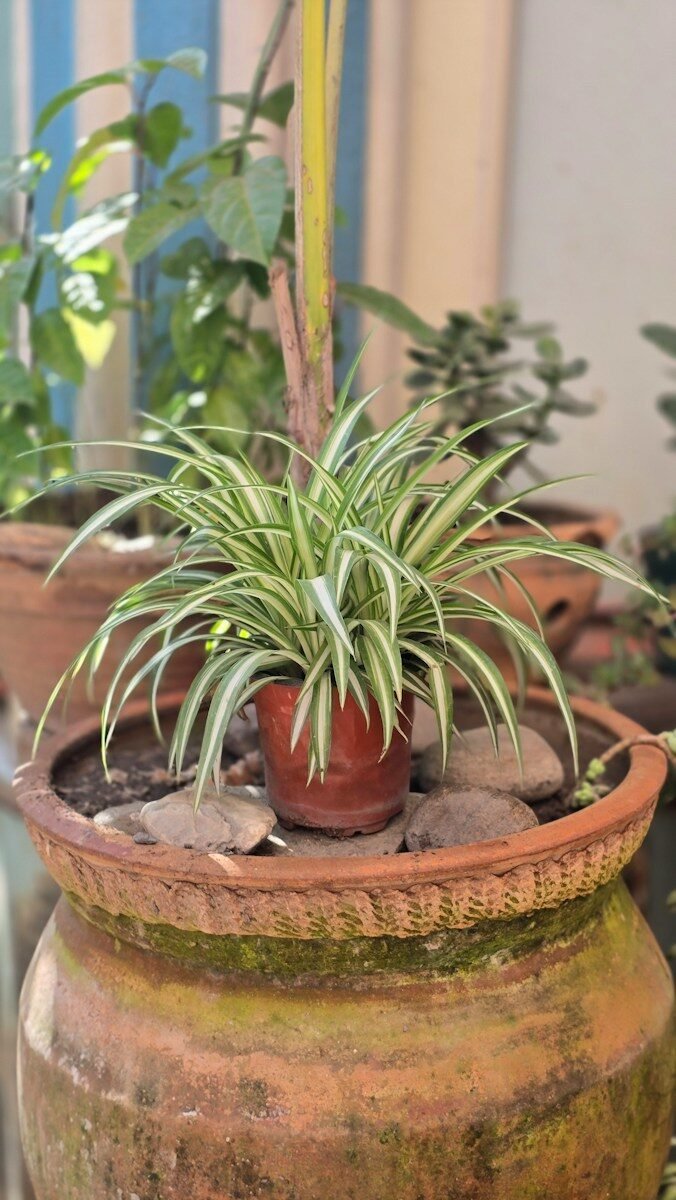
Quick diagnosis: spider plant brown tips
Symptom: The tips of your spider plant’s long leaves are turning brown and crispy, sometimes spreading down the leaf edges.
Most likely cause: Fluoride in tap water or dry air. Spider plants are famously sensitive to fluoride, and low humidity dries leaf tips faster than the plant can hydrate them.
Your 60-second first step: Switch to filtered or distilled water for the next few waterings and check the room humidity. Trim the brown tips with clean scissors (cut at an angle to mimic the leaf shape) — they won’t heal, but new growth will come in clean.
Brown tips on a spider plant are so common they’re practically a rite of passage — but they’re also one of the easiest plant problems to fix. The browning almost never means your plant is dying; it means something small in the environment needs adjusting. This guide explains why is my spider plant turning brown at the tips, with seven causes and the exact fix for each. For general leaf-trouble triage, see our symptom hub and the Plant Emergencies archive.
1. Fluoride in tap water (the #1 cause)
Why it happens: Many municipal water supplies add fluoride, which spider plants cannot tolerate. It accumulates in the leaf tips — the farthest point from the roots — causing them to brown and die back even when everything else is perfect.
How to confirm: Brown tips persist despite good watering and humidity, you water straight from the tap, and the browning is worst on older leaves. Check your local water report for fluoride.
Fix it:
- Switch to filtered, distilled, or rainwater — this single change fixes most cases.
- Letting tap water sit out doesn’t remove fluoride (unlike chlorine), so filtering or an alternative source is needed.
- Trim existing brown tips; new growth will emerge clean within weeks.
2. Low humidity and dry air
Why it happens: Leaf tips dry out first when the air is arid. Heated winter homes and air-conditioned rooms drop humidity below what spider plants prefer, crisping the delicate tips.
How to confirm: Browning worsens in winter or near heating/AC vents, and the air feels dry. Other humidity-loving plants show similar tip browning.
Fix it:
- Move the plant away from heaters and vents.
- Run a humidifier nearby or group plants together.
- A pebble tray helps in mildly dry rooms.
3. Fertilizer burn and salt buildup
Why it happens: Over-fertilizing leaves mineral salts in the soil, which wick to the leaf tips and burn them. Spider plants are light feeders and burn easily.
How to confirm: White crust on the soil surface, browning that started after fertilizing, and you feed more than monthly in the growing season.
Fix it:
- Flush the soil with clean water until it runs freely from the drainage holes.
- Skip fertilizer for 2 months, then feed at half strength, monthly, in spring and summer only.
- Scrape off visible salt crust from the soil surface.
4. Underwatering
Why it happens: Spider plants store water in thick tuberous roots, but chronic underwatering still dries the leaf tips first — the plant sacrifices its extremities to protect the crown.
How to confirm: Soil is bone-dry, the pot feels very light, and leaves look dull or slightly curled alongside the brown tips.
Fix it:
- Water thoroughly until it drains from the bottom.
- Going forward, water when the top inch of soil feels dry.
- Trim brown tips — they won’t green up again.
5. Overwatering
Why it happens: Soggy soil damages spider plant roots, and stressed roots can’t deliver water evenly — ironically causing tip browning that looks like underwatering. If you’re unsure which watering problem you have, see our overwatered vs underwatered guide.
How to confirm: Soil stays wet for days, the pot feels heavy, and browning comes with soft, yellow, or translucent leaves near the base.
Fix it:
- Let the soil dry out and ensure drainage holes are clear.
- Remove yellow, mushy leaves at the base.
- Water only when the top inch is dry going forward.
6. Too much direct sun
Why it happens: Spider plants prefer bright, indirect light. Harsh direct sun scorches the leaf tips and bleaches the stripes, especially through south or west windows.
How to confirm: The plant sits in direct afternoon sun, tips are brown and crispy on the sun-facing side, and the variegation looks washed out.
Fix it:
- Move to bright, indirect light — an east window or a few feet back from a sunny one.
- A sheer curtain filters harsh rays nicely.
- New leaves will emerge with crisp, colorful stripes.
7. Natural aging of older leaves
Why it happens: Spider plants shed their oldest leaves over time. An aging leaf browns from the tip inward as the plant reclaims its nutrients — normal, especially on mature, full plants.
How to confirm: Only the oldest, outermost leaves are browning, the center of the plant is lush with new growth, and the plant is otherwise healthy.
Fix it:
- Trim the spent leaves at the base — no other action needed.
- If browning spreads to young leaves too, revisit the causes above.
Spider plant brown tips: quick differential
| What you see | Likely cause | Instant check |
|---|---|---|
| Brown tips despite good care, tap water | Fluoride | Local water report |
| Tips crisp, dry air, winter | Low humidity | Near heater or vent |
| White crust on soil, recent feeding | Fertilizer burn | Salt on soil surface |
| Bone-dry soil, dull leaves | Underwatering | Pot feels very light |
| Wet soil + yellow base leaves | Overwatering | Soggy for days |
| Sun-facing side worst, bleached stripes | Too much sun | Direct afternoon sun |
| Only oldest outer leaves | Natural aging | Center growth healthy |
How long until it recovers
Brown tips are permanent — trimming is cosmetic, and the plant won’t heal them. Recovery means clean new growth: after switching water or fixing humidity, expect fresh, tip-perfect leaves within 3 to 4 weeks. Spider plants grow fast in good conditions, so a full flush of healthy foliage can replace the damaged look within a couple of months.
When to give up
Never give up on a spider plant for brown tips alone — this is cosmetic, not fatal. Only compost if the crown (the central growing point) is black and mushy, all roots have rotted, and no firm white tissue remains. Spider plants regrow readily from the crown and even from rooted plantlets, so this one is almost always saveable.
Frequently asked questions
Should I cut off the brown tips of my spider plant?
Yes — brown tips won’t heal, so trimming them improves the look. Cut at an angle following the leaf’s natural point with clean scissors. But also fix the underlying cause (usually water quality or humidity), or new tips will brown again.
Does tap water cause brown tips on spider plants?
Often, yes — fluoride in municipal water is the top culprit. Letting water sit out removes chlorine but not fluoride, so switch to filtered, distilled, or rainwater for the best results.
Will brown tips spread to the whole leaf?
They can if the cause continues — fluoride damage and salt burn progress down the leaf over time. Fixing water quality or flushing salts stops the spread, though already-browned tissue stays brown.
How do I prevent brown tips on new growth?
Use fluoride-free water, keep humidity above 40%, feed lightly (half-strength, monthly in spring/summer), and give bright indirect light. New leaves emerging under these conditions stay clean and green.
Are brown tips a sign my spider plant is dying?
No — brown tips are cosmetic and extremely common. The plant is only in real trouble if the crown turns black and mushy or the roots rot. Tip browning alone just means a small environmental tweak is needed.