
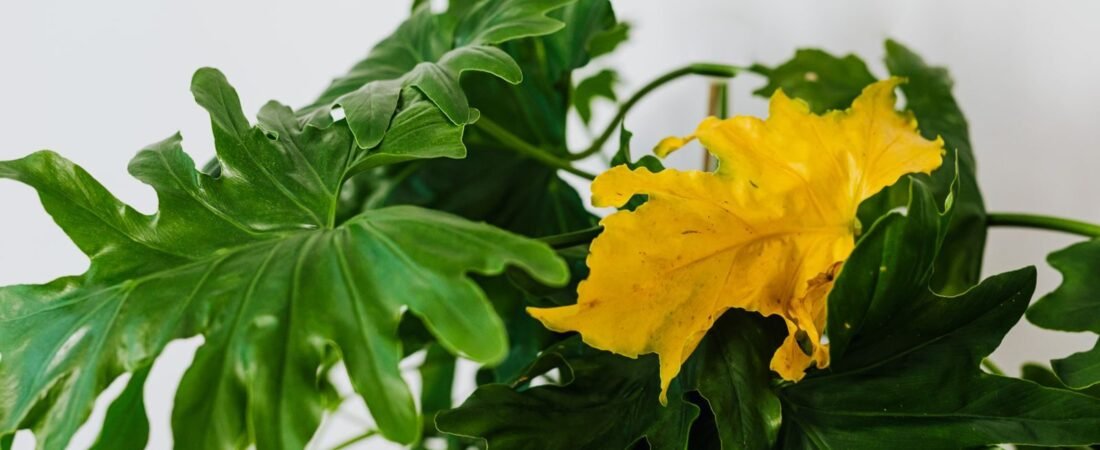
Quick diagnosis
Philodendron yellowing almost always comes down to watering. Soft, mushy yellow leaves low on the plant plus damp soil = overwatering — the #1 cause by far. Dry, papery yellow leaves plus bone-dry soil = underwatering. If just one or two bottom leaves are yellowing while new growth looks green, that’s normal aging and nothing needs fixing. Match your symptoms below and skip straight to the fix.
Philodendrons are some of the most forgiving houseplants you can own, which is exactly why yellow leaves feel like such a betrayal. You barely did anything — and now the plant is telling on you anyway.
Here’s the good news: yellow leaves are a message, not a verdict. Your philodendron is describing its problem in the only language it has. Once you can read the pattern — where the yellowing starts, how the leaves feel, what the soil is doing — the fix is usually simple, and the plant bounces back fast.
This guide walks through the 7 reasons philodendron leaves turn yellow, how to confirm which one is yours, and the exact steps to fix it. If you’re dealing with yellowing on other plants too, start at our yellow leaves symptom hub for the full picture.
What your yellow leaves are telling you
| What you see | Most likely cause |
|---|---|
| Lower leaves yellow, soft or mushy, soil stays damp | Overwatering |
| Yellow leaves feel dry and papery, soil pulls away from the pot | Underwatering |
| Yellowing even though you “barely water,” soil never dries | Poor drainage or dense soil |
| Older leaves yellow after a move, growth slows | Low light or light change |
| Older leaves pale first, weak new growth, no feeding in months | Nutrient deficiency |
| Fine yellow dots or stippling, webbing or cottony spots | Pests |
| Only the 1–2 oldest bottom leaves yellow, rest looks healthy | Natural aging |
1. Overwatering (the #1 cause)
Why it happens: Philodendron roots need air as much as water. When the soil stays soggy, air pockets collapse, roots suffocate, and the plant starts sacrificing its oldest leaves first. This is the single most common reason philodendron leaves turn yellow — especially in winter, when slower growth means the soil takes much longer to dry out and your usual watering routine suddenly becomes too much.
How to confirm: The yellow leaves feel soft, weak, or slightly mushy. Yellowing starts on the oldest, lowest leaves and creeps upward. The soil smells sour or stays visibly damp days after watering, and the pot feels heavy. If you unpot and find brown, slimy roots instead of firm white or tan ones, that’s root rot.
How to fix:
- Stop watering immediately and let the top couple of inches of soil dry out completely.
- Empty the saucer after every watering from now on — never let the plant sit in standing water.
- If the soil is still wet three days after watering, unpot the plant. Trim any brown, mushy roots with clean scissors and repot in fresh, airy mix (details in cause #3).
- Going forward, water only when the top 1–2 inches of soil feel dry to your finger.
Not sure whether your watering is too much or too little? Run through our overwatered vs. underwatered comparison — it’s the fastest way to tell. And if you found rotted roots, our root rot signs and treatment guide walks through the full rescue.
2. Underwatering
Why it happens: When the soil goes too dry for too long, the plant can’t move water and nutrients up to its leaves. It starts rationing, and the leaves lose color before eventually drying out. Philodendrons tolerate a missed watering, but repeated drought cycles wear them down.
How to confirm: The yellow leaves feel thin, dry, and papery rather than soft. Edges may curl inward. The soil has shrunk and pulled away from the sides of the pot, and the pot feels noticeably light when you lift it. The plant may look slightly droopy overall.
How to fix:
- Water thoroughly until it flows freely from the drainage holes. Wait 30 minutes, then dump the saucer.
- If the soil is so compacted that water runs straight through without soaking in, bottom-water instead: set the pot in a basin of water for 15–20 minutes so the root ball drinks evenly.
- Trim off leaves that are fully yellow and crispy — they’re done. Partly yellow leaves won’t turn green again, but leave any with green remaining.
- Going forward, check the top 1–2 inches of soil regularly and water when dry — but not bone-dry. Avoid tiny sips; deep, thorough waterings work much better.
3. Poor drainage or the wrong soil mix
Why it happens: Sometimes the watering is fine but the container isn’t cooperating. Dense, peat-heavy soil with no perlite or bark holds water like a sponge. Pots without drainage holes — or decorative cache pots where water pools at the bottom — do the same. The roots stay wet no matter how carefully you water, and the yellowing looks exactly like overwatering.
How to confirm: The soil stays damp for days even though you water rarely. Growth is slow. Yellowing spreads despite your watering schedule being modest. If you see a white crust of salt on the soil surface, drainage and mineral buildup are compounding each other.
How to fix:
- The pot must have drainage holes — no exceptions. If it’s sitting in a decorative outer pot, lift it out and empty any collected water after every watering.
- Repot into a chunky, airy aroid mix: standard potting soil amended with perlite and orchid bark. Philodendrons grow on trees in the wild; their roots expect air.
- Don’t pack the soil down when repotting — leave it loose.
- When upsizing, go only 1–2 inches wider. An oversized pot holds a swamp of unused wet soil around a small root system.
4. Low light or sudden light changes
Why it happens: Light drives everything — water use, nutrient uptake, growth speed. In dim light the plant drinks slowly, so the soil stays wet longer (which circles back to cause #1). Older leaves are usually sacrificed first. A sudden move to a darker spot, or the shortening days of fall and winter, can trigger yellowing even when nothing else changed.
How to confirm: The plant was recently moved, or it’s sitting in a dim corner. Growth has slowed or gone leggy and sparse. The rest of your care looks right on paper.
How to fix:
- Move the philodendron to bright, indirect light — an east-facing window, or a few feet back from a south- or west-facing one. Avoid harsh direct afternoon sun, which scorches leaves.
- Keep conditions consistent; don’t shuttle the plant between bright and dark rooms.
- If your space is genuinely dim, a basic grow light on 10–12 hours a day works well.
- Adjust expectations seasonally — in winter, less light means less water, not the same routine.
Clemson University Extension’s philodendron care guide notes that yellowing of lower leaves in philodendrons is commonly caused by too little light or overwatering — the two causes that most often arrive together.
5. Nutrient deficiency (your plant is hungry)
Why it happens: If watering, soil, and light are all fine, an unfed philodendron eventually runs out of fuel. Months without fertilizer — or years in the same depleted potting mix — show up as overall paleness and yellowing that starts on older leaves while new growth looks small and weak.
How to confirm: Nothing has been fed in 6+ months, or the plant hasn’t been repotted in 2+ years. Yellowing is gradual and even. Important: check that you’re not seeing the opposite problem — overfertilizing causes salt burn (crispy brown edges), and dumping more fertilizer on an already-stressed plant makes everything worse.
How to fix:
- Feed with a balanced liquid houseplant fertilizer diluted to half strength, every 4–6 weeks during spring and summer only.
- Never fertilize a stressed plant — fix watering and light problems first, then feed once the plant is stable.
- Flush the pot with plain water every few months (run water through until it flows freely for a minute) to wash out accumulated salts.
- Repot every 1–2 years to refresh depleted soil — often the real fix behind a “nutrient deficiency.”
6. Pests
Why it happens: Sap-sucking insects — spider mites, mealybugs, thrips, and scale — drain individual leaf cells, causing fine yellow stippling that can merge into full yellowing. Pest damage tends to be diffuse, hitting many leaves at once wherever the insects are feeding.
How to confirm: Look closely at leaf undersides and stem joints. Spider mites leave fine stippling plus faint webbing (hold white paper under a leaf and tap — moving specks confirm it). Mealybugs look like tiny cotton tufts in leaf axils. Scale appears as small raised brown bumps that don’t wipe off easily. Thrips leave silvery streaks and tiny dark droppings. If the tiny white bugs are in the soil rather than on the leaves, see our guide on tiny white bugs in houseplant soil instead — different culprit, different fix.
How to fix:
- Isolate the plant immediately so pests don’t spread to neighbors.
- Shower the leaves or wipe them with a damp cloth; prune the worst-affected leaves.
- Treat with insecticidal soap or neem oil, coating leaf undersides, and repeat weekly for 3–4 weeks — one treatment never kills the eggs.
- Check neighboring plants; pests travel.
7. Natural leaf aging (nothing to fix)
Why it happens: Philodendrons periodically shed their oldest leaves to redirect energy into new growth. It’s routine turnover, not distress.
How to confirm: Only one or two of the lowest, oldest leaves are yellowing. The rest of the plant looks healthy and is actively pushing out new green leaves. The yellowing is slow and even — the leaf turns yellow over weeks, then dries and drops.
How to fix: Nothing. Let the leaf turn fully yellow before removing it (the plant is still reclaiming nutrients from it), then snip it off with clean scissors. The real danger here is “fixing” a non-problem — watering more or fertilizing in response to normal aging is how healthy plants get into trouble.
How long until it recovers?
Honest timelines, based on the cause:
- Watering corrected: The plant perks up within days; new green growth appears in 2–4 weeks.
- Repotted after root rot: Expect 3–6 weeks before healthy new growth shows the rescue worked.
- Nutrient deficiency fixed: New leaves come in green within about a month of regular feeding.
- Pests cleared: Healthy new growth within a few weeks of the last treatment.
One rule for all of them: yellowed leaves never turn green again. Judge recovery by the new growth, not the old leaves. If fresh leaves are coming in green and healthy, your fix worked — even if the plant still wears a few yellow badges from the ordeal.
When to give up
Most yellow philodendrons are very saveable. Be honest with yourself in these cases:
- The stem base is mushy or black all the way through, and there are no firm roots left when you unpot. There’s nothing left to grow from.
- Every leaf has yellowed and there’s zero new growth after 6–8 weeks of correct care. The plant has no energy reserves left.
But before you compost: if any stem section still has a firm node (the little bump where a leaf meets the stem), cut it off and root it in water. Philodendrons root readily from nodes — a fresh plant from the wreckage is a perfectly good ending.
Frequently asked questions
Will yellow philodendron leaves turn green again?
No. Once a leaf has yellowed, the chlorophyll is gone and it won’t come back. Remove fully yellow leaves so the plant puts energy into new growth, and judge your fix by whether the new leaves come in green.
Should I remove yellow leaves from my philodendron?
Wait until a leaf is fully yellow — the plant is still pulling nutrients from it. Then snip it at the base with clean scissors. Don’t tear leaves off; that wounds the stem.
How often should I water my philodendron?
There’s no fixed schedule — check the top 1–2 inches of soil and water when dry. That might be weekly in summer and every two to three weeks in winter. Always water thoroughly and empty the saucer.
Why are my philodendron’s new leaves yellow?
New leaves yellowing points to either overwatering (most common) or a nutrient problem — pale new growth with green veins suggests nutrients are locked out, usually by compacted old soil or salt buildup. Repot into fresh mix and flush with plain water.
Can a philodendron recover from root rot?
Yes, if any firm roots or healthy stem remain. Trim away all brown, mushy roots, repot in fresh chunky mix, and water sparingly until new growth appears. If the entire root system and stem base are mush, it’s time to propagate from any healthy nodes instead.
Why are my philodendron leaves turning yellow with brown spots?
Yellow leaves with brown spots usually mean the problem has been building for a while. Soft yellow leaves with brown patches point to overwatering and possible root rot, while dry, crispy brown spots on yellowing leaves suggest underwatering. Check the soil moisture first, then match the spot pattern to the diagnosis table above — the spotted leaves won’t heal, so judge your fix by new growth coming in clean.
Why are my heartleaf philodendron leaves turning yellow?
Heartleaf philodendrons follow the same rules as the rest of the genus — yellowing is almost always about watering, light, or both. Soft, mushy yellow leaves low on the plant plus damp soil means overwatering; dry, papery leaves plus bone-dry soil means underwatering. Run through the quick diagnosis at the top of this guide and fix what matches.
Why are my philodendron leaves turning yellow in water?
Philodendrons rooting in water yellow for different reasons than potted ones — usually low nutrients or light that’s too dim, since there’s no soil to hold either. Change the water weekly to keep it fresh and oxygenated, and add a drop of diluted liquid fertiliser once roots are a few inches long. If a yellowing stem feels mushy, trim it back to firm, healthy tissue before the rot spreads.
Why are the lower leaves of my philodendron yellowing?
Lower leaves are the oldest, so they’re the first to yellow from almost any stress — overwatering, low light, or simply natural aging. If it’s only one or two bottom leaves and the rest of the plant looks healthy, that’s routine shedding and nothing to fix. If yellowing is spreading upward, work through the causes above starting with watering.
Related rescues
- Pothos Leaves Turning Yellow: 7 Causes & Fixes
- Why Are My Monstera Leaves Turning Yellow? 8 Causes & Fixes
- Root Rot: How to Spot It and Save Your Plant
- Philodendron — the complete philodendron care hub.