
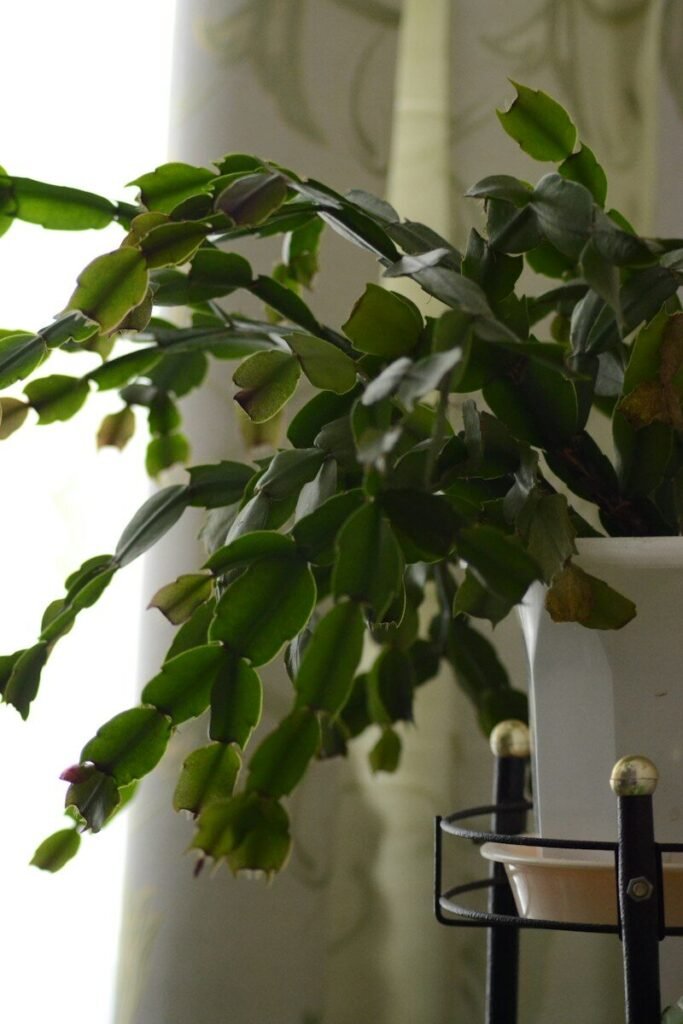
Quick diagnosis
Symptom: Your Christmas cactus is dropping its flat green segments — they fall off at the joints, sometimes with buds still attached.
Most likely cause: Overwatering or a sudden environment change. Christmas cacti shed segments when stressed by soggy soil, drafts, or being moved while budding.
Your 60-second first step: Feel the soil — soggy means overwatering, bone-dry means underwatering. Then stabilize: no moving, no repotting, no drafts. Christmas cacti hate change, especially while forming buds.
Watching your Christmas cactus drop segments just before the holidays feels like a personal betrayal — but it’s almost always a stress response, not a death sentence. These tropical cacti are more sensitive than their desert cousins, and they protest change by shedding. This guide explains why is my christmas cactus dropping segments, with six causes and the exact fix for each. For general leaf-trouble triage, see our symptom hub and the Plant Emergencies archive.
1. Overwatering (the #1 cause)
Why it happens: Despite the name, Christmas cacti are tropical plants that need watering — but soggy soil rots the segment joints, causing them to detach. Overwatering is the top reason for segment drop.
How to confirm: Soil stays wet for days, segments feel soft or translucent at the joints, and the plant may also drop buds. If you’re unsure which watering problem you have, see our overwatered vs underwatered guide.
Fix it:
- Let the soil dry out and ensure the pot drains freely.
- Going forward, water when the top inch feels dry — moist, not soggy.
- Remove fallen segments; healthy ones can be propagated.
2. Underwatering
Why it happens: Christmas cacti need more water than desert cacti. When the soil goes bone-dry for too long, the plant sheds segments to conserve moisture.
How to confirm: Soil is completely dry and pulling from the pot edges, segments look shriveled or wrinkled before dropping.
Fix it:
- Water thoroughly until it drains from the bottom.
- Going forward, keep the soil lightly moist — never let it go completely dry for days.
- Wrinkled segments plump back up within a day or two of watering.
3. Sudden environment changes
Why it happens: Christmas cacti are creatures of habit. Moving the plant, repotting, or sudden temperature swings — especially while buds are forming — triggers segment and bud drop as a stress response.
How to confirm: Dropping started right after you moved, repotted, or the plant experienced a cold draft or heat blast. Buds drop along with segments.
Fix it:
- Put the plant back where it was happy and leave it alone.
- Never repot or move a budding Christmas cactus.
- Keep temperatures steady between 60 and 70°F (15–21°C).
- The plant will settle and resume normal growth within a few weeks.
4. Too much direct sun
Why it happens: Christmas cacti are forest cacti that grow in dappled shade. Harsh direct sun scorches segments, turning them reddish-purple before they drop.
How to confirm: The plant sits in direct afternoon sun, segments have a reddish or bleached tinge, and dropping is worst on the sun-facing side.
Fix it:
- Move to bright, indirect light — an east or north window is ideal.
- A sheer curtain filters harsh rays.
- Reddened segments green up again once the light stress is removed.
5. Low humidity and dry air
Why it happens: As tropical plants, Christmas cacti prefer humidity above 40%. Dry heated air in winter — right when they’re budding — stresses the plant and causes segment drop.
How to confirm: Dropping peaks in winter, the plant sits near a heater or fireplace, and the air feels dry.
Fix it:
- Move away from heat sources.
- Run a humidifier nearby or set the pot on a pebble tray.
- Grouping with other plants helps create a humid microclimate.
6. Natural shedding of old segments
Why it happens: Christmas cacti occasionally shed their oldest, lowest segments as they grow — a normal part of the plant’s cycle, especially on large, mature plants.
How to confirm: Only a few of the oldest segments drop, the rest of the plant is firm and green, and it’s otherwise growing or budding normally.
Fix it:
- No action needed — this is normal.
- Propagate the fallen segments: let the cut end callus for a day, then plant in moist cactus mix.
- If dropping increases or spreads to young segments, revisit the causes above.
Christmas cactus segment drop: quick differential
| What you see | Likely cause | Instant check |
|---|---|---|
| Soft joints, wet soil, bud drop | Overwatering | Soggy for days |
| Shriveled segments, bone-dry soil | Underwatering | Soil pulling from edges |
| Drop after moving or repotting | Environment change | Recent disturbance |
| Reddish segments, sun-facing side | Too much sun | Direct afternoon sun |
| Winter drop near heater | Low humidity | Dry heated air |
| Only oldest segments, plant healthy | Natural shedding | New growth normal |
How long until it recovers
Dropped segments don’t reattach — but the plant itself recovers quickly once the stress is removed. Expect the shedding to stop within 1 to 2 weeks of fixing water or stabilizing the environment. New segment growth resumes in spring, and a happy Christmas cactus can rebloom the following season. Propagated segments root within 3 to 4 weeks, so your “losses” can become new plants.
When to give up
Don’t give up on a Christmas cactus for segment drop alone — even a plant that loses half its segments can recover fully. Only compost if the base stem is black and mushy through the center, all roots have rotted, and no firm green segments remain. Healthy fallen segments root easily, so you can almost always start over from the healthiest pieces.
Frequently asked questions
Will dropped Christmas cactus segments grow back?
The dropped segments won’t reattach, but the plant grows new ones — expect fresh growth in spring after you fix the cause. And don’t toss the fallen segments: let the broken end callus for a day, then plant in moist mix for free new plants.
Why is my Christmas cactus dropping buds too?
Bud drop has the same causes as segment drop — usually a sudden move, draft, or watering change while budding. Christmas cacti are extremely sensitive to disturbance during bud formation, so keep conditions steady from fall through bloom.
Should I water a Christmas cactus that’s dropping segments?
Only if the soil is dry. Dropping is most often caused by overwatering, so check first — water when the top inch feels dry, and make sure excess drains away. Both soggy and bone-dry soil cause segment drop.
Can I propagate fallen Christmas cactus segments?
Absolutely — it’s one of the easiest propagations. Let the broken end dry for a day, then insert it about half an inch into moist cactus or succulent mix. Roots form within 3 to 4 weeks in bright, indirect light.
Why are my Christmas cactus segments turning red?
Reddish segments usually mean too much direct sun or cool temperatures — a mild stress response. Move to bright indirect light and the green color returns. Some redness in fall is normal as the plant prepares to bloom.