Quick answer: Both work when done right. Bottom watering (soaking the pot from a tray) keeps the topsoil dry and encourages deep roots — great for fungus gnat battles and leaf-sensitive plants. Top watering (pouring onto the soil) flushes out fertilizer salts and waters evenly. For most houseplants, the winning routine is bottom water most of the time, with a top-water flush every month or two.
If you’ve spent any time in plant groups, you’ve seen the debate: bottom watering devotees swear their roots have never been healthier, while top watering loyalists point to salt-crusted soil and say, “see?” They’re both right — and both wrong. Each method has real jobs it’s best at, and a few jobs it genuinely can’t do. Here’s how to tell which one your plant needs, and how to do each one properly.
What Is Bottom Watering?
Bottom watering means setting a potted plant into a shallow basin of water and letting the potting mix drink upward through the drainage holes by capillary action. You never pour a drop on the surface — the soil wicks up what it needs from below.
How to Bottom Water in 5 Steps
- Fill a tray, sink, or basin with 1–3 inches of room-temperature water. Deep enough that the water reaches about a third of the way up the pot.
- Set the plant in. Make sure the pot has working drainage holes — bottom watering physically cannot work without them (more on that below).
- Wait 15–45 minutes. Small pots may finish in 15 minutes; big thirsty plants in dry soil can take close to an hour. The soil surface should feel slightly damp when you touch it.
- Lift and drain completely. Let the pot drip until it stops, then return it to its saucer or cache pot.
- Empty the saucer. Never let a pot sit in standing water — soggy bottoms are exactly how root rot gets started.
What Is Top Watering?
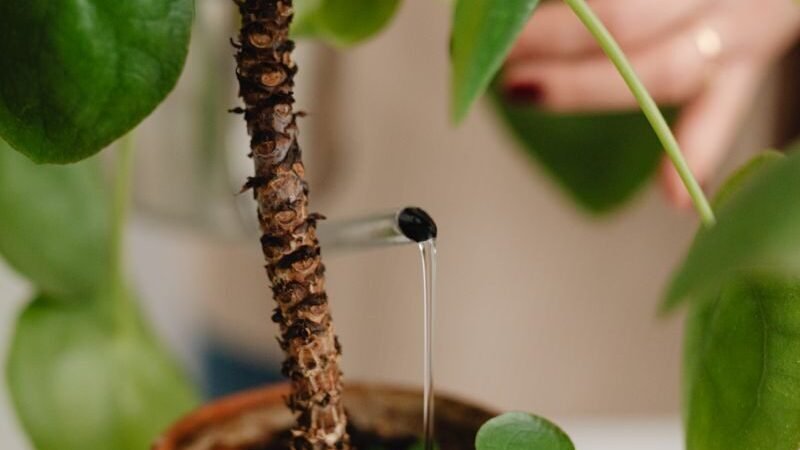
Top watering is the classic: pour water slowly and evenly onto the soil surface until it drains freely from the bottom. It’s the fastest method, it reaches the entire root zone, and it’s the only method that washes built-up fertilizer salts out of the mix.
How to Top Water Properly
- Pour slowly, in a circle. Move the stream around the whole soil surface so water soaks in evenly — don’t dump it in one spot.
- Keep pouring until water runs out the drainage holes. That’s your signal the whole root ball is saturated. University extension guidance says to water until it drains from the bottom rather than giving small sips — sips leave dry pockets in the middle of the pot.
- Wait a few minutes, then empty the saucer. Give the pot 10–15 minutes to finish dripping, then pour off any collected water. Sitting in a puddle invites rot even when the watering itself was perfect.
Bottom Watering vs Top Watering: The Honest Comparison
| Bottom Watering | Top Watering | |
|---|---|---|
| How roots get water | Soil wicks moisture upward; deep roots drink first | Water percolates downward through the whole root zone |
| Topsoil stays… | Dry — fungus gnats lose their breeding ground | Wet for hours — gnats love it |
| Salt & mineral buildup | Salts accumulate in the top of the soil over time | Flushes salts out with every deep watering |
| Speed | Slow — 15 to 60 minutes per plant | Fast — done in a minute or two |
| Evenness | Can miss the top of the root ball in deep pots | Very even if poured slowly |
| Hydrophobic soil | Excellent rescue — soaks peat mixes that repel surface water | Water channels through cracks and runs out without soaking in |
| Leaf & stem contact | None — foliage stays bone dry | Splashes leaves and crowns; risky for sensitive plants |
| Big / heavy plants | Impractical — try lifting a 5-foot fiddle leaf fig into a tub | The only realistic option |
When Bottom Watering Wins
Reach for the tray when any of these apply:
- You’re fighting fungus gnats. Gnats lay eggs in damp topsoil; a dry surface breaks their breeding cycle. This is the #1 reason bottom watering is worth the hassle. Pair it with our soil-check watering rule so you never water on a calendar.
- The plant hates wet leaves. African violets, begonias with fuzzy leaves, and succulents with tight rosettes (water sitting in the crown rots them) all do better watered from below.
- The soil has gone hydrophobic. If your peat-based mix has dried out so hard that water runs straight through the cracks, bottom watering is the rescue move — it rehydrates the mix far better than pouring from the top.
- Seedlings and small starts. Top watering blasts tiny seedlings out of their cells; a gentle soak from below leaves them undisturbed.
When Top Watering Wins
- You fertilize regularly. Salts from liquid fertilizer creep upward when you bottom water, forming a white crust on the soil surface. A deep top watering every 4–8 weeks flushes them out. If you fertilize your houseplants, periodic flushing isn’t optional.
- The plant is big. Bottom watering a floor plant is a logistical comedy sketch. Top water it where it stands.
- The pot has no drainage holes. Neither method works safely here, honestly — but a careful top watering lets you control exactly how much water goes in. (The real fix is repotting into a pot with drainage — see our guide on signs your plant needs repotting.)
- You want speed. Twenty plants top-watered in ten minutes beats twenty plants bottom-watered in an afternoon.
Mistakes to Avoid With Each Method
| Method | Common mistake | What to do instead |
|---|---|---|
| Bottom watering | Leaving the pot sitting in the tray for hours | Pull it out once the top of the soil feels damp; empty the saucer |
| Bottom watering | Never flushing salts out | Top water deeply every 4–8 weeks to wash fertilizer salts away |
| Bottom watering | Assuming it worked — deep pots can stay dry on top | Touch the soil surface; if it’s still bone dry after 45 minutes, the mix may be too compacted or the pot too deep |
| Top watering | Giving frequent small sips instead of a deep soak | Water thoroughly until it drains — then wait until the soil actually needs it again (learn to tell overwatered from underwatered) |
| Top watering | Pouring too fast down one spot | Pour slowly in a circle so the whole root zone gets wet evenly |
The Verdict: Use Both
Most experienced growers end up with a hybrid routine: bottom water for your everyday waterings, and top water every month or two as a flush. You get the dry topsoil, deep roots, and gnat protection of bottom watering, plus the salt-flushing and even saturation of top watering. Adjust the ratio to your collection — if you barely fertilize, you can go months between flushes; if you feed heavily in summer, flush monthly.
A Note for Winter
Whatever method you choose, you’ll use it less often in winter. Lower light and shorter days mean your plants drink far less — most need watering every 3–4 weeks instead of weekly. Our guide on watering houseplants in winter walks through the seasonal adjustment, and it pairs well with checking humidity levels since dry winter air complicates everything.
Related Rescues
- Overwatered vs Underwatered: How to Tell the Difference — the differential-diagnosis pillar every watering article should be checked against.
- How Often to Water a Snake Plant: The Soil-Check Rule — the “check, don’t calendar” method that pairs perfectly with either watering technique.
- How to Save an Overwatered Plant: 7 Rescue Steps — if your watering routine has already gone wrong, start here.
-
Is bottom watering better than top watering for houseplants?
Neither is universally better. Bottom watering keeps the topsoil dry (great against fungus gnats) and encourages deep root growth, while top watering flushes out fertilizer salts and waters the entire root zone evenly. The best routine for most houseplants is bottom watering most of the time with a deep top-watering flush every 4–8 weeks.
-
How long should I bottom water a houseplant?
Most plants need 15–45 minutes in 1–3 inches of water. Small pots may finish in 15 minutes; large or very dry pots can take up to an hour. Check the soil surface — once it feels slightly damp, lift the pot out and let it drain completely. Never leave a plant sitting in water for hours.
-
Does bottom watering work without drainage holes?
No — bottom watering physically requires drainage holes, since the water enters through them. If your pot has no drainage, top water very carefully with a measured amount of water, and consider repotting into a pot with drainage holes, because a drainless pot is the fastest route to root rot.
-
Can you bottom water every time?
You can, but not indefinitely. Bottom watering lets fertilizer salts accumulate in the top of the soil, where they can eventually burn roots. If you bottom water routinely, flush the soil from the top every month or two to wash salts out — especially during the growing season when you’re fertilizing.
-
Why isn’t the water reaching the top of the soil when bottom watering?
Common causes: the potting mix is compacted, the drainage holes are blocked, the pot is too deep for capillary action, or the mix has gone hydrophobic. Try poking a few holes in the soil with a chopstick, clearing the drainage holes, or soaking longer. For a badly hydrophobic mix, bottom watering is still your best rescue — it just needs more time.