
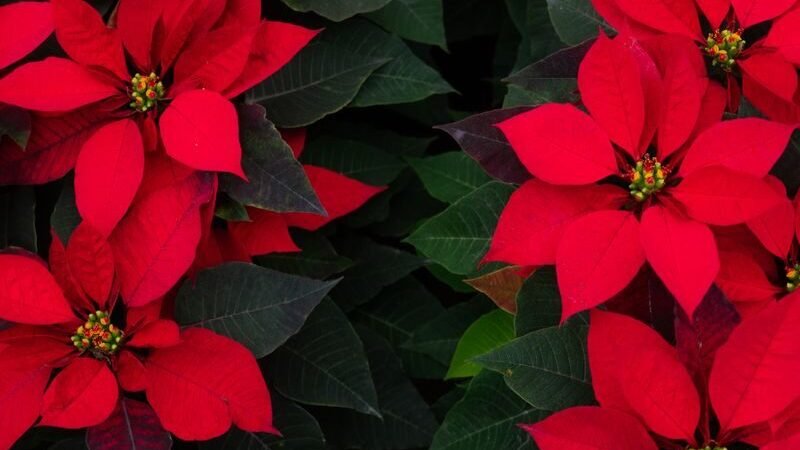
Quick answer: A poinsettia dies fastest from three things: sitting in water (blame the foil), cold drafts, and too much heat. Fix those three — punch drainage holes in the foil, water only when the soil surface is dry, keep it at 60–70°F in bright indirect light — and it will easily last through New Year’s. Get the after-holiday care right and it can bloom again next Christmas.
Most poinsettias don’t die because they’re fragile. They die because they’re treated like decorations instead of tropical plants. Poinsettias are the best-selling potted plant in the United States, and most of them end up in the trash by February — not because they were doomed, but because a few common mistakes stacked up. Here are the seven that kill the most poinsettias, and exactly how to avoid each one. Like our other holiday plant, the Christmas cactus, the fixes are small and they work fast.
Mistake 1: Bringing home a plant that’s already dying
Poinsettia problems often start before the plant reaches your house. Cold display areas, overheated shelves, and weeks without water at the store all take a toll, and a stressed plant will drop leaves no matter what you do at home.
Before you buy, run this checklist:
| Feature | Look for | Walk away if |
|---|---|---|
| Stems | Strong, sturdy, upright | Leggy or leaning |
| Foliage | Dense, dark green leaves all the way down to the base | Bare lower stems |
| Bracts (the colored “flowers”) | No blemishes, bruises, or drooping | Wilted or spotty |
| True flowers | The tiny yellow buds in the center of the bracts are still closed or just opening — that means a long display ahead | Already fully open or dropped off |
| Roots | Plenty of tan, healthy white roots (peek through the pot hole if you can) | Few roots, or dark brown mushy ones |
| Display | Warm, sheltered spot inside the store | Chilly entranceway or outdoor rack |
This is the one mistake you can’t fix later — start with a healthy plant and the rest of this guide does the heavy lifting.
Mistake 2: Leaving the decorative foil on
The pretty foil sleeve florists wrap around the pot is the single most common poinsettia killer. It traps water in the pot, the roots sit in it, and root rot sets in within days.
How to confirm: lift the pot. If water pools in the foil, or the soil smells sour and swampy, you’ve found the problem.
The fix takes 30 seconds: punch several drainage holes in the foil, or just remove it entirely and set the pot on a saucer. From now on, water until it drains out the bottom, then empty the saucer. A poinsettia should never sit in standing water.
Mistake 3: Watering on a schedule instead of checking the soil
Overwatering is the number-one killer of poinsettias at home; letting it dry to bone is number two. Both happen when people water “every Tuesday” instead of checking the plant.
Quick diagnosis:
| Symptom | Overwatered | Underwatered |
|---|---|---|
| Lower leaves | Turning yellow lower leaves and dropping | Wilting but still green, then crispy |
| Soil | Soggy, smells swampy | Bone dry, pulling away from the pot edge |
| Stem base | Soft or mushy | Firm, plant springs back after watering |
| Fix | Let it dry out, then water only when the surface is dry | Water thoroughly now, check more often |
The rule: stick a finger an inch into the soil. Dry? Water deeply until it drains out the bottom. Still damp? Walk away. That’s the whole watering method — the same check, not a calendar, that keeps all your houseplants happy when you water houseplants in winter.
If you’re still unsure whether a plant is thirsty or drowning, this overwatering vs. underwatering comparison sorts it out in about a minute.
Mistake 4: Letting it freeze on the ride home
Poinsettias are native to Mexico — tropical plants that start taking damage below 50°F. The most brutal version of this mistake: buying the plant in December, leaving it in a freezing car trunk while you run errands, then wondering why every leaf dropped within 48 hours.
The fix: ask the shop to wrap the plant in a paper or plastic sleeve before you leave, heat the car first, and don’t leave it in the trunk. At home, keep it away from cold windows and drafty doors — don’t let the leaves touch cold glass. Daytime temperatures of 60–70°F and nights around 55°F are ideal; the same threshold you use when bringing houseplants indoors for winter applies.
Mistake 5: Parking it over the heat vent
High heat shortens a poinsettia’s bloom life fast, and dry hot air from vents, radiators, and fireplaces makes it drop leaves and bracts. The plant that sits “festively” on the fireplace mantel is often the first to go bare.
The fix: bright, indirect light — at least six hours a day — in a normal room-temperature spot, well away from heating vents, radiators, fireplaces, and hot drafts. Worried about dry winter air in general? Our guide on whether you should mist houseplants in winter explains why a humidifier beats a spray bottle — but average home humidity is fine for poinsettias, so don’t stress it.
Mistake 6: Fertilizing it during the holidays
University extension experts rank fertilizing a blooming poinsettia as one of the most common causes of rapid death, right next to overwatering. The plant is putting all its energy into those colored bracts; extra fertilizer burns roots and stresses it out.
The fix: do not fertilize while the bracts are showing color. At all. When new green growth starts in spring, begin feeding with an all-purpose houseplant fertilizer at half strength every two weeks through the growing season, then stop again when the fall dark treatment begins.
Mistake 7: Tossing it in January because you think it’s done
Here’s the secret the throwaway culture misses: a poinsettia is a perennial. With basic aftercare it can live for years — and bloom again next Christmas. The full rebloom trick is one strict schedule of darkness starting in fall.
What to do after the holidays:
| When | What to do |
|---|---|
| January–March | Enjoy the color. Water when the surface is dry; no fertilizer. Bracts fade by March or April. |
| April | Cut the stems back to about 6 inches. Repot into a slightly larger pot with fresh mix; start fertilizing. |
| May–July | Once nights stay above 50–60°F, move it to a shady outdoor spot. Pinch the stem tips every few weeks to keep it bushy — stop pinching by late July. |
| September | Bring it back inside before the first cold snap. |
| October 1 | Begin the “darkness ritual”: 13–14 hours of total, uninterrupted darkness every night (a closet or a box over the plant works — but any stray light, even a streetlight, can spoil it) until color shows, usually around Thanksgiving. Keep watering normally; don’t lock it in a dark room and ignore it. |
A quick honesty note: many people find the closet routine too fussy and buy a fresh plant each December. That’s fine too. But if any firm green stems remain after the holidays, the plant is very much alive — it just needs this calendar.
Already dropping leaves — can it still be saved?
Run this triage before you panic:
| What happened | Signs | What to do |
|---|---|---|
| Cold shock on the trip home | Sudden leaf drop 24–48 hours after purchase, bracts look fine otherwise | Nothing to fix — remove dead leaves, keep the care right, and wait for new growth |
| Overwatering / foil trap | Yellow lower leaves, soggy soil, maybe a swampy smell | Drain it, let it dry, remove the foil; repot if the roots are rotten |
| Heat or draft stress | Dropping leaves near a vent or cold window | Move it; recovery in 1–2 weeks |
| It’s just January | Bracts fading, green leaves still healthy underneath | Normal — follow the after-holiday calendar above |
When to give up
Be honest with yourself here. If the stems are mushy and black all the way to the base, and the roots are nothing but brown mush, the plant is gone — compost it. But if there’s any firm green stem left, even a stub, it can regrow from there. Poinsettias are tougher than their reputation suggests; give the stub light, light water, and time.
Related rescues
- How Often Should I Water My Houseplants in Winter?
- When Should I Bring My Houseplants Indoors for Winter?
- Should I Mist My Houseplants in Winter?
How long do poinsettias last?
With the care in this guide, the colored bracts last 6–8 weeks — easily through the holidays — and often hold until March or April. As a plant, a poinsettia is a perennial that can live for years and bloom again each Christmas if you follow the fall darkness schedule.
Do poinsettias need direct sunlight?
They need at least six hours of bright, indirect light a day. Some gentle morning sun is fine, but hot afternoon sun fades the bracts and stresses the plant. A bright windowsill with sheer curtains is close to perfect.
Are poinsettias poisonous to cats and dogs?
No — not in the way the myth says. The milky sap is mildly irritating and can cause mouth irritation or mild stomach upset if chewed, but poinsettias are not lethally poisonous to pets or people. Still, keep the plant out of reach of curious pets and kids.
Can I put my poinsettia outside?
Yes, once nights stay consistently above 50–60°F — usually late spring. Put it in a shady spot, not blazing sun, and bring it back inside well before fall temperatures drop. Outdoors it grows fast and bushy, which sets up a better bloom next year.
Why are my poinsettia’s leaves dropping right after I brought it home?
Almost always one of two things: cold shock from an unprotected trip home, or overwatering (often the foil trapping water). Cold damage shows as sudden leaf drop within a day or two; overwatering shows as yellowing lower leaves and soggy soil. Fix whichever matches — see Mistakes 2, 3, and 4 above.