
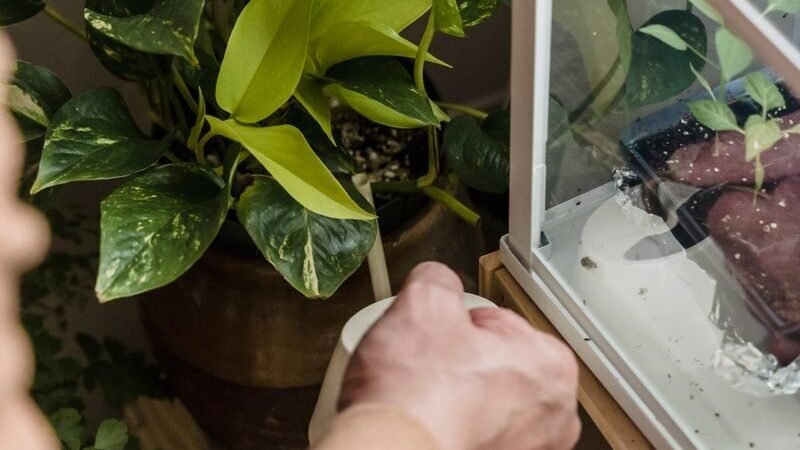
Short answer: most houseplants need water about half as often in winter as they do in summer — and some need almost none. Stop following your summer schedule, check the soil 2 inches down instead, and when you do water, water deeply, let the pot drain, and empty the saucer. Winter is the season when overwatering does the most damage.
Why winter changes the watering rules
Your plants aren’t being dramatic — they’re resting. Shorter days and weaker sunlight slow growth to a crawl, and a resting plant drinks far less. At the same time, heated indoor air dries out the surface of the soil fast, which tricks you into thinking the pot is dry when the bottom half is still soaked.
That combination is the classic winter killer: you water on your summer rhythm, the soil never dries, and the roots sit in soggy mix for weeks. If you’ve recently moved your plants inside for the cold season (here’s the checklist for that move), their watering needs dropped the moment they crossed the threshold.
Two more winter quirks worth knowing:
- Cold water shocks roots. Water from a cold tap can stress a resting plant; room-temperature water is gentler.
- Skip the fertilizer. Plants that aren’t actively growing don’t need feeding. Resume in spring when you see new growth.
How to tell if your plant actually needs water
Forget the calendar. Use one of these three checks instead — they’re the same soil-check rule we use year-round, just with winter’s slower drying factored in:
- The finger test. Stick your finger 2 inches into the soil. Bone dry? Water. Still damp or cool to the touch? Wait.
- The chopstick test. Push a wooden chopstick or skewer to the bottom of the pot and leave it for 30 minutes. If it comes out with damp soil clinging to it, the plant can wait.
- The lift test. Get to know what your pot weighs right after watering vs. when it’s dry. It’s the fastest check once you learn it.
If two of the three say “wait,” wait. Your plant will be fine — it can handle drought far better than a drowning in winter.
How often to water in winter: a plant-group guide
These are starting points, not rules. Your soil check sets the real schedule — but this table will get you in the right neighborhood:
| Plant group | Typical winter rhythm | What to watch |
|---|---|---|
| Tropical foliage (pothos, monstera, philodendron, peace lily) | Every 2–3 weeks | Let the top 2 inches dry out completely |
| Snake plant & ZZ plant | Every 3–4 weeks | Let the soil dry out fully between waterings |
| Succulents & cacti | Every 4–6 weeks (sometimes less) | Wrinkled leaves mean water; firm leaves mean wait |
| Winter bloomers (poinsettia, Christmas cactus) | Check weekly | Keep evenly moist, not soggy — blooms drink more |
| Humidity lovers (ferns, calathea) | Check weekly | Keep slightly moist; pair with a pebble tray for humidity |
For plant-specific detail, our snake plant watering guide and monstera watering guide walk through the same soil-check approach.
How to water in winter the right way
When the soil check says “go,” do it like this:
- Use room-temperature water. Fill your can and let it sit out a bit if it came straight from a cold tap.
- Water in the morning or midday. This gives the plant time to take up water before cooler nighttime temperatures, and any spilled water on leaves dries faster.
- Water deeply. Keep pouring slowly until water runs freely from the drainage hole. A full soak reaches the whole root ball — light sips don’t.
- Empty the saucer. Wait 10–15 minutes, then dump any water sitting in the saucer or cache pot. Standing water is the fastest route to root rot.
- Keep the leaves dry. Water the soil, not the foliage. While you’re at it, wipe dust off the leaves — a dusty leaf can’t photosynthesize well in weak winter light.
No drainage hole in the pot? Winter is when that catches up with you. Consider moving the plant to a nursery pot with drainage that sits inside the decorative one — it makes the “water deeply, then empty” step possible.
5 winter watering mistakes to stop making
- Keeping your summer schedule. The #1 winter mistake. Your July rhythm is meaningless now — the soil check is the only schedule that matters.
- Light sips instead of deep watering. Small, frequent pours keep only the top layer moist while the deeper roots stay thirsty — or worse, they keep the surface damp enough to rot the crown. Water less often, but thoroughly.
- Using cold water. Icy tap water can shock roots, especially in an already-stressed plant. Room temperature is the safe zone.
- Letting pots sit in saucer water. In winter the soil stays wet so long that a full saucer can keep the roots waterlogged for days. Always empty it.
- Misting to fix dry air. A quick spritz barely moves the humidity needle and wets leaves that won’t dry quickly in winter. A pebble tray or a small humidifier near your plants does far more.
Think you’ve already overwatered?
It happens — and winter is the most common season for it. Watch for yellow leaves, soft or mushy stems, a sour smell from the soil, or mold on the surface. The tricky part: drooping and yellow leaves can also mean underwatering, so check the soil first. Christmas cacti have their own tell: an overwatered one drops whole segments instead of just yellowing. If yours is shedding pieces, see our guide to Christmas cactus dropping segments.
Not sure which one you’re dealing with? Our overwatered vs. underwatered guide walks through the differences side by side, and how to save an overwatered plant gives you the full 7-step rescue plan. If roots are already mushy and dark, read our root rot signs and treatment guide — and see our root rot symptom hub for every article on the topic.
Frequently asked questions
Can I water my houseplants with cold water in winter?
It’s not ideal. Cold water can shock the roots of a resting plant, especially tropical types. Let the water sit until it reaches room temperature (around 65–70°F) before you pour. It takes a few minutes and removes one more winter stressor.
Is bottom watering better in winter?
Bottom watering — setting the pot in a basin and letting the soil soak up water from below — works well in winter because it encourages deep root growth and keeps the crown dry. Just don’t let the pot sit in water for more than 20–30 minutes, and still empty any saucer afterward.
Do succulents need any water in winter?
Yes, but barely. Most indoor succulents and cacti need water only every 4–6 weeks in winter, and some barely-wrinkling types can go longer. Wait until the leaves show slight wrinkling or softness, then give them a full soak.
Should I fertilize when I water in winter?
No. Most houseplants aren’t growing enough in winter to use fertilizer, and unabsorbed salts build up in the soil. Hold off until spring, when you see fresh growth starting.
Why is the soil surface dry but the deeper soil still wet?
Heated, dry indoor air pulls moisture from the surface while the bottom of the pot stays damp — especially in big pots or dense soil. That’s exactly why the finger test goes 2 inches deep instead of trusting the surface. If the bottom stays wet for weeks, consider a chunkier, faster-draining mix next repot.