
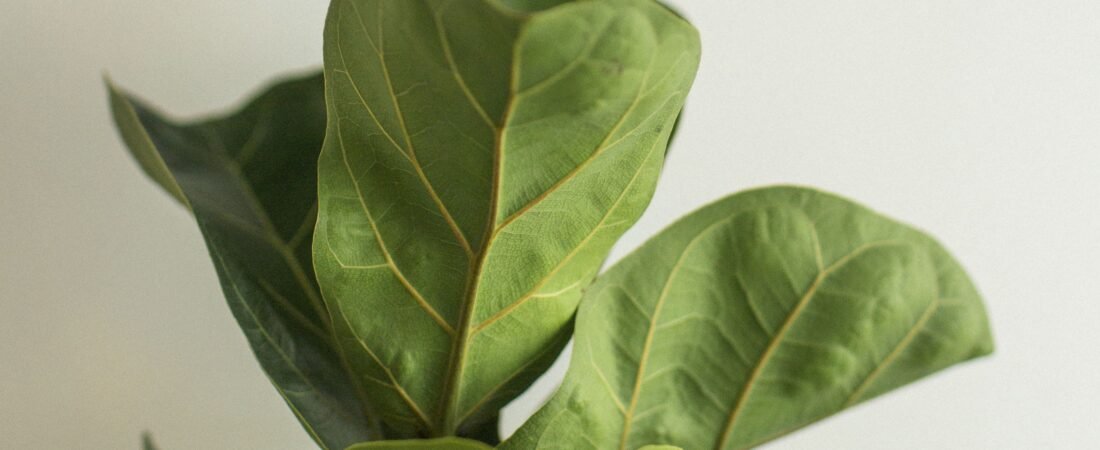
Fiddle leaf figs have earned their reputation as the drama queens of the houseplant world. Move one a few feet, miss a watering, or let a cold draft sneak in, and it answers by dropping leaves — sometimes a slow trickle, sometimes an alarming shower.
The good news: leaf drop is almost always a stress signal, not a death sentence. Your plant is telling you exactly what’s wrong — you just have to read the signs. Work through the causes below, match them to what you’re seeing, and most fiddle leaf figs bounce back within a few weeks.
Quick diagnosis: match the symptom to the cause
Before you change anything, look at the leaves that are falling — and where they fell from. This 60-second check points you at the right cause.
| What you’re seeing | Most likely cause | 60-second check |
|---|---|---|
| Leaves yellowing from the bottom up, then dropping; soil stays wet for days | Overwatering / root rot | Push a finger 2 inches into the soil — if it’s soggy, that’s your answer |
| Brown, crispy leaf edges; soil pulling away from the pot sides | Underwatering | Soil is bone dry and the pot feels unusually light |
| Lower leaves yellowing and dropping; leggy stems, slow growth | Not enough light | Plant sits in a dim corner or far from any window |
| Bleached brown patches on the upper leaves that get the most sun | Sunburn | Damage is worst on the sun-facing side |
| Sudden drop of still-green leaves with no spots or yellowing | Temperature shock or relocation | Recently moved, or sitting near a vent, door, or drafty window |
| Tiny webs, sticky residue, or small bumps on leaf undersides | Pests | Inspect the undersides of leaves closely |
| Brown spots with yellow halos on the newest leaves | Bacterial leaf spot | New growth looks worse than old growth |
| Water runs straight through; roots circling the drainage holes | Root-bound or exhausted soil | Lift the pot and check the bottom |
1. Overwatering — the number-one leaf-drop trigger
Fiddle leaf figs hate sitting in wet soil. Roots need oxygen as well as water, and waterlogged soil suffocates them. Leaves yellow from the bottom up and drop, and if it goes on long enough, root rot sets in — which is much harder to fix.
How to confirm it: the soil stays wet three or four days after watering, the pot has no drainage or the saucer is always full, there’s a musty smell, and the lower leaves yellow first while stems feel soft.
The fix:
- Stop watering and let the top 2 inches of soil dry out completely.
- Make sure the pot has drainage holes, and empty the saucer after every watering.
- If leaves keep yellowing, unpot the plant and inspect the roots. White and firm is healthy; brown, mushy, and smelly means root rot — trim the dead roots with clean scissors and repot in fresh, well-draining mix. Here’s our full root rot rescue guide.
- Going forward, water only when the top 1–2 inches of soil feel dry, and water deeply until it drains freely. Not sure whether you’re over- or under-watering? Work through our overwatered vs. underwatered guide.
2. Underwatering
Fiddle leaf figs also drop leaves when they go too long without water. The plant sheds what it can no longer support, and the leaf edges turn brown and crispy first.
How to confirm it: crispy brown edges, soil pulling away from the sides of the pot, leaves that feel papery or brittle, and a pot that feels very light when you lift it.
The fix:
- Give it a deep drink — water slowly until water flows from the drainage holes, then empty the saucer.
- If the soil is so dry it’s repelling water, set the pot in a few inches of room-temperature water for 20–30 minutes so the root ball rehydrates from the bottom up.
- Water when the top 1–2 inches are dry — not on a fixed schedule. In summer air-conditioning or winter heating season, check twice a week.
3. Not enough light
This is the most common placement mistake we see. Fiddle leaf figs need bright, indirect light to support those big leaves. In a dim room they can’t photosynthesize enough to feed every leaf, so they shed the lower ones first to cut their losses.
How to confirm it: lower-leaf yellowing, leggy stems with long gaps between leaves, the plant leaning hard toward the window, and no new growth.
The fix:
- Move it within a few feet of a bright window — an east- or west-facing window is ideal. A south-facing window works too if you filter harsh midday sun with a sheer curtain.
- Rotate the pot a quarter turn every week or two so growth stays even.
- Give it time: after a light upgrade, expect new growth at the top within a few weeks. The bare lower stem won’t refill, but the plant fills out again from above.
As the NC State Extension notes, fiddle leaf figs prefer bright indirect light and need protection from harsh afternoon sun.
4. Too much direct sun (sunburn)
The flip side of low light: harsh afternoon sun beating through glass scorches the big leaves. Burned patches look bleached or light brown, sometimes with red or yellow edges — mostly on the upper leaves facing the sun.
How to confirm it: the damage is worst on the sun-facing side and the upper leaves, while shaded leaves look fine.
The fix:
- Move the plant a few feet back from the window or hang a sheer curtain to diffuse the light.
- Trim only the fully dead, crispy leaves. Leave partially damaged ones alone — they’re still photosynthesizing.
- New growth will come in healthy once the light is right; the burned spots on old leaves won’t heal, but they won’t spread either.
5. Cold drafts, heat vents, and dry air
Fiddle leaf figs come from warm, humid West African forests, and they notice when your home doesn’t match. A blast of AC, a heating vent, or a drafty exterior door can shock the plant into dropping leaves fast — often while they’re still green.
How to confirm it: leaves dropping suddenly with no discoloration; the plant sits near a vent, radiator, exterior door, or drafty window; it’s heating or cooling season.
The fix:
- Move the plant away from vents, radiators, and drafty doors — even a few feet makes a difference.
- Keep the room temperature steady, ideally 65–75°F, and don’t let it sit below 55°F for long stretches.
- Raise humidity: group plants together, run a humidifier nearby, or set the pot on a pebble tray with water. Skip daily misting as your main strategy — it barely moves the needle.
6. Relocation shock — you just moved it
This is the classic fiddle leaf fig move. Bringing one home from the nursery, switching rooms, or even shifting it several feet changes its light, temperature, humidity, and airflow all at once. The plant responds by shedding older leaves to conserve energy while it adjusts.
How to confirm it: leaf drop started within a week or two of a move, the fallen leaves are still green, and there are no other symptoms.
The fix:
- Honestly? Wait it out. Pick the best spot now and stop moving it — every move restarts the clock.
- Keep watering and light consistent while it adjusts; don’t overhaul your care routine at the same time.
- Losing one or two leaves a week with new growth still emerging from the top is normal adjustment, not an emergency.
7. Pests: spider mites, scale, and mealybugs
Pests weaken the plant by sucking sap from the leaves. As the infestation grows, leaves yellow or brown and drop. Fiddle leaf figs are most often hit by spider mites (fine webbing, stippled or dusty-looking leaves), scale (small brown bumps along stems and veins — easy to mistake for part of the plant), and mealybugs (white, cottony clusters in leaf joints).
How to confirm it: inspect the undersides of leaves, stems, and new growth for webbing, sticky residue, tiny moving dots, or bumps.
The fix:
- Isolate the plant from your other houseplants immediately.
- Wipe the leaves down with a damp cloth to remove as many pests as you can.
- Treat with insecticidal soap or neem oil, coating the undersides of the leaves. Repeat in 7–14 days and inspect again. Heavily infested leaves can be pruned off.
8. Bacterial leaf spot
If brown spots show up worst on the newest leaves, with yellow halos spreading around them, you’re likely looking at bacterial leaf spot. Here’s the tell: with root rot, affected leaves stay dark green with brown spots — with bacterial leaf spot, the whole leaf turns yellow as the spot spreads.
How to confirm it: the newest growth looks worse than the older leaves, and spots have yellow halos.
The fix:
- Remove the worst-affected leaves with clean scissors to slow the spread.
- Avoid wetting the leaves when you water, and improve airflow around the plant.
- Water at soil level and don’t let the plant sit in soggy conditions.
- New, healthy growth means you’re winning — keep monitoring for a few weeks.
9. Root-bound roots or exhausted soil
A fiddle leaf fig that hasn’t been repotted in two or more years can strangle itself. Roots circle the pot, the soil compacts, water runs straight through without soaking in, and nutrients run out. The plant can’t drink or eat properly — so it drops leaves.
How to confirm it: roots poking from the drainage holes or the soil surface, water draining through instantly, or the plant needing water far more often than it used to.
The fix:
- Repot into a container 2–4 inches wider, with fresh, well-draining potting mix (regular mix plus perlite works well).
- Gently loosen the root ball so the roots spread into the new soil.
- Expect some leaf drop after repotting anyway — it counts as a move. New growth within a few weeks means it’s settling in.
- Wait about a month before fertilizing; fresh mix already has nutrients.
How long until my fiddle leaf fig recovers?
- Relocation shock or a light fix: leaf drop slows within 1–2 weeks; new top growth in 3–6 weeks.
- Watering corrected: new growth in 2–4 weeks.
- Root rot treated: 4–8 weeks for real recovery — be patient.
- Pests or disease treated: new, clean growth within a few weeks of the second treatment.
When to give up on a fiddle leaf fig
Be honest with yourself: if the trunk is soft and mushy all the way through, every leaf is gone with no sign of new buds, and the roots are black mush with no firm white roots left, the plant is done. Compost it — there’s no shame in it.
But if there’s any firm green stem, any firm white roots, or any sign of new buds, it’s worth the rescue. Fiddle leaf figs are dramatic, but they’re stubborn survivors too.
Fiddle leaf fig leaf drop FAQs
Quick answers to the questions we hear most.
Is it normal for a fiddle leaf fig to drop leaves after bringing it home?
Yes. The shift from greenhouse to your home changes light, humidity, temperature, and airflow all at once. Losing a few lower leaves in the first couple of weeks is normal adjustment. If it’s still dropping leaves after a month with no new growth, work through the causes above.
Will dropped fiddle leaf fig leaves grow back?
Not on the bare spots — a fiddle leaf fig won’t regrow leaves on a naked lower stem. But the top keeps growing, and with the cause fixed, new leaves emerge from the top buds. Over a growing season the plant fills out again from above.
How often should I water my fiddle leaf fig?
There’s no fixed schedule — check the soil instead. Water deeply when the top 1–2 inches feel dry, which is usually every 7–10 days in the growing season and less often in winter. Always let excess water drain away and empty the saucer.
Can a fiddle leaf fig recover after losing all its leaves?
Sometimes. If the stems are still firm and green (scratch the bark lightly — green underneath means alive) and the roots have firm white sections, cut back watering, give it bright indirect light, and wait. New buds can appear in 4–8 weeks. If the stems are brown and brittle throughout, it won’t recover.
Should I remove yellow or damaged leaves from my fiddle leaf fig?
Remove leaves that are fully brown and crispy — they won’t recover. Leave yellowing leaves alone for now; they’re still feeding the plant while you fix the cause, and removing them too early adds stress. Once new growth is coming in, you can prune the tired-looking ones.
Why is my fiddle leaf fig dropping leaves with brown spots?
Brown spots on falling leaves usually point to a watering or light problem rather than a single cause. Crispy brown edges mean underwatering or low humidity, while dark brown patches with yellow halos on the newest leaves suggest bacterial leaf spot from water sitting on the foliage. Match the spot pattern to the diagnosis table above — the spots on old leaves won’t heal, but new growth will come in clean once the underlying cause is fixed.
Why is my fiddle leaf fig losing its bottom leaves?
Bottom leaves are the oldest on the plant, so they’re the first to go when it’s stressed — usually from too little light or inconsistent watering. If the drop is slow and new growth still looks healthy at the top, your plant is simply reallocating energy. Move it closer to a bright window, keep watering steady, and accept that leaves won’t regrow on the bare lower stem.
Why is my fiddle leaf fig dropping leaves after repotting or moving?
Repotting disturbs the roots and moving changes the light, temperature, and humidity all at once — both count as major stress events for this plant. A week or two of leaf drop afterwards is a normal adjustment response, not a sign you’ve killed it. Keep care steady, resist the urge to keep relocating it, and look for fresh growth at the top within a few weeks.
Why are the new leaves falling off my fiddle leaf fig?
New growth dropping is more worrying than old leaves falling, because it points to current conditions rather than past stress. The most common culprits are overwatering, cold draughts on tender growth, or bacterial leaf spot. Check the soil moisture first, move the plant away from vents and draughty doors, and avoid wetting the leaves when you water.
Related rescues
- Why Is My Monstera Drooping? — another drama-queen diagnosis, step by step.
- Root Rot: Signs and How to Treat It — the full root-rescue playbook.
- Spider Plant Brown Tips: Causes and Fixes — crispy edges, solved.
- Drooping & Wilting — the full symptom guide for limp, wilting leaves.