
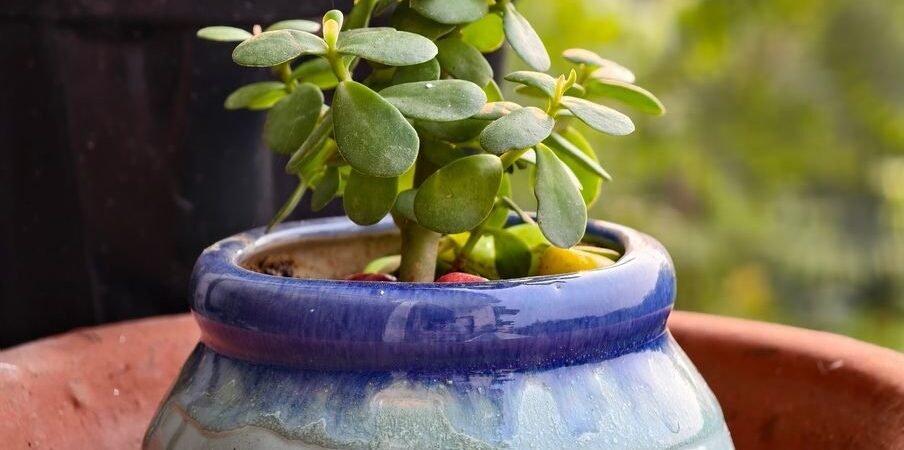
The fastest way to propagate a jade plant is a stem cutting in soil: snip a 3–6 inch stem, let the cut end callus for 3–5 days, then plant it in cactus mix and water sparingly. Roots usually appear in 2–4 weeks. Leaf cuttings work too, but they take 4–8 weeks just to root and months to become a real plant.
Jade plants are some of the most forgiving houseplants you can multiply. A single plump leaf or a stem you pruned off can become a whole new plant, and the process is genuinely simple — as long as you respect one rule: jade is a succulent, and succulents rot when they stay wet. Get the drying and watering right and almost every cutting takes.
This guide covers the three methods that actually work — stem cuttings in soil, leaf cuttings, and stem cuttings in water — plus division, the bonus method for mature plants. You will also find a realistic timeline, the five mistakes that kill most cuttings, and what to do when a cutting stalls.
Jade (Crassula ovata) is a subtropical succulent shrub from South Africa that grows into a miniature tree indoors. North Carolina Extension notes that propagation is easily achieved by leaf cutting — and stem cuttings are faster still.
Is Your Jade Ready to Propagate?
Sixty seconds of checking now saves weeks of waiting on a cutting that was never going to root. Take cuttings only from a healthy parent plant.
- Firm leaves. Squeeze a few leaves gently. They should feel plump and firm, not soft, wrinkled or translucent. Soft leaves mean the parent is stressed — fix that first.
- No pests, no rot. Check leaf joints and stem bases for mealybugs, scale or black mushy patches. Never propagate from a sick plant; you will only clone the problem.
- Something to spare. You need a healthy stem with several pairs of leaves, or a few plump leaves you can twist off without stripping the plant bare. A small jade with four leaves is not a donor yet.
- The right season helps. Spring and early summer are the best time, when the plant is actively growing. You can propagate indoors at any time of year, but cuttings taken in deep winter root more slowly — keep them warm, at 65–75°F, and be patient.
If your jade is dropping leaves for no clear reason, sort that out before propagating — our guide to why jade plants drop leaves walks through the nine usual causes.
Which Method Should You Choose?
All three methods work. The right one depends on what plant material you have and how patient you are.
| Method | What you need | First roots | Best for |
|---|---|---|---|
| Stem cutting in soil | A 3–6 inch stem | 2–4 weeks | Fastest, most reliable results |
| Leaf cutting in soil | One plump leaf | 4–8 weeks | When you only have leaves to spare |
| Stem cutting in water | A stem and a jar | 3–5 weeks | Watching roots grow; teaching children |
| Division | A mature, multi-stem plant | Immediate | Repotting day — a free second plant |
Stem cuttings in soil are the default choice: they root fastest, skip the risky move from water to soil, and look like a small jade within a single growing season. Leaf cuttings are the slow road — charming, but a leaf can take a year or more to become a plant that looks like a jade. Water propagation is the most fun to watch and the most useful for diagnosing problems, but the cutting still has to survive the move into soil afterwards.
What You’ll Need
- Clean, sharp scissors or pruning shears, wiped with rubbing alcohol
- Cactus or succulent potting mix — or mix your own from 2 parts potting soil, 1 part perlite and 1 part coarse sand
- Small pots with drainage holes (2–3 inches wide is plenty for cuttings)
- A clean glass jar, for the water method
- A paper towel or tray to lay cuttings on while they callus
Do not use ordinary potting soil on its own. It holds too much moisture for a succulent cutting and is the single biggest cause of rot. If you only have regular mix, stir in at least a third perlite or coarse sand. And whatever pot you choose, it must have a drainage hole — jade cuttings will not tolerate sitting in water.
Method 1: Stem Cuttings in Soil (Fastest and Most Reliable)
This is the method to use if you want a new jade plant as quickly as possible — for instance, after pruning a leggy stem, or when a branch snaps off.
- Choose a healthy stem. Pick a stem 3–6 inches long with several pairs of firm, green leaves. Semi-woody stems root best — not soft green tips, and not old brown wood.
- Cut just below a leaf node. Using sterilised shears, cut the stem just below a node (the slight bump where a leaf joins the stem). A clean cut heals faster than a crushed one.
- Strip the lower leaves. Remove the bottom one or two pairs of leaves to expose 1–2 inches of bare stem. Keep those leaves — each one is a bonus leaf cutting (Method 2).
- Let it callus. Lay the cutting in bright, indirect light for 3–5 days until the cut end feels dry and slightly hardened. This step is not optional: a fresh, wet cut planted straight into soil is an open invitation to rot.
- Plant it. Push the callused end about 1 inch deep into dry cactus mix and firm the soil gently around it so the cutting stands upright.
- Wait before watering. Leave it dry for about a week, then water lightly — just enough to dampen the mix. After that, water only when the soil is completely dry. When in doubt, wait another day; a thirsty cutting recovers, a rotted one does not.
- Give it bright, indirect light. A bright windowsill out of direct sun is ideal. New growth in 4–6 weeks is your sign that roots have formed. Resist the urge to tug the cutting to check — you will tear the very roots you are waiting for.
If you are unsure whether your soil is dry enough, use the same check as for a grown jade: push a finger or a wooden skewer an inch into the mix. Our overwatered vs underwatered guide explains the difference, and it matters even more for cuttings, which have no roots yet to drink with.
Method 2: Leaf Cuttings (Slow, but Almost Free)
Every healthy jade leaf is a potential plant. This method is perfect when a leaf falls off on its own, or when you want lots of new plants from one parent and do not mind waiting.
- Twist, don’t cut. Hold a plump, healthy leaf at its base and twist it gently from side to side until it pops off whole. The base must come away clean — a leaf torn halfway across will not root.
- Callus the leaf. Lay it on a paper towel in bright, indirect light for 2–3 days until the broken end has dried over.
- Lay it on soil. Place the leaf flat on dry succulent mix with the callused end touching the surface. Do not bury it — the roots need to find the soil themselves.
- Mist sparingly. Lightly mist the soil surface every 5–7 days, only once roots appear. Before that, keep it dry; a wet leaf with no roots just rots.
- Wait for roots, then a plantlet. Fine pinkish-white roots usually appear in 4–8 weeks, followed by a tiny rosette at the base of the leaf. This is the slow part — do not expect a visible plant for a couple of months.
- Transplant when ready. Once the plantlet has two pairs of true leaves and the mother leaf has shrivelled away, pot it into its own 2-inch pot of cactus mix. That can take several months from the day you twisted the leaf off.
Start several leaves at once. Not every leaf roots, and a tray of six leaves costs you nothing but a little windowsill space. The ones that take will give you plants to share — jade is traditionally a gift plant, said to bring good luck to its new home.
Method 3: Stem Cuttings in Water (Best for Watching Roots)
Water propagation is slower than soil and adds one risky step — moving the cutting into soil later — but it lets you see exactly what is happening, which makes it a good choice for children, classrooms, or anyone who has killed cuttings in soil before and wants to know why.
- Take and callus a stem cutting exactly as in Method 1, steps 1–4. Skipping the callus is even riskier in water than in soil.
- Submerge just the bottom half-inch. Stand the cutting in a clean glass jar with room-temperature water covering only the bottom half-inch of stem. Never submerge leaves or nodes — they will rot.
- Change the water weekly. Fresh water keeps bacteria down. Top it up between changes if the level drops.
- Wait for roots. White roots usually appear in 3–5 weeks. Let them grow to 1–2 inches before moving the cutting — shorter roots are too fragile for the move.
- Transplant gently. Pot into damp (not wet) cactus mix, keep the soil lightly moist for the first week while the water-grown roots adjust, then switch to normal sparse watering. Expect the cutting to sulk for a week or two; that is normal.
- Don’t try leaves in water. Leaf cuttings almost always rot in water. Leaves belong on soil, per Method 2.
If you like watching roots, our pothos in water guide covers the same technique in more depth — pothos is far more forgiving in water than jade, so it is a good practice plant first.
Bonus Method: Division (a Free Plant on Repotting Day)
Mature jades often grow several stems from the base, each with its own roots. When you repot, you can split one plant into two — no waiting for roots at all.
- Water the parent 1–2 days before, so the rootball is moist and flexible.
- Slide the plant out of its pot and shake off loose soil until you can see the natural divisions.
- Gently tease the sections apart with your hands. If two stems share a thick root, cut it cleanly with a sterilised knife rather than tearing it.
- Pot each division in cactus mix at the same depth it grew before, water lightly after a few days, and keep out of direct sun for a week.
Only divide a plant that is genuinely crowded or top-heavy. If you are not sure whether yours needs a new pot at all, our signs your plant needs repotting guide will help you decide.
The Timeline: What to Expect
| Stage | Stem in soil | Leaf in soil | Stem in water |
|---|---|---|---|
| Callus forms | 3–5 days | 2–3 days | 3–5 days |
| First roots | 2–4 weeks | 4–8 weeks | 3–5 weeks |
| New growth or plantlet | 4–6 weeks | 2–4 months | 4–6 weeks after potting |
| Looks like a small jade | One growing season | A year or more | One growing season |
These are typical ranges in a warm, bright room. Cool rooms, short winter days and weak light all stretch them out — sometimes by weeks. A cutting that is firm, green and unchanged after a month is not necessarily failing; it may just be slow. A cutting that is soft, black or translucent is failing, and the troubleshooting table below tells you what to do.
5 Mistakes That Kill Jade Cuttings
- Skipping the callus. Planting a fresh cut straight into damp soil is the number one cause of rot. The cut end needs 2–5 days to seal itself first.
- Watering on a schedule. Cuttings need far less water than a grown plant, and a cutting with no roots needs almost none. Water only when the soil is dry all the way through — never “a little every day.” If you have drowned a plant before, read how to save an overwatered plant before you start.
- Ordinary potting soil and no drainage hole. Dense soil stays wet, wet soil breeds rot, and a pot without drainage turns the whole thing into a swamp. Cactus mix plus a drainage hole is non-negotiable.
- Wrong light. Fresh cuttings scorch in direct sun, but they stretch pale and leggy in a dark corner. Bright, indirect light — an east-facing windowsill, or a few feet back from a south-facing one — is the sweet spot until roots form.
- Checking too often. Tugging a cutting to see if it has rooted tears off the hair-thin new roots. Poking the soil daily keeps it disturbed and damp. Check once a week at most, and judge by new growth, not by pulling.
Troubleshooting: What Went Wrong?
| Symptom | Likely cause | Fix |
|---|---|---|
| Cut end turns black and mushy | Rot — no callus, or soil too wet | Cut back to firm green tissue, re-callus for 3–5 days, restart in dry mix |
| Leaf shrivels before rooting | Too dry, or too much direct sun | Move to bright indirect light; mist the soil surface lightly |
| Nothing happens for 6+ weeks | Cool room or winter dormancy | Move somewhere 65–75°F with bright light; be patient — check the stem is still firm |
| New growth is pale and stretched | Too little light | Move closer to a window gradually over a week |
| White mould on the soil surface | Soil staying damp, poor airflow | Let the soil dry out fully, scrape the mould off, improve air circulation |
| Leaves fall off the stem cutting | Stress, usually overwatering | Check the soil is dry before watering again; use the fallen leaves as leaf cuttings |
Soft, black stem bases are the classic sign of root rot, and the same rules apply: cut away everything soft, keep only firm tissue, and start again in dry mix. A cutting that is firm and green but slow is alive — give it time.
Aftercare: The First 6 Months
Once a cutting has rooted, treat it like a young jade, not a fragile seedling. It wants the same conditions as its parent, just in smaller doses.
- Light: bright indirect light first, then a few hours of gentle direct sun once new growth is established. North Carolina Extension recommends a sunny indoor spot with some afternoon shade.
- Water: soak only when the soil is dry, and always empty the saucer afterwards. In winter, water even less — jade slows down as the days shorten.
- Feeding: hold off until the cutting is growing steadily, then feed lightly with diluted succulent fertiliser every 4–6 weeks in spring and summer only. Our fertilising guide covers the schedule and the signs of overfeeding.
- Potting on: move up one pot size when roots fill the pot — usually after 6–12 months for a stem cutting. Jade likes a snug pot, so do not jump to a big one.
Succulents that stay too wet develop the same mushy-leaf problems as any overwatered succulent — see why succulent leaves go mushy if your young jade’s leaves start feeling soft.
When to Give Up on a Cutting
Most jade cuttings root if you give them warmth, light and dry soil. Give up only when the cutting is clearly dead: the whole stem has gone soft and black right up to the node, a leaf has turned translucent and collapsed, or there are still no roots after 10–12 weeks in warm, bright conditions despite firm, green tissue.
When that happens, compost it without guilt and take a fresh cutting from healthy growth on the parent. A failed cutting usually teaches you something — almost always that the soil was too wet or the callus was skipped — and the next one benefits.
Related Rescues
- Why Is My Jade Plant Dropping Leaves? 9 Causes & Fixes
- How to Save an Overwatered Plant: 7 Rescue Steps That Actually Work
- How to Propagate a ZZ Plant: 3 Methods That Work
-
How long does it take to propagate a jade plant?
A stem cutting in soil usually roots in 2–4 weeks and shows new growth in 4–6 weeks. A leaf cutting takes 4–8 weeks just to root, and several months to grow a plantlet with two pairs of leaves. Warmth, bright indirect light and dry soil keep you at the fast end of those ranges; a cool room in winter stretches them out.
-
Can you propagate a jade plant from just a leaf?
Yes. Twist a plump, healthy leaf off cleanly at the base, let the broken end callus for 2–3 days, then lay it flat on dry succulent mix. Roots usually appear in 4–8 weeks, followed by a tiny plantlet. It is the slowest method — a leaf cutting can take a year or more to look like a small jade — so start several leaves at once.
-
Should jade cuttings go in water or soil?
Soil is more reliable. A stem cutting in cactus mix roots in 2–4 weeks and never has to survive a move from water to soil. Water works for stem cuttings and lets you watch the roots grow, but the roots are fragile and the cutting often sulks for a week or two after transplanting. Never put leaf cuttings in water — they almost always rot.
-
Why is my jade cutting rotting?
Almost always one of two things: the cutting was planted before the cut end callused over, or the soil stayed wet. Cut away all soft, black tissue back to firm green stem, let the fresh cut callus for 3–5 days, and restart in dry cactus mix in a pot with a drainage hole. Then water only when the soil is completely dry.
-
When is the best time to propagate a jade plant?
Spring and early summer, when the plant is actively growing, give the fastest rooting. You can take cuttings indoors at any time of year, but winter cuttings root more slowly, so keep them somewhere warm (65–75°F) with bright indirect light and water even more sparingly than usual.