
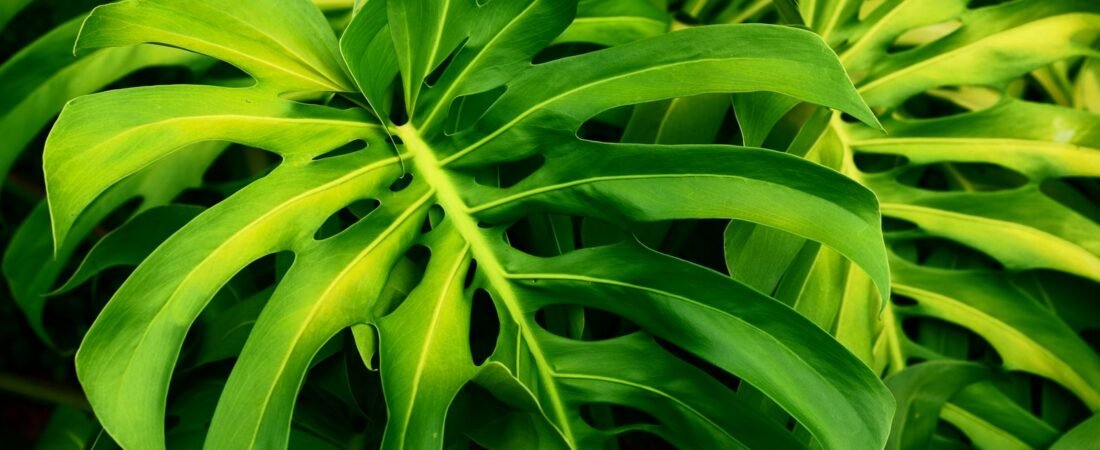
Nothing ruins the tropical-jungle vibe like your monstera with yellow leaves. Before you spiral, take a breath: yellow leaves are your monstera’s way of telling you exactly what’s wrong. The pattern of the yellowing — which leaves, where on the leaf, what the soil feels like — points straight at the cause.
Run through the eight causes below, match your plant’s symptoms, and you’ll almost certainly find your culprit. (Not sure this is the right symptom? Our yellow leaves hub walks through every cause across all houseplants.)
Quick diagnosis: monstera leaves turning yellow
Symptom: Yellow leaves — maybe one leaf, maybe several. Yellowing at the edges, between the veins, or across whole leaves.
Most likely cause: Overwatering — especially if the soil is still wet days after you watered.
Your 60-second first step: Stick your finger 2 inches into the soil. Still wet? Stop watering and read cause #1. Bone dry? Give it a deep drink and read cause #2. Moist but fine? Check how much light it’s getting — cause #3.
1. Overwatering (the most common cause)
Why it happens: Monstera roots need air as well as water. In waterlogged soil they suffocate, the plant can’t take up nutrients, and leaves yellow from the bottom up. This is behind more monstera yellowing than anything else.
How to confirm: The lower leaves yellow first and feel soft or limp. The soil is still wet 2 inches down, days after watering. The saucer may be holding standing water. A musty smell from the pot means root rot is starting.
Fix it:
- Stop watering. Let the top 2 inches of soil dry out completely before you water again.
- Empty the saucer after every watering. Never let the pot sit in standing water.
- Check that the pot has drainage holes. No holes? Repot into a pot that has them.
- If the stem base feels soft or the soil smells musty, unpot the plant and inspect the roots. Brown, mushy roots mean root rot — trim the mushy parts and repot in fresh mix. Here’s the full rescue walkthrough: What Root Rot Looks Like (and How to Fix It)
- Still can’t tell if you’re over or under? This guide settles it: Overwatered vs Underwatered Plants: How to Tell the Difference
2. Underwatering
Why it happens: Skip too many waterings in a row and the plant yellows leaves to cut down on how much water it needs.
How to confirm: Yellow leaves with dry, brown, crispy edges. The soil is bone dry 2 inches down, or it has shrunk away from the sides of the pot. The leaves may droop before they yellow. If drooping is your main symptom rather than yellowing, here’s why your monstera is drooping.
Fix it:
- Water deeply until it drains out the bottom, then empty the saucer.
- If the soil is so dry it repels water (it runs straight through), bottom-water instead: set the pot in a basin of room-temperature water for 20–30 minutes so the root ball actually soaks.
- Water on a check, not a calendar — do the finger test every time.
3. Not enough light
Why it happens: A monstera in a dim spot can’t photosynthesize enough to feed itself. Leaves turn pale yellow, growth slows, and new leaves come in small with few or no splits.
How to confirm: Uniform pale yellowing, leggy stems, smaller new leaves, and disappearing fenestrations. The plant sits far from a window or in a dark corner. North Carolina State Extension recommends bright, indirect light for monsteras — not dim shade and not harsh direct sun: Monstera deliciosa — NC State Extension Gardener Plant Toolbox
Fix it:
- Move it within 3–5 feet of a bright window. East-facing is ideal; a south or west window with a sheer curtain works too.
- Give it 2–3 weeks. The yellow leaves won’t green back up, but new growth should come in bigger and bolder.
- Watch the splits: fenestrations disappearing is your early warning that the light is too low, often before yellowing even starts.
4. Natural aging (the good-news cause)
Why it happens: Monsteras shed their oldest leaves as they grow. One bottom leaf yellowing at a time, while the rest of the plant looks healthy, is just the plant’s lifecycle — not a problem to solve.
How to confirm: Only the lowest, oldest leaf is yellow. Everything above it is firm and green, and new growth keeps coming.
Fix it: Nothing. Snip the yellow leaf off at the base of its stem with clean scissors so the plant puts its energy into new growth instead.
5. Nutrient deficiency
Why it happens: A monstera that hasn’t been fed in months runs low on nitrogen (and sometimes magnesium or iron), and yellowing is how it shows it.
How to confirm: Uniform yellowing of the older leaves first points to nitrogen. Yellowing between the veins while the veins stay green points to magnesium (on older leaves) or iron (on younger leaves). And you haven’t fertilized in 6 months or more.
Fix it:
- Feed with a balanced liquid houseplant fertilizer, diluted to half strength, every 4–6 weeks in spring and summer. Skip feeding in fall and winter when growth slows.
- A balanced fertilizer usually covers magnesium and iron too — don’t chase single nutrients unless the pattern is unmistakable.
- Don’t overcorrect: too much fertilizer burns roots and causes its own yellowing (see cause #8).
6. Pests
Why it happens: Spider mites, scale, thrips, and mealybugs all feed on monstera leaves, leaving yellow stippling or patches where they’ve been draining the plant.
How to confirm: Fine webbing between leaves and tiny dots on the undersides (spider mites). Bumpy brown shells on the stems (scale). Sticky residue on the leaves. Always check the leaf undersides — that’s where they hide.
Fix it:
- Wipe the leaves down with a damp cloth and dab visible pests with rubbing alcohol on a cotton swab.
- Spray with insecticidal soap or neem oil, covering the leaf undersides. Repeat once a week for 3–4 weeks to catch the next hatch.
- Isolate the plant from your other houseplants until the pests are gone — and check its neighbors too.
7. Cold drafts and temperature swings
Why it happens: Monsteras are tropical. Cold air from a drafty window, a constantly opening door, or a blasting AC vent stresses the plant, and stressed leaves yellow.
How to confirm: The yellowing started after a cold snap, or the plant sits by a leaky window, an exterior door, or right under an AC vent. The room drops below 60°F.
Fix it:
- Move it away from the draft — but keep it bright. Don’t trade one stress for another.
- Keep it between 60°F and 85°F, the range monsteras prefer.
- Keep it off cold windowsills in winter, and away from radiators and heat vents as well.
8. Fertilizer burn and salt buildup
Why it happens: Too much fertilizer — or months of fertilizing without ever flushing the soil — leaves salts behind that burn the roots. Leaf edges yellow first, then turn brown and crispy.
How to confirm: A white, crusty residue on the soil surface or around the pot rim. Yellowing starts at the leaf edges and tips, then browns. You’ve been fertilizing often, or you never flush the soil.
Fix it:
- Flush the soil: run room-temperature water through the pot for several minutes, letting it drain fully. Do it twice.
- Hold off on all fertilizer for at least a month.
- Going forward, fertilize at half strength and flush the soil every few months to keep salts from building up.
Monstera yellowing: quick differential
| What you see | Most likely cause | Instant check |
|---|---|---|
| Lower leaves yellow, soft; soil stays wet days after watering | Overwatering | Finger test 2 inches down — still wet? |
| Yellow leaves with dry, crispy brown edges | Underwatering or fertilizer burn | Bone-dry soil, or white crust on the soil surface? |
| Pale, uniform yellowing + small leaves, fewer splits | Not enough light | Is it more than 5 feet from a window? |
| One oldest leaf yellowing, rest of the plant looks great | Natural aging | Is it only the bottom leaf? |
| Yellowing between the veins, veins stay green | Magnesium or iron deficiency | Fed it at all in the last 6 months? |
| Yellow stippling, fine webbing, or sticky leaves | Pests | Check the leaf undersides with your phone flashlight |
| Yellowing started after a cold snap | Cold draft | Near a drafty window, exterior door, or AC vent? |
How long until it recovers
- Underwatering: leaves perk up within hours of a deep watering.
- Low light: 2–3 weeks in a brighter spot before new growth improves. The old yellow leaves stay yellow.
- Overwatering: 2–4 weeks after you fix the watering rhythm. If root rot needed surgery, expect 1–2 months before new growth appears.
- Nutrient deficiency: new growth greens up within 3–4 weeks of feeding. Existing yellow leaves won’t recover.
- Pests: new growth resumes a couple of weeks after the infestation is fully gone.
- Cold stress: stabilizes within 1–2 weeks in a warm, draft-free spot.
When to give up
A monstera with yellow leaves is almost never dead. Do the stem test: scratch the main stem lightly with your fingernail. Green and firm underneath? It’s alive — fix the cause and wait. Only compost it if the stems are brown and mushy from the base up, the crown has collapsed, and nothing new has grown for 6–8 weeks after you fixed the conditions. Monsteras are resilient; most “dead” ones people throw away were just thirsty, dark, or cold.
Frequently asked questions
Should I cut off yellow monstera leaves?
Yes. A fully yellow leaf won’t turn green again, and the plant keeps spending energy on it. Snip it off at the base of the stem with clean, sharp scissors. If a leaf is only partly yellow, you can leave it — the green part is still photosynthesizing and helping the plant.
Can yellow monstera leaves turn green again?
No. Once the chlorophyll has broken down, the color change is permanent. Fixing the cause stops new leaves from yellowing, and the next leaves your monstera puts out will be healthy and green. The goal is to stop the spread, not reverse it.
Why is my variegated monstera turning yellow?
Variegated monsteras have less chlorophyll, so their white and cream sections are the most fragile — they scorch first in too much sun and fade first in too little light. They need brighter indirect light than all-green monsteras. Yellowing on the white parts usually means the light balance is off, not that the plant is dying.
Why is my monstera turning yellow after repotting?
Transplant shock. Repotting disturbs the roots, and the plant may yellow or drop a leaf or two while it re-establishes. Keep conditions stable, water lightly, and give it 2–4 weeks. If it keeps declining after a month, check that the new pot drains well and you didn’t bury the stem deeper than it was before.
My monstera is turning yellow but the soil feels dry. Is it underwatered?
Possibly — but not always. Roots damaged by past overwatering can’t absorb water, so the soil reads dry while the plant is effectively drowning below. If a deep watering doesn’t perk it up within a day, unpot it and check the roots: white and firm is healthy, brown and mushy means rot. See the root rot rescue guide linked in the article.
Why are my monstera leaves turning yellow with brown spots?
Yellow leaves with brown spots usually mean the original problem has been going on a while — soft leaves with brown patches and yellow halos point to overwatering and possibly root rot, while dry, crispy brown spots on yellowing leaves suggest underwatering or fertiliser burn. Check the soil moisture and feel the spots, then match what you find to the differential table above. The spotted leaves won’t heal, so judge your fix by the new growth coming in clean.
Is it normal for a monstera’s oldest leaf to turn yellow?
Yes — completely normal. Monsteras shed their oldest, lowest leaf as they grow, one at a time, while everything above stays firm and green. If it’s only that one bottom leaf and new growth keeps coming, there’s nothing to fix. Just snip the yellow leaf off at the base of its stem with clean scissors.