
Isolate the plant, dab every visible bug with 70% rubbing alcohol on a cotton swab, then spray with insecticidal soap or neem and repeat every 5-7 days for 4-6 weeks. One treatment never finishes the job — eggs hidden in cottony masses hatch in waves, so the schedule, not the spray, is what actually gets rid of mealybugs.
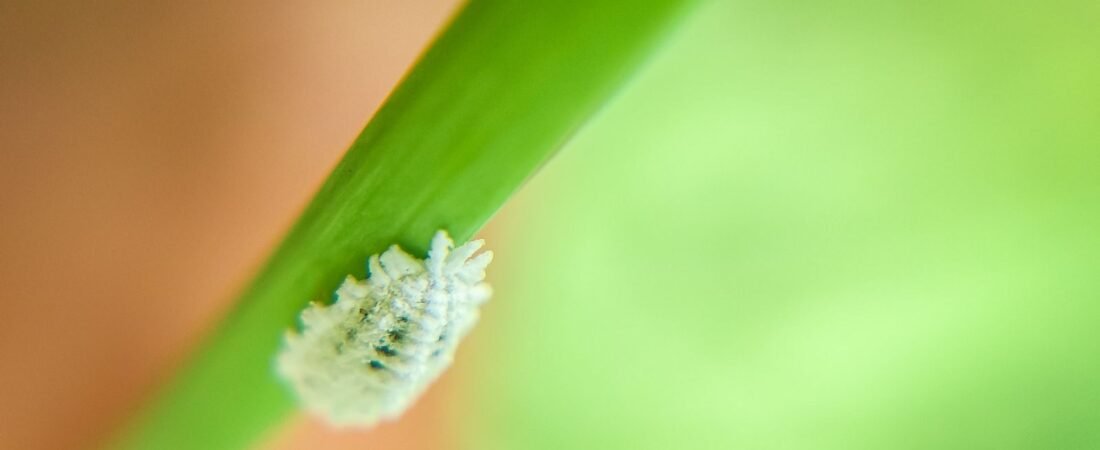
If your houseplant has little white cottony clumps tucked into its leaf joints, you almost certainly have mealybugs. They are soft, oval, wax-covered insects that feed on plant sap, and the white fluff is their protective waxy coating — and, often, the cottony mass where a female has laid her eggs. The good news is that a small infestation caught early is very beatable. The bad news is that mealybugs are patient: they hide in crevices, their eggs shrug off most sprays, and a single enthusiastic treatment followed by neglect is how they come back.
This guide is the full treatment plan: how to be sure it really is mealybugs, the step-by-step ladder from alcohol dabbing to spray to (only if needed) repotting, a week-by-week schedule, and the honest point at which throwing the plant away is the right call.
What mealybugs look like (and how to be sure)
Adult female mealybugs are wingless, oval, and about 1/8 inch long, covered in white wax with short waxy filaments around the edges. The most common indoor species, the citrus mealybug, may show a faint dark stripe down its back. Newly hatched crawlers are yellow to pink, wax-free, and mobile — these are the ones that spread to neighbouring plants. Egg masses look like tiny bits of cotton wool. Colonies tuck into protected spots: leaf axils, stem joints, growing tips, the crown of the plant, and stems near the soil.
Signs beyond the bugs themselves: sticky honeydew on leaves and nearby surfaces, black sooty mold growing on that honeydew, yellowing or wilting leaves, and slowed or distorted growth on a heavy infestation. Ants trailing to the plant are another clue — they farm mealybugs for honeydew.
| Look-alike | How to tell it apart |
|---|---|
| Mealybug | Segmented, legged, oval insect under the wax; crawls slowly; cottony egg masses. |
| Cottony cushion scale / soft scale | A bump or shell fixed to the stem or leaf, not a legged insect that moves. |
| Whitefly | Tiny white flies that flutter up when disturbed; nymphs are flat and fixed in place. |
| Woolly aphid | Similar white fluff, but mostly an outdoor pest; aphids cluster on stems and leave more honeydew. |
If you are still unsure, poke the fluff gently with a toothpick. A mealybug is a distinct segmented insect under the wax, not just lint or mold. The white fluff that wipes off cleanly with no insect underneath may be something else entirely.
Step 1: Isolate the plant right now
Before you treat anything, move the infested plant away from every other plant. Mealybug crawlers walk between pots that touch or where leaves overlap, and they hitchhike on hands, clothing, and tools. Put the plant in a separate room if you can, or at least with clear space around it, and do not return it to the collection until you have had two full weeks with no new bugs.
While it is isolated, inspect every plant that stood near it — especially the leaf axils and stem bases — even if they look clean. A second infested plant you never noticed is the most common reason treatment seems to fail. Treat all affected plants at the same time, or the untreated one will keep re-infesting the treated ones.
Step 2: Remove every bug you can see
- Dip a cotton swab in 70% isopropyl (rubbing) alcohol and press it directly onto each visible mealybug and egg mass. The alcohol dissolves the waxy coat and kills on contact.
- Work methodically: leaf axils, stem joints, growing tips, leaf undersides, and the crown. Use a soft toothbrush for woody stems and tight crevices.
- Prune off the worst-affected leaves and any flowers housing a colony, if the plant can spare them. Bag the prunings and bin them — do not compost them.
- Wipe honeydew off the leaves with a damp cloth, which also removes sooty mold and lets you see new bugs clearly next time.
Test first. Alcohol can damage the foliage of some plants, so dab one or two leaves, wait a day, and check for burn before treating the whole plant. Never use undiluted alcohol on tender new growth — dilute it 1:1 with water for spraying, and keep the plant out of direct sun until it dries.
Step 3: Spray what alcohol cannot reach
Alcohol dabbing handles the bugs you can see. A spray handles the crawlers you cannot — the tiny, wax-free nymphs hiding in crevices. Insecticidal soap, horticultural oil, and neem oil all work the same way here: they smother young mealybugs on contact. They work best on crawlers and young nymphs, because the waxy coat on adults repels most contact sprays. That is why the University of California IPM notes that mealybugs are very difficult to manage with insecticides alone.
- Choose one: ready-to-use insecticidal soap, or neem oil mixed exactly as its label directs. Do not mix up a stronger batch hoping for a stronger result — label strength is what the plant can tolerate.
- Spray every surface thoroughly: tops and undersides of leaves, stems, joints, and the crown. A spray that only hits the top of the leaves misses most of the colony.
- Test on a leaf or two first, as with alcohol, and spray in the evening or out of direct sun so wet leaves do not scorch.
- Keep the plant isolated and out of strong sun until the spray dries.
Skip the systemic insecticide as a first move. Products containing imidacloprid are less reliable against mealybugs than against other sap-feeding insects, and they should be avoided on flowering plants to protect pollinators. Reserve them, if at all, for a valuable plant that has failed everything else — and always follow the label exactly.
Step 4: Check the roots before you assume you are done
If a plant keeps declining — wilting, yellowing, stunted — and you cannot find bugs on the leaves, check below the soil. A few mealybug species feed on roots, and ground mealybugs are most often reported on African violets and gardenias. Slide the plant out of its pot and look for white powdery deposits or waxy colonies on the roots and soil.
- Shake off as much old soil as possible and wash the roots gently under tepid water.
- Trim away any black, mushy roots.
- Wash the pot thoroughly with hot soapy water — do not reuse the old soil, which can hide eggs and crawlers.
- Repot into fresh, sterile mix and treat the above-ground parts with alcohol as well.
Repotting is not needed for ordinary leaf-and-stem mealybugs. Repot only when you have actually seen root mealybugs, or you will stress a plant that is already struggling for no benefit.
Step 5: Repeat on a schedule that breaks the life cycle
This is the step most people skip, and it is the whole game. A female mealybug lays 100 to 200 or more eggs in a cottony sac over 10 to 20 days, and indoors all life stages can be present year-round. Eggs are shielded from sprays, so each treatment kills the bugs alive today while the next wave is still hatching. Stop after one round and the infestation rebuilds.
| Week | What to do | What you should see |
|---|---|---|
| Week 1 | Isolate; alcohol-dab every visible bug; first soap or neem spray | Fewer adults; sticky honeydew fading. |
| Week 2 | Alcohol-dab again; second spray 5-7 days after the first | New crawlers appearing — this is expected, not failure. |
| Week 3 | Dab + spray again; inspect neighbouring plants | Numbers clearly dropping; no new egg masses. |
| Week 4 | Dab + spray again; wipe leaves clean | Only the odd straggler in a crevice. |
| Week 5 | Inspect thoroughly; spot-dab anything found; spray only if bugs remain | Clean leaves, or nearly so. |
| Week 6 | Final full inspection; if two weeks pass with no bugs, return the plant to the collection | Clear. |
Keep checking weekly for a month after the last bug you see. If new cottony masses keep appearing after six weeks of honest, on-schedule treatment, re-check for a reservoir plant you missed, or consider the discard call below.
What does not work
- One spray and done — eggs survive, crawlers hatch, and the colony rebuilds within weeks.
- Spraying only the tops of leaves — mealybugs live in joints, undersides, and crevices that a top-down spray never reaches.
- Reusing infested soil or an unwashed pot after a root-mealybug repot — eggs and crawlers survive in both.
- Feeding heavily with nitrogen fertiliser during an infestation — soft, tender new growth is exactly where mealybugs prefer to lay eggs.
- Treating one plant while an infested neighbour sits untouched — crawlers will walk back across.
When to throw the plant away
This is not giving up; it is protecting the rest of your collection. Discard the plant (bag it and bin it, do not compost it) if the infestation covers most of the plant, if it has survived six weeks of on-schedule treatment with no improvement, if it is a cheap, easily replaced plant, or if it is a root-mealybug case on a plant that is already mostly dead above ground. University extension advice is blunt on this point: heavily infested plants are often better discarded than treated, because a reservoir plant can re-infest everything around it. Clean the spot where it stood, wash the pot before reuse, and check its neighbours one more time.
How to stop them coming back
- Quarantine every new plant for 2-4 weeks before it joins your collection, and inspect leaf axils, stem joints, and growing tips on arrival and again a week later.
- Inspect mealybug-prone plants monthly — hoya, jade, orchids, palms, philodendron, ficus, and ferns are frequent hosts.
- Clean tools, pots, and saucers between plants during treatment, and wash your hands after handling an infested plant.
- Keep plants healthy but not overfed: correct light and watering, and no heavy nitrogen feeding while pests are active.
- Keep pots from touching and leaves from overlapping where you can — crawlers travel across contact.
Related rescues
- How to Get Rid of Fungus Gnats in Houseplants
- Tiny White Bugs in Houseplant Soil: What Are They?
- How to Save an Overwatered Plant: 7 Rescue Steps That Actually Work
How long does it take to get rid of mealybugs?
Plan on 4 to 6 weeks of repeat treatment. One treatment kills the bugs alive today, but eggs hidden in cottony masses hatch in waves, so you need to dab and spray every 5 to 7 days until two full weeks pass with no new bugs. A plant is clear when a thorough inspection finds nothing, not when it merely looks better.
Does rubbing alcohol kill mealybugs?
Yes. Dabbing 70 percent isopropyl alcohol onto mealybugs with a cotton swab dissolves their waxy coating and kills them on contact. Test one or two leaves first and wait a day, since alcohol can damage some foliage, and dilute it 1 to 1 with water before spraying tender growth.
Can mealybugs spread to other plants?
Yes. Crawlers, the tiny wax-free nymphs, walk between pots that touch or where leaves overlap, and they hitchhike on hands, clothing, and tools. Isolate infested plants immediately and inspect every plant that stood nearby, treating all affected plants at the same time.
Do I need to repot a plant with mealybugs?
Only if you have root mealybugs. For ordinary leaf and stem infestations, repotting stresses the plant for no benefit. If you do find white waxy colonies on the roots, wash the roots clean, discard the old soil, wash the pot, and repot into fresh sterile mix.
Why do mealybugs keep coming back?
Usually for one of three reasons: treatment stopped after one round while eggs were still hatching, bugs hidden in crevices were never reached by the spray, or a second infested plant nearby keeps re-infesting the treated one. Repeat treatment on schedule for 4 to 6 weeks and inspect the whole collection, not just the one plant.