
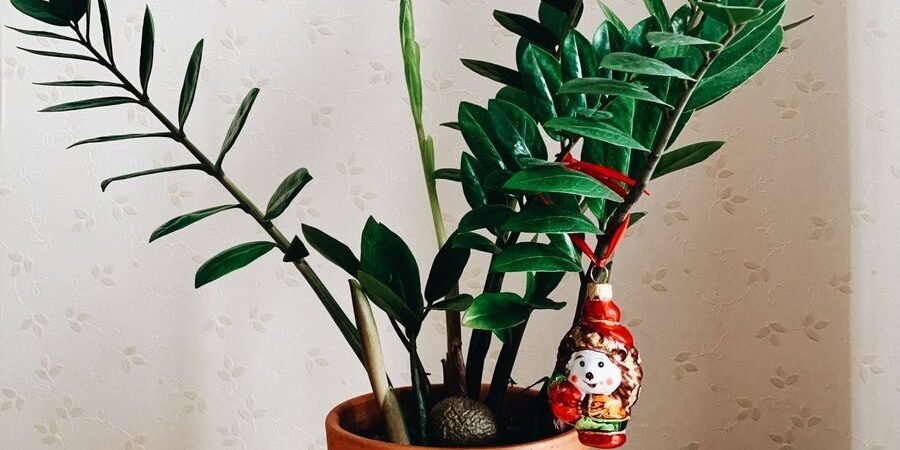
The fastest way to propagate a ZZ plant is division: split a mature plant at the rhizome and each piece is already a plant. Stem cuttings come second, rooting in about 4–8 weeks. Leaf cuttings work too, but they are the slowest route by far — expect 3–9 months before a new shoot appears. Whichever method you pick, patience matters more here than with almost any other houseplant.
A ZZ plant (Zamioculcas zamiifolia) is one of the easiest houseplants to keep alive and one of the slowest to multiply — and it is the same trait behind both. It stores water and energy in thick underground rhizomes, and every cutting must grow one of its own before pushing out new leaves. The work happens underground first, invisibly. That is why so many ZZ propagations get thrown away too early: a leaf cutting unchanged after two months is usually building a rhizome, not failing.
One safety note before you start: all parts of a ZZ plant are mildly toxic if eaten and the sap can irritate skin, so keep cuttings away from children and pets, wash your hands after handling them, and wear gloves if your skin is sensitive.
Which method should you choose?
Pick by what your plant can spare and how long you are willing to wait. If you have a mature, crowded plant, division is the obvious choice. If you only have a stem or a few leaves to spare, cuttings will get you there — just more slowly.
| Method | Timing | Difficulty | Best for |
|---|---|---|---|
| Division | New growth in 2–4 weeks | Easy | A mature plant with several stems; the only way to keep a variegated ZZ variegated. |
| Stem cuttings in soil | Roots in 4–8 weeks; new shoot later | Easy to medium | A healthy stem to spare. |
| Stem cuttings in water | Roots in 3–6 weeks; must move to soil | Medium | Watching roots form; move to soil at 1–2 inches. |
| Leaf cuttings in soil | Rhizome in 2–4 months; shoot in 3–9+ months | Patient only | Multiplying one plant into many from a few leaves. |
Before you cut: timing and supplies
Spring and early summer are the best times to propagate a ZZ plant, when it is actively growing and warmth speeds rooting. Autumn is slower, and it is best to avoid starting cuttings in deep winter, when cold, short days leave them sitting in damp mix for far too long.
- Clean, sharp scissors or a knife
- Rubbing alcohol for sterilising the blade
- Small pots with drainage holes
- Well-draining mix — a cactus or succulent mix, or potting mix with roughly half perlite
- Rooting hormone (optional)
- A clear plastic bag or propagator lid (optional, for leaf cuttings)
- Gloves
Sterilise the blade before every cut. A dirty cut invites rot, and ZZ cuttings sit in soil for months, so a clean start matters more here than with faster-rooting plants.
Method 1: Division (fastest)
Division skips the wait because each section already has a rhizome, roots and stems. It is the method to use when you are repotting anyway, so you can split the plant while it is already out of its pot.
- Water a day or two beforehand, then slide the plant out of its pot.
- Shake and tease away loose soil until the rhizomes and stem clusters are visible.
- Pull clusters apart by hand where they separate naturally; if they resist, cut through the rhizome with a sterilised knife, making sure each section keeps at least one stem and some roots.
- Let cut surfaces dry for a few hours, up to a day, to callus.
- Pot each section in fresh well-draining mix at the same depth it grew before, in a pot only slightly larger than its root ball.
- Wait 2–3 days before watering, then water lightly, and give bright indirect light.
Expect new growth within a few weeks. If a division sulks, check watering first — you may be watering it like an established plant when it needs a lighter hand while it settles in.
Method 2: Stem cuttings (the reliable middle ground)
A ZZ “stem” is the long central stalk with leaflets along it. It grows roots first, then a rhizome, then a shoot, which is why stem cuttings take longer to look like a new plant than division does, even though they root fairly reliably.
- Cut a healthy, mature stem near the base with sterilised scissors.
- Optional: cut it into shorter sections, each with at least two leaflets.
- Let the cut ends callus for several hours or overnight.
- Plant cut-end down about an inch deep in barely moist, well-draining mix.
- Give bright indirect light, never direct sun.
- Keep the soil barely damp; water only when the top inch is dry.
Rooting in a glass of water works too. Change the water every few days, keep only the base submerged, and move the cutting to soil at 1–2 inches of roots. Do not leave it in water for months: water-grown roots are brittle and rot-prone, and soil is the more reliable finish.
Roots typically appear in 4–8 weeks in warm conditions, but a new shoot takes longer, because it is waiting on the rhizome. Do not fertilise a fresh cutting — it has no roots yet to use the feed, and fertiliser will only stress it.
Method 3: Leaf cuttings (slow, but one leaf can become a plant)
Leaf cuttings are the way to multiply a plant without dividing it or cutting a whole stem. Each leaflet pulled off with its short stalk (petiole) intact can grow its own rhizome. A leaflet without its petiole will not work, so check that the little stalk comes with the leaf.
- Pull or snip healthy leaflets from a mature stem, keeping the petiole attached.
- Let the cut ends callus for a few hours.
- Push each leaflet petiole-first about half an inch into barely moist, well-draining mix, spaced so they do not touch.
- Give bright indirect light and warmth; a clear cover holds humidity — air it out every few days to prevent mould.
- Water sparingly, with a light sprinkle when the mix dries, never a soak.
Roots and a tiny rhizome may form within 2–4 months in warm conditions, but the first shoot often takes 3–9 months, and longer in a cool room. A leaflet that stays green and firm is alive even with nothing showing above the soil, so leave it be.
What to expect: a realistic timeline
| Stage | Division | Stem cuttings | Leaf cuttings |
|---|---|---|---|
| Roots/rhizome ready | Already present (division) | Roots in 4–8 weeks (stem) | Rhizome in 2–4 months (leaf) |
| First new shoot | 2–4 weeks | A few months after rooting | 3–9+ months |
| A plant that looks like a plant | Immediately | 6–12 months | 12–18 months |
These are ranges, not promises. Warmth — around 75–80°F — is the biggest lever you can pull, and bright indirect light feeds the cutting while it builds its rhizome. A cool, dim corner will stretch every timeline above.
Troubleshooting: is my cutting dead or just slow?
| What you see | What it means | What to do |
|---|---|---|
| Leaflet still green and firm after 2 months, no growth | Normal, rhizome forming | Leave it; check warmth and light. |
| Cutting yellowed and mushy at base | Rot from wet soil | Discard; next time callus cuts and water less. |
| Stem cutting wilted and dry | Too much sun or bone-dry mix | Move to bright indirect light; moisten lightly. |
| Roots in water slimy/smelly | Bacterial growth | Change water, trim slimy roots, move to soil sooner. |
| New shoot appeared then stalled | Rhizome still small | Keep watering lightly; growth resumes. |
| Variegated cutting produced all-green shoot | Expected from leaf/stem cuttings | Only division preserves variegation. |
5 mistakes that kill ZZ cuttings
- Watering on a schedule instead of checking the soil — if you have already gone too far, see how to save an overwatered plant.
- Skipping the callus step.
- Propagating in winter in a cold room.
- Using a pot far too big for the cutting.
- Throwing away a healthy leaf cutting at week eight because nothing shows above the soil.
When to call it
A cutting is done when the whole thing is black, mushy, or smells sour — that is rot, and it will not recover. Remove a single rotted leaflet promptly, so mould cannot spread to its neighbours. Everything else — green, firm, unchanged — deserves more time.
Related rescues
- Why Is My ZZ Plant Turning Yellow? 6 Causes & How to Fix It
- How to Propagate a Snake Plant: 3 Methods That Actually Work
- How to Propagate Pothos in Water
How long does it take to propagate a ZZ plant?
It depends on the method. Division gives you a new plant immediately, with fresh growth in 2–4 weeks. Stem cuttings root in about 4–8 weeks, then take a few more months to produce a shoot. Leaf cuttings are slowest: a rhizome in 2–4 months and a first shoot in 3–9 months or longer. Warmth and bright, indirect light speed all three up.
Can you propagate a ZZ plant in water?
Yes, stem cuttings root in water — change the water every few days and move the cutting to soil once roots reach 1–2 inches. Do not leave cuttings in water for months, as water-grown roots are weak and rot-prone. Leaf cuttings do far better in soil than in water.
Can you propagate a ZZ plant from just one leaf?
Yes, if the leaflet still has its short stalk (petiole) attached. Push the petiole about half an inch into well-draining mix and wait — it can take 3–9 months or more for a new shoot. A leaflet without its petiole will not root.
Why is my ZZ cutting not growing?
Usually it is not failing — it is building a rhizome underground, which takes weeks to months and shows nothing above the soil. Only worry if the cutting turns yellow, black, or mushy, which signals rot from wet soil. Check that it is warm, in bright indirect light, and barely watered.
Do ZZ cuttings keep variegation?
No — leaf and stem cuttings from a variegated ZZ almost always grow back all green. If you want to keep the variegation, divide the plant instead: each division carries the parent’s rhizome and keeps its pattern.