
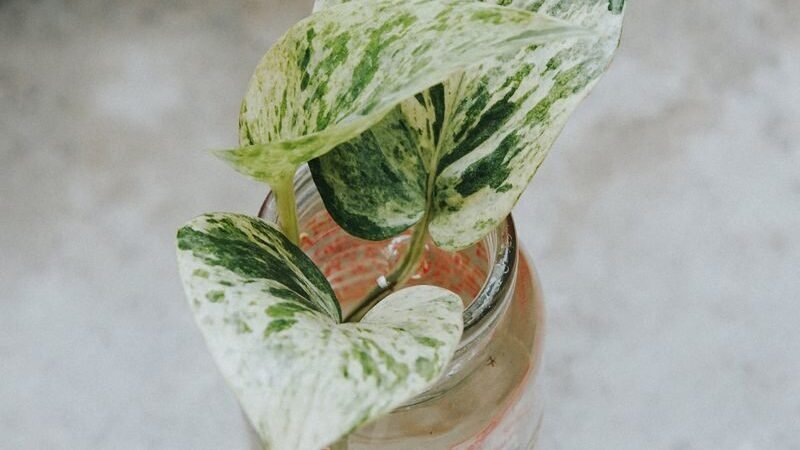
Short answer: In water, most healthy pothos cuttings show their first roots in 7 to 14 days and are ready to pot in 2 to 4 weeks, once roots are 2 to 3 inches long. In soil, expect the same job to take a little longer — usually 2 to 4 weeks before roots are established, sometimes up to 6 weeks in a cool or dim room.
You snipped a healthy vine, dropped it in a jar of water, and now you are staring at it every morning wondering whether anything is happening. That waiting period is normal — and it is also where most propagation mistakes happen, because cuttings get potted too early, left in stale water too long, or thrown away just before they would have rooted. This guide gives you the honest timeline, what healthy roots look like at each stage, and what to fix when nothing is happening. If you still need the cutting itself, start with our step-by-step guide to propagating pothos in water.
What “rooted” actually means
Part of the confusion is that “rooted” means three different things, and only the last one means your cutting is ready for a pot:
- First roots: tiny white nubs or threads appearing from a node. Exciting, but not enough to support the plant in soil yet.
- Ready to pot: several roots, each about 2 to 3 inches long, ideally starting to branch. This is the point to move a water cutting into soil.
- Established: the cutting holds firm when you tug it very gently, and it starts pushing out new growth. For soil cuttings, this is how you know rooting worked, since you cannot see the roots.
Judging a cutting by first roots alone is the most common reason a cutting wilts after potting. Wait for the second stage.
Water vs. soil: the timeline at a glance
North Carolina State Extension notes that pothos vines root easily in water, and that shows in the timeline: water is usually a few days faster, and you can watch the progress. Soil takes a little longer and hides the evidence, but the roots it produces are already adapted to soil, so there is less transplant shock.
| Method | First roots | Ready / established | How you know |
| Water | 7 to 14 days | 2 to 4 weeks | Several roots 2 to 3 inches long |
| Soil | 2 to 3 weeks (unseen) | 2 to 4 weeks, sometimes up to 6 | Gentle tug meets resistance; new growth appears |
These ranges assume a healthy cutting with a node, kept warm in bright indirect light. A cutting in a cold room or a dark corner can sit at the slow end of the range — or beyond it — without anything being wrong with the cutting itself.
What healthy roots look like, week by week
- Week 1: usually nothing visible. The node may swell slightly, and a tiny white bump can appear toward the end of the week. No change yet is normal.
- Week 2: thin white threads emerge from the node. In water you can see them clearly; in soil you will see nothing, which is also normal.
- Weeks 3 to 4: roots lengthen and branch. Water roots should be approaching 2 to 3 inches. A new leaf unfolding is a good sign the cutting is establishing.
- After potting: expect a quiet week or two while roots adjust to soil. Keep the mix lightly moist and the plant out of direct sun, then resume normal care as described in how often to water a pothos.
5 things that change the timeline
- A node, or no node. Roots grow from nodes, the small bumps where leaves and aerial roots emerge. A cutting with no node will not root, no matter how long you wait — see why in our guide to propagating without a node. Two or three nodes root more reliably than one.
- Warmth. Cuttings root fastest in a warm room. Below about 65°F, rooting slows noticeably, and a cutting on a cold windowsill in winter can take weeks longer than the same cutting in spring.
- Light. Bright indirect light gives the cutting the energy to grow roots. Low light slows rooting a lot, while direct sun overheats a water jar and scorches leaves. An east-facing window, or a few feet back from a bright window, is about right.
- The cutting itself. A firm, healthy vine from active growth roots faster than an old, woody, or stressed one. Heavily variegated cuttings often root a little more slowly than all-green ones, because they have less chlorophyll to work with.
- Water and soil care. In water, change the water every few days so it stays fresh and oxygenated, and keep the node submerged without submerging leaves. In soil, keep the mix evenly moist but never soggy — soggy mix rots a cutting before it can root. If rot does set in, the rescue steps in how to save an overwatered plant apply here too.
When to move a water cutting into soil
Pot it up once it has several roots about 2 to 3 inches long. Do not wait until the roots fill the jar or grow very long: long water roots are fragile and adapt poorly to soil, so an over-waited cutting often wilts worse after potting than one moved at the right time. Plant in a small pot with drainage holes and well-draining mix, water it in thoroughly, and keep the soil lightly moist for the first week or two while the roots adjust. If you are unsure whether your cutting is over- or underwatered after the move, compare the signs in overwatered vs. underwatered.
Why your cutting hasn’t rooted yet
| What you see | Likely cause | What to do |
| No roots after 3 weeks, stem still firm | Too cold, too dark, or no node | Check for a node, move to a warmer spot in bright indirect light, and give it another week or two |
| Stem turning black or mushy | Rot from stale water or soggy soil | Cut back to firm, healthy stem below the rot, change the water or mix, and start again from the healthy section |
| Leaves yellowing or dropping | Stress, submerged leaves, or rot spreading | Remove any leaves sitting in water, check the stem, and improve light and warmth |
| Roots formed but no new growth | Roots still too short, or the cutting is adjusting | Wait until roots reach 2 to 3 inches before potting; new growth usually follows establishment, not first roots |
| Cutting wilts after potting | Potted too early, or roots dried out | Keep soil lightly moist, keep it out of direct sun, and trim any collapsed leaves so the cutting can focus on roots |
When to start over instead of waiting
Patience is usually the right call — a firm, green cutting with a node deserves at least a month before you judge it. Start over instead when the stem has gone soft or black all the way through the node, when every leaf has yellowed and dropped, or when the cutting smells sour and the stem collapses when touched. A cutting rotted through its node will not recover, and waiting longer only risks spreading rot to other cuttings sharing the same jar. Take a fresh cutting from healthy growth, cut just below a node with clean scissors, and give it the warm, bright, indirect spot the first one did not have.
Related rescues
- How to Propagate Pothos in Water: 7 Steps for Roots in 1–2 Weeks
- How Often to Water a Pothos: The Soil-Check Rule
- Why Are My Pothos Leaves Turning Yellow?
Frequently asked questions
How long do pothos cuttings take to root in water?
Most healthy cuttings show their first roots in 7 to 14 days in water, and are ready to pot in 2 to 4 weeks once roots reach 2 to 3 inches long. A cool room or low light can push that to the slow end of the range.
How long do pothos cuttings take to root in soil?
Usually 2 to 4 weeks before roots are established, sometimes up to 6 weeks in cool or dim conditions. You cannot see soil roots, so judge by a gentle tug meeting resistance and by new growth appearing.
How long should pothos roots be before potting?
Wait until there are several roots about 2 to 3 inches long. A single short root is not enough to support the plant in soil, and very long water roots adapt poorly, so 2 to 3 inches is the sweet spot.
Why has my pothos cutting not rooted after 3 weeks?
Check three things first: that the cutting includes a node, that it is warm, and that it gets bright indirect light. If the stem is still firm and green, give it another week or two. If it is mushy or black, cut back to healthy stem or start over.
Can I leave pothos cuttings in water forever?
Pothos can live in water for months, but it will not thrive there indefinitely without nutrients, and long water roots adapt poorly to soil later. For a strong plant, pot it up once roots reach 2 to 3 inches.